

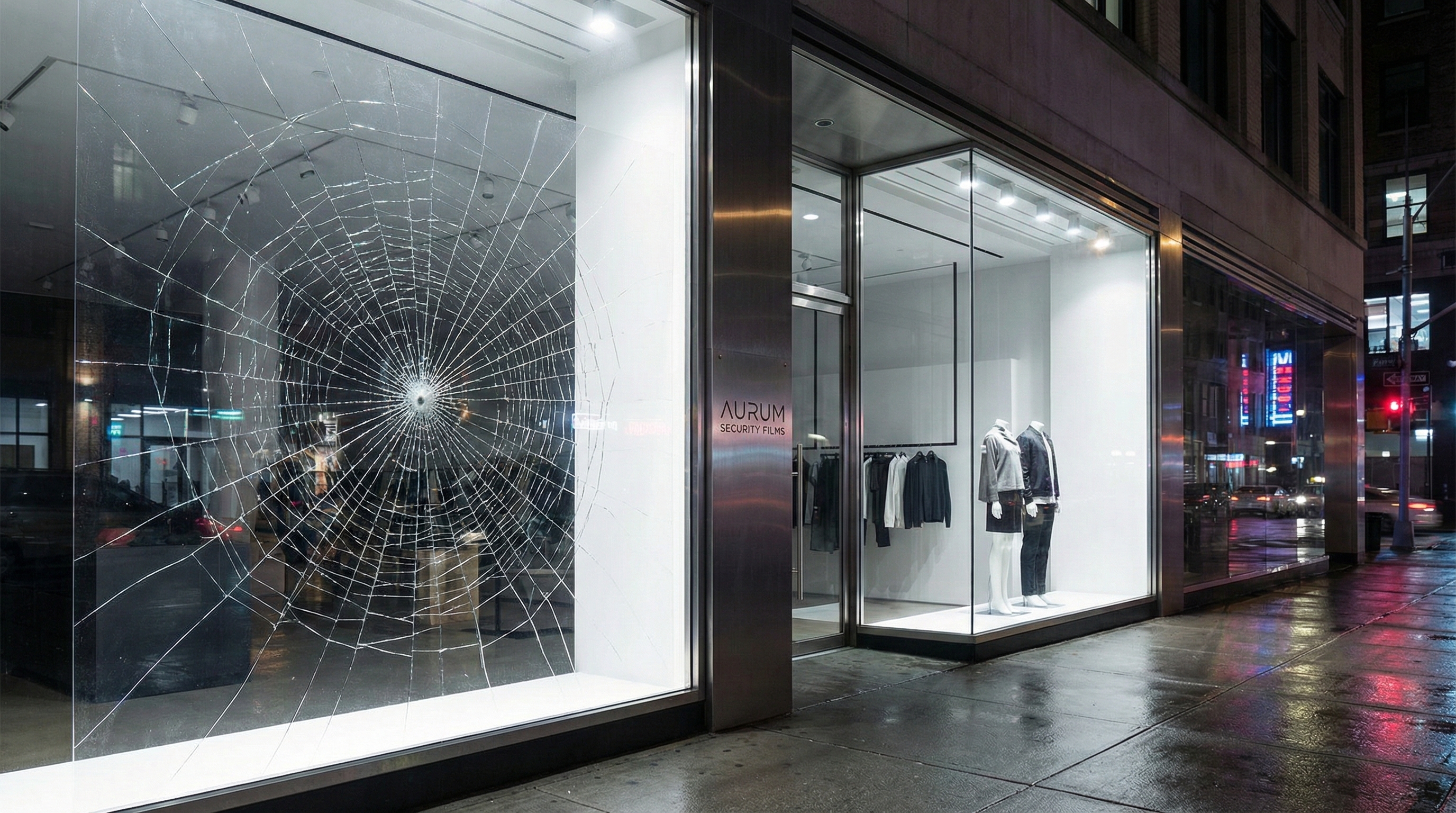
Storefront glass is one of the most vulnerable parts of any retail or commercial building. It is highly visible, easy to access, and often the first target during break-ins and vandalism attempts.
Many business owners install security window film to protect their storefronts. But one of the most common questions is not whether to use security film, but which thickness actually provides the right level of protection.
Security window film is not one-size-fits-all. The thickness you choose plays a major role in how well the glass holds together, how long it resists impact, and how much time it can delay a forced entry. Choosing the wrong thickness can lead to a false sense of security or unnecessary costs.
A thin film may help reduce shattering, but it may not offer enough resistance during a smash-and-grab attempt. On the other hand, a thicker film can significantly slow down intruders when paired with proper installation. This delay often makes the difference between theft and a failed break-in.
In this guide, you will learn how security film thickness works, what different mil options mean, and how to choose the right thickness for your storefront based on real-world risks. This will help you protect your business with confidence and clarity.
Security window film is a clear, durable layer applied directly to the interior surface of storefront glass. Its main purpose is to hold the glass together when it is struck, cracked, or shattered. This added layer of strength helps reduce damage and increases resistance during break-in attempts.
Unlike decorative or solar films, security window film is designed for impact resistance. It reinforces existing glass without changing the appearance of the storefront. From the outside, customers and passersby usually cannot tell the film is installed.
When glass without protection breaks, it shatters into sharp pieces and falls away quickly. This creates an easy opening for intruders. Security window film changes this behavior by keeping broken glass bonded together. The glass may crack, but it stays in place longer.
For storefronts, this delay is critical. Smash-and-grab crimes rely on speed. Even a short delay can discourage intruders or force them to abandon the attempt. Security film also helps reduce injuries caused by flying glass during accidental impacts.
Storefront security window film is commonly used on retail windows, glass doors, and display panels. It provides an extra layer of protection without the need for bars or shutters. This makes it a practical solution for businesses that want security without sacrificing visibility.
Security film strengthens glass by increasing its ability to absorb and distribute impact. When force is applied, the film stretches instead of breaking, which helps hold cracked glass together.
This reinforcement slows down repeated strikes. It also reduces the chance of the glass collapsing inward. For commercial storefronts, this added resistance can protect inventory, staff, and customers during an incident.
Security window film is effective against several common threats, including:
By addressing these risks, security film becomes a key part of storefront protection.
Learn more about commercial security window film solutions offered by American Window Film
Security window film thickness is measured in mils. A mil is one-thousandth of an inch. While that may sound small, even a few mils can make a noticeable difference in how glass performs during impact.
Many storefront owners assume thicker film always means better protection. Thickness does matter, but it must be understood correctly. The right choice depends on how the film reacts under stress, not just how heavy it feels.
Thicker films tend to stretch more before tearing. This allows the glass to stay bonded together longer after it cracks. Thinner films may reduce shattering, but they can fail faster during repeated strikes.
Understanding mil ratings helps you avoid overpaying or under-protecting your storefront. It also makes it easier to compare film options accurately when reviewing proposals or recommendations.
A mil is a unit used to measure film thickness. For security window film, common options range from 4 mil to 12 mil and higher.
To put it simply, higher mil numbers mean thicker film. Thicker film contains more material, which increases its ability to absorb impact and hold broken glass together.
For storefronts, mil ratings directly affect how long the glass can resist forced entry. This is why mil thickness is one of the first specifications professionals look at when recommending security film.
Thicker security film performs differently because it can stretch and absorb more force before tearing. This stretching action is what keeps shattered glass from falling away.
When an intruder strikes glass multiple times, thicker film increases resistance with each hit. It does not make glass unbreakable, but it does slow the process significantly.
This added delay is often enough to draw attention, trigger alarms, or cause intruders to leave. For storefront protection, this performance difference is why film thickness should never be an afterthought.
Security window film is available in several thickness levels. Each option offers a different balance between protection, cost, and performance. Understanding how these thicknesses compare helps you choose what makes sense for your storefront.
Not every business needs the thickest film available. The right choice depends on your location, risk level, and how the storefront glass is used. Below is a breakdown of the most common security film thickness options for storefront protection.
4 mil security film is considered an entry-level option. It is thicker than standard safety film and helps reduce glass shattering during minor impacts.
This thickness is often used in low-risk areas where the main concern is accidental breakage rather than forced entry. It can help keep broken glass in place, but it offers limited resistance against repeated strikes.
For most retail storefronts, 4 mil film alone is not enough for serious break-in protection. It works best as a basic safety upgrade rather than a primary security solution.
8 mil security film is the most popular option for storefront protection. It provides a strong balance between durability and cost.
This thickness significantly improves the glass’s ability to stay intact during smash-and-grab attempts. It holds broken glass together longer and resists tearing under repeated impact.
Many retail businesses choose 8 mil film because it offers meaningful protection without being excessive. It is suitable for most storefront windows and glass doors, especially in moderate-risk locations.
12 mil and thicker security films are designed for high-risk environments. These films provide maximum resistance and longer delay times during forced entry attempts.
This level of thickness is commonly recommended for storefronts in high-crime areas or businesses with high-value inventory. The film is harder to tear and maintains glass integrity under aggressive impact.
Thicker films may cost more, but they offer the highest level of storefront protection when installed correctly. For some businesses, this added security is well worth the investment.
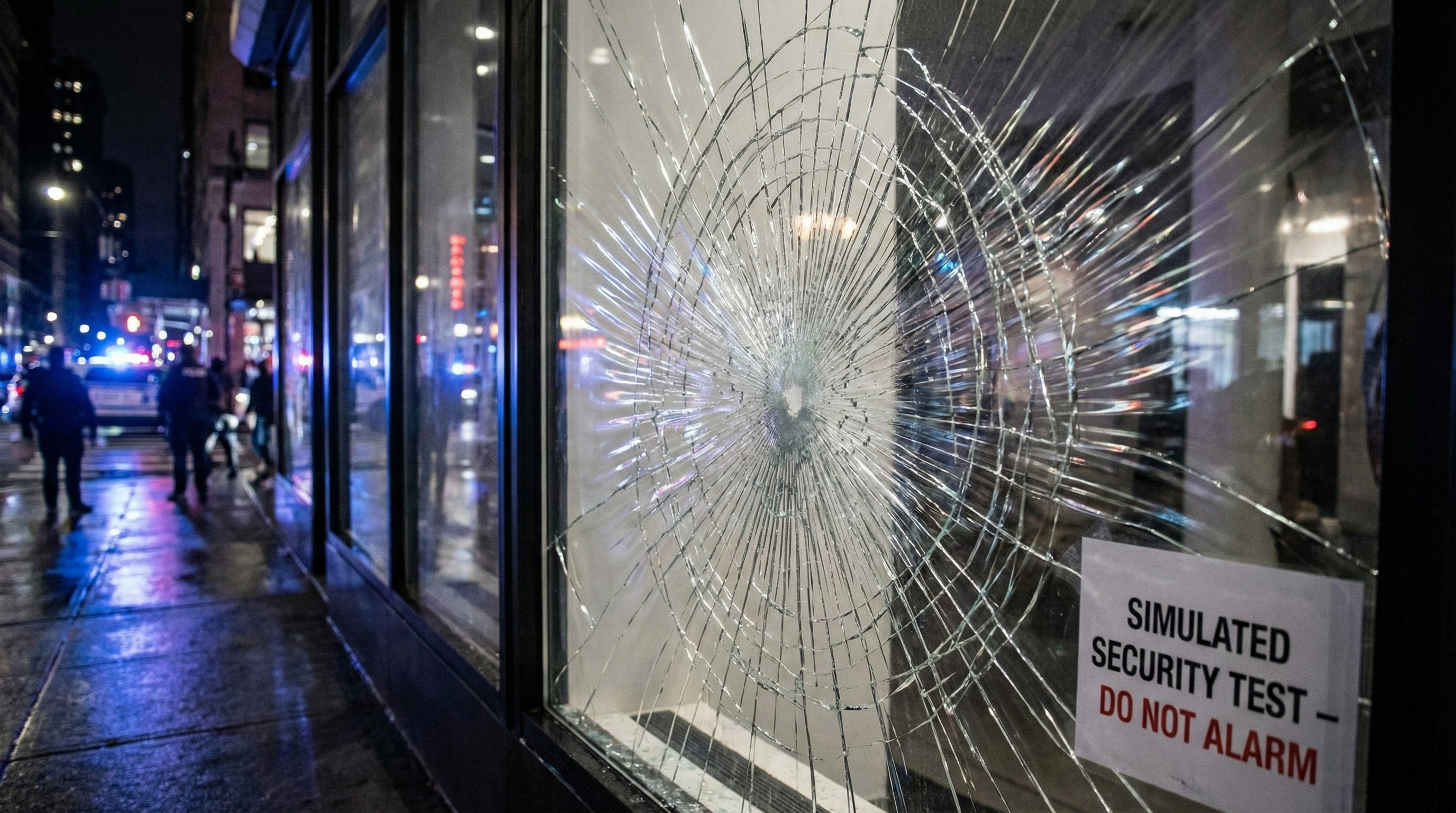
Security film thickness plays a direct role in how long storefront glass can resist a break-in attempt. Most smash-and-grab crimes depend on speed. Intruders want the glass to fail quickly so they can access the interior and leave within seconds.
Thicker security window film increases resistance by forcing intruders to work harder and longer. Even when the glass cracks, the film keeps it bonded together. This creates a barrier that must be repeatedly struck or cut through.
This extra time is critical. Delays increase noise, attract attention, and raise the risk of getting caught. In many cases, intruders abandon the attempt once they realize the glass will not fail easily.
Smash-and-grab attempts rely on breaking glass with a single strike. Thin or unprotected glass fails almost instantly.
With thicker security film, the first strike may crack the glass, but it does not create an opening. Each additional strike meets resistance from the film holding the glass together.
An 8 mil or thicker film can add valuable seconds or even minutes of delay. That delay often determines whether a break-in succeeds or fails.
One of the most important benefits of thicker security film is its ability to hold shattered glass in place. Instead of falling away, the broken glass stays bonded to the film.
This reduces the chance of creating a clean opening. It also limits flying glass that could cause injuries inside or outside the storefront.
By keeping the glass intact longer, thicker security film turns a quick break-in into a difficult and risky task for intruders.
Security film thickness is important, but it should never be evaluated on thickness alone. Industry standards and performance ratings help measure how a film performs under real-world conditions.
Many storefront owners focus only on mil ratings when comparing options. While thickness affects strength, testing standards provide a clearer picture of how the film reacts during impact and forced entry attempts.
Understanding these ratings helps you choose a solution that delivers proven performance rather than assumptions.
Performance standards are designed to test how security film systems behave under stress. These tests measure impact resistance, tear strength, and glass retention.
ASTM testing evaluates how well the film holds broken glass together. ANSI standards focus on safety performance related to glass breakage.
For storefront protection, these standards help confirm that a security film system performs as expected. They also provide a benchmark for comparing different products beyond thickness.
Thicker film does not automatically mean better protection. Without proper installation or tested performance, even thick film can fail.
The way the film bonds to the glass, how it stretches, and how it is anchored all affect results. A thinner film with proper installation may outperform a thicker film that is poorly installed.
This is why storefront security should be approached as a complete system. Thickness matters, but performance ratings and professional installation are just as important.
Explore safety & security film solutions to strengthen your storefront glass
Security window film is often misunderstood, especially when it comes to thickness. These misconceptions can lead to poor decisions and unrealistic expectations for storefront protection.
One common myth is that thicker security film makes glass unbreakable. No security film can make glass impossible to break. The real benefit is delay, not invincibility. Thicker film slows forced entry and increases resistance, but glass can still crack under enough force.
Another misconception is that any security film offers the same level of protection. Thickness matters, and so does installation quality. A thin film may reduce shattering but provide little resistance during a break-in.
Some business owners believe security film replaces alarms, locks, or other security measures. Security film works best as part of a layered approach. It buys time, which allows other security systems to do their job.
There is also a belief that thicker film always costs more than it is worth. In reality, the cost difference between 8 mil and 12 mil film is often small compared to the added protection in higher-risk areas.
Understanding these myths helps storefront owners make smarter, more informed decisions about security film thickness.
Choosing the right security film thickness starts with understanding your specific risk level. Not all storefronts face the same threats, and the best solution depends on location, exposure, and the type of business you operate.
A film that works well for one storefront may not provide enough protection for another. Matching thickness to real-world conditions helps avoid under-protecting or overspending.
Storefronts in low-risk areas may not require the thickest security film available. If break-ins are rare and the main concern is accidental damage, an 8 mil film may provide enough protection.
High-risk locations often need stronger solutions. Storefronts in high-crime areas or those that have experienced repeated vandalism benefit from 12 mil or thicker security film. The added resistance creates longer delay times and increases deterrence.
Retailers with valuable merchandise on display also fall into higher-risk categories. In these cases, thicker film offers added peace of mind.
The type of glass in your storefront matters. Large glass panels and glass doors are more vulnerable to impact and forced entry. These areas often need thicker film.
Entry doors and ground-level windows face higher exposure than upper-level glass. Choosing thicker security film for these locations helps strengthen the weakest points.
By evaluating location, glass size, and exposure, storefront owners can select a security film thickness that provides effective protection without unnecessary upgrades.
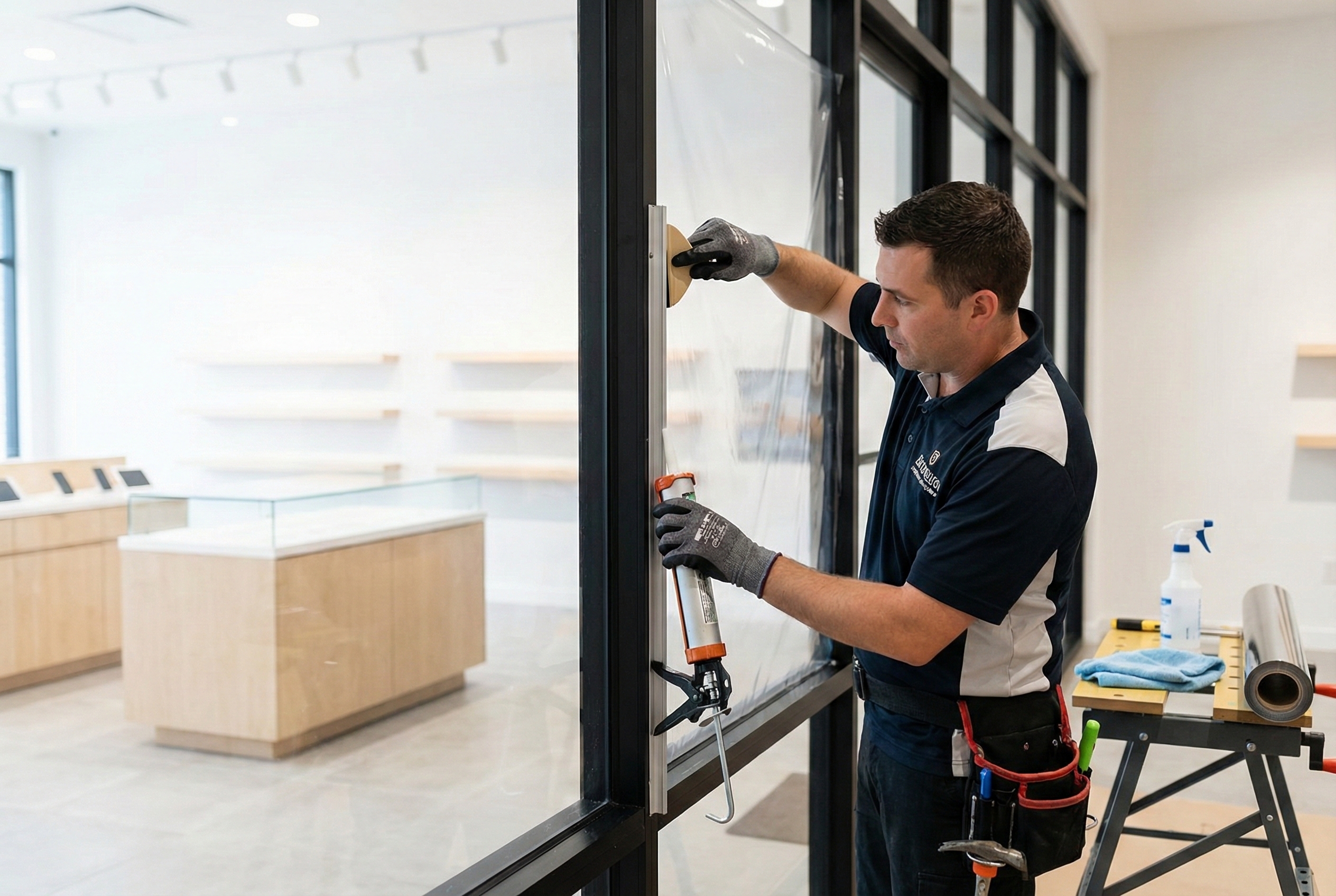
Security film thickness is only part of the equation. How the film is installed has a major impact on how well it performs during a break-in attempt.
Even the thickest security film can fail if it is not properly installed. Professional installation ensures the film bonds correctly to the glass and performs as designed.
During impact, security film relies on strong adhesion to hold shattered glass together. If the film is poorly installed, it may peel away from the glass when struck.
Professional installers follow specific procedures to prepare the glass, apply the film evenly, and eliminate weak points. This improves durability and resistance during repeated strikes.
Proper installation also helps the film stretch correctly under pressure, which is critical for delaying forced entry.
Edge attachment systems secure the film to the window frame. Without proper attachment, the entire glass pane can push out of the frame during impact.
These systems improve performance by keeping the glass and film anchored in place. This increases delay time and reduces the chance of creating an opening.
For storefront protection, attachment systems often make the difference between basic resistance and true security performance.
When choosing security film thickness, cost is often a deciding factor. Thicker film usually costs more, but the added protection can justify the investment for many storefronts.
The key is understanding what you are paying for. Thicker security film provides longer resistance times, improved glass retention, and better performance during aggressive break-in attempts.
4 mil security film is the most affordable option. It offers basic safety benefits but limited security performance.
8 mil film costs more, but it delivers a noticeable increase in protection. For most retail storefronts, this thickness provides strong value and reliable performance.
12 mil and thicker films are priced higher due to added material and strength. These options are designed for high-risk locations and businesses with valuable inventory.
Security film can reduce damage during break-ins and accidental impacts. This may lower repair costs and downtime after an incident.
By holding glass together, thicker film also reduces injury risks. This can help limit liability exposure for business owners.
When viewed over time, thicker security film often delivers strong return on investment by preventing losses and reducing repeated glass replacement.
Choosing the right security film thickness becomes easier when you match it to your storefront’s specific situation. This quick guide helps simplify the decision.
For low-risk storefronts, such as offices or retail locations in quiet areas, 8 mil security film is often sufficient. It provides strong glass retention and basic break-in resistance without added cost.
For medium-risk storefronts, including busy shopping areas or locations with occasional vandalism, 8 mil film with proper installation is a reliable choice. It balances protection and affordability.
High-risk storefronts benefit from thicker protection. Businesses in high-crime areas or those with high-value inventory should consider 12 mil or thicker security film. The added resistance increases delay time and deterrence.
Glass doors and ground-level windows are the most vulnerable areas. Using thicker film on these locations strengthens the weakest points of the storefront.
This guide provides a general starting point. A professional assessment can help confirm the best thickness for your specific needs.
Check out the security window film FAQs for answers to common questions about thickness, installation, and performance
Choosing the right security film thickness is one of the most important decisions you can make for storefront protection. The goal is not to make glass unbreakable, but to slow forced entry and reduce damage.
For most storefronts, 8 mil security window film offers the best balance of protection and cost. It provides strong resistance against smash-and-grab attempts and holds broken glass together effectively.
Storefronts in higher-risk areas or those with valuable merchandise often benefit from 12 mil or thicker film. The added strength increases delay time and improves overall security performance.
Thinner films may help with safety, but they usually fall short for true break-in protection. Thickness should always be paired with professional installation and proper attachment systems for best results.
Every storefront is different. Location, glass type, and exposure all play a role in choosing the right solution.
For expert guidance and professional installation, contact American Window Film to protect your storefront with the right security film thickness and performance system.
No Comments Yet
Let us know what you think