

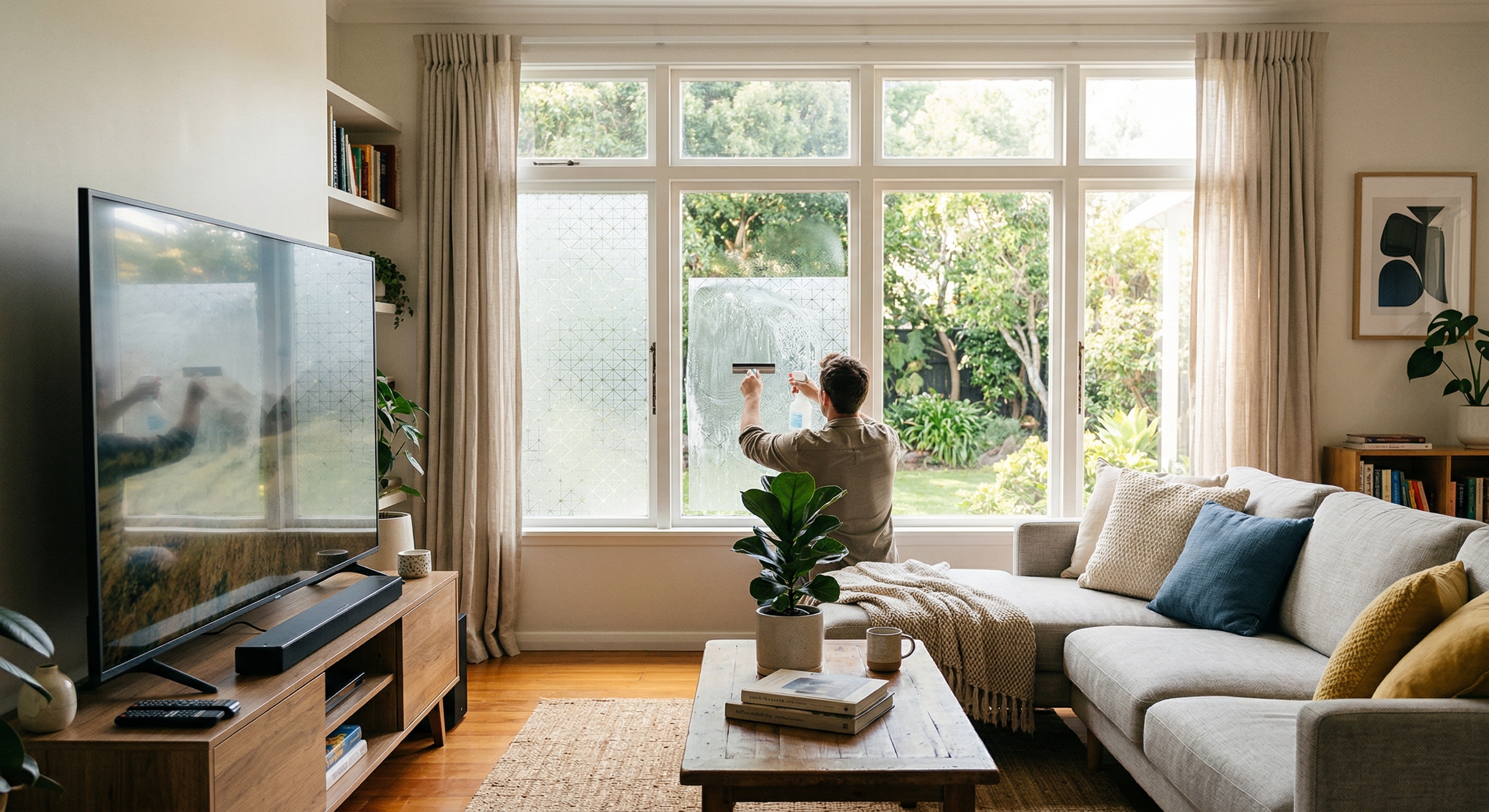
Watching TV during the day can be frustrating when sunlight hits your screen just right or wrong. That annoying reflection washes out your picture, strains your eyes, and makes your favorite shows harder to enjoy.
While repositioning your TV or closing blinds helps a little, these solutions often fall short.
Window films offer a simple, effective fix. Applied directly to your windows, they reduce glare, control reflections, and let you keep natural light flowing through your space.
They come in different types, from reflective and tinted films to UV-blocking options, giving you flexibility based on your room and TV setup.
In this guide, we’ll explore why glare happens, how window films solve the problem, and what to look for when choosing, installing, and maintaining the perfect film for your home.
Say goodbye to daytime glare and hello to a better viewing experience.
Sunlight hitting your TV screen during the day can make watching almost impossible. Glare washes out colors, reduces contrast, and can strain your eyes.
Many people think closing blinds or moving the TV is enough. Sunlight often finds its way onto your screen regardless of furniture placement or curtains.
Glare comes from bright light sources reflecting off the screen. Windows, shiny surfaces, and even light-colored walls can bounce sunlight directly onto your TV.
This reflection makes the picture look faded or washed out. Over time, constant glare can also lead to eye fatigue and headaches.
Curtains and blinds block some sunlight but often do not eliminate reflections completely.
Moving the TV might help slightly, but it can be impractical in smaller rooms or when windows are large. The real solution needs to address the light before it hits your screen.
This is where window films come in.
Window films are thin layers applied directly to glass surfaces. They are designed to control how light enters a room.
By reducing glare before it reaches your TV, films make daytime viewing more comfortable. They work silently in the background without altering your furniture or décor.
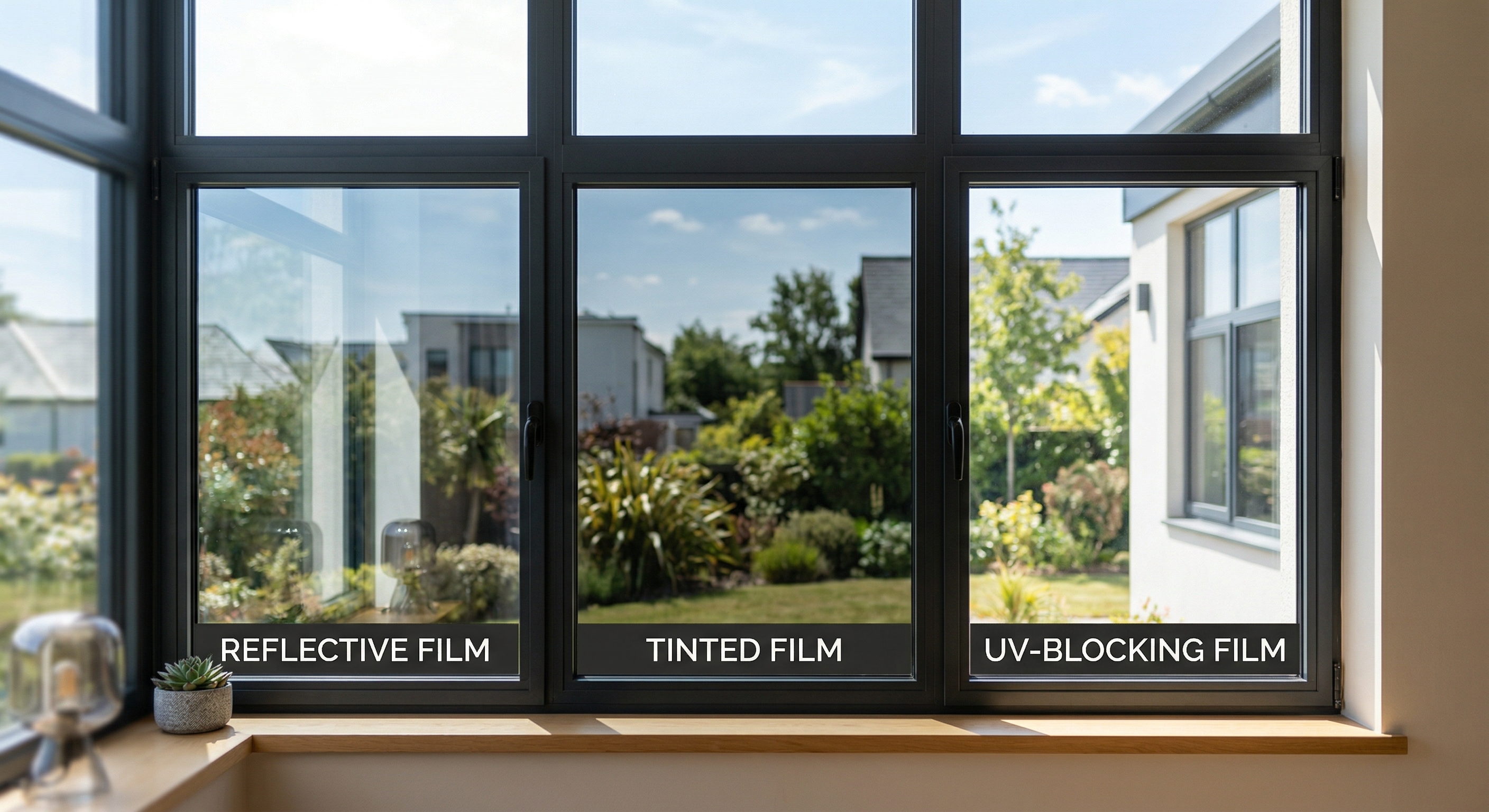
Reflective Films reduce the amount of sunlight bouncing off the screen. They act like a mirror from the outside while maintaining visibility inside.
Tinted Films darken incoming light. This lowers brightness without completely blocking natural daylight.
UV-Blocking Films filter harmful ultraviolet rays. They help protect your eyes, skin, and even furniture from sun damage.
Each type has unique benefits, and many homeowners combine films for the best results. The choice depends on your room’s light exposure and personal preferences.
Read More: Types of window film available for residential use.
Window films reduce glare without darkening your entire room. You can keep your windows open to enjoy natural light while still watching TV comfortably.
They also protect furniture and flooring from fading caused by UV rays. This makes them a practical investment for your home beyond just screen visibility.
Energy efficiency is another advantage. Films can lower room temperature by blocking heat from sunlight, reducing the need for constant air conditioning.
Applying window films improves overall viewing comfort. Colors look richer, contrast improves, and your eyes experience less strain.
Many people notice an immediate difference after installation. Glare that once made screens nearly unreadable is now minimal, letting you enjoy TV any time of the day.
Read More: Best window films to block heat, reduce glare, and protect your home
Not all window films are the same. Choosing the right one ensures maximum glare reduction and comfort.
You should consider your room’s orientation and how much sunlight enters. This affects the type of film that will work best.
Other factors include the size of your windows and the placement of your TV. Large windows may require stronger reflective or tinted films.
Room orientation is important. South- or west-facing windows get the most direct sunlight.
TV placement matters too. A screen opposite a window may need a higher-opacity film.
Film opacity and light transmission rates are key. Higher opacity blocks more light but may darken the room.
Consider your priorities: do you want to preserve natural light or maximize glare reduction? Balance is often the best choice.
Professional installation guarantees a smooth, bubble-free finish. Experts can also advise on the best film type for your room.
DIY installation can save money. Many films come with clear instructions and are manageable with patience.
However, improper installation may reduce effectiveness. Mistakes like dust or trapped air can create bubbles and reduce glare control.
By weighing room conditions, sunlight exposure, and installation options, you can select the right window film. This ensures that your TV glare problem is solved without compromising room aesthetics.
Read More: Window film solutions & tinting options
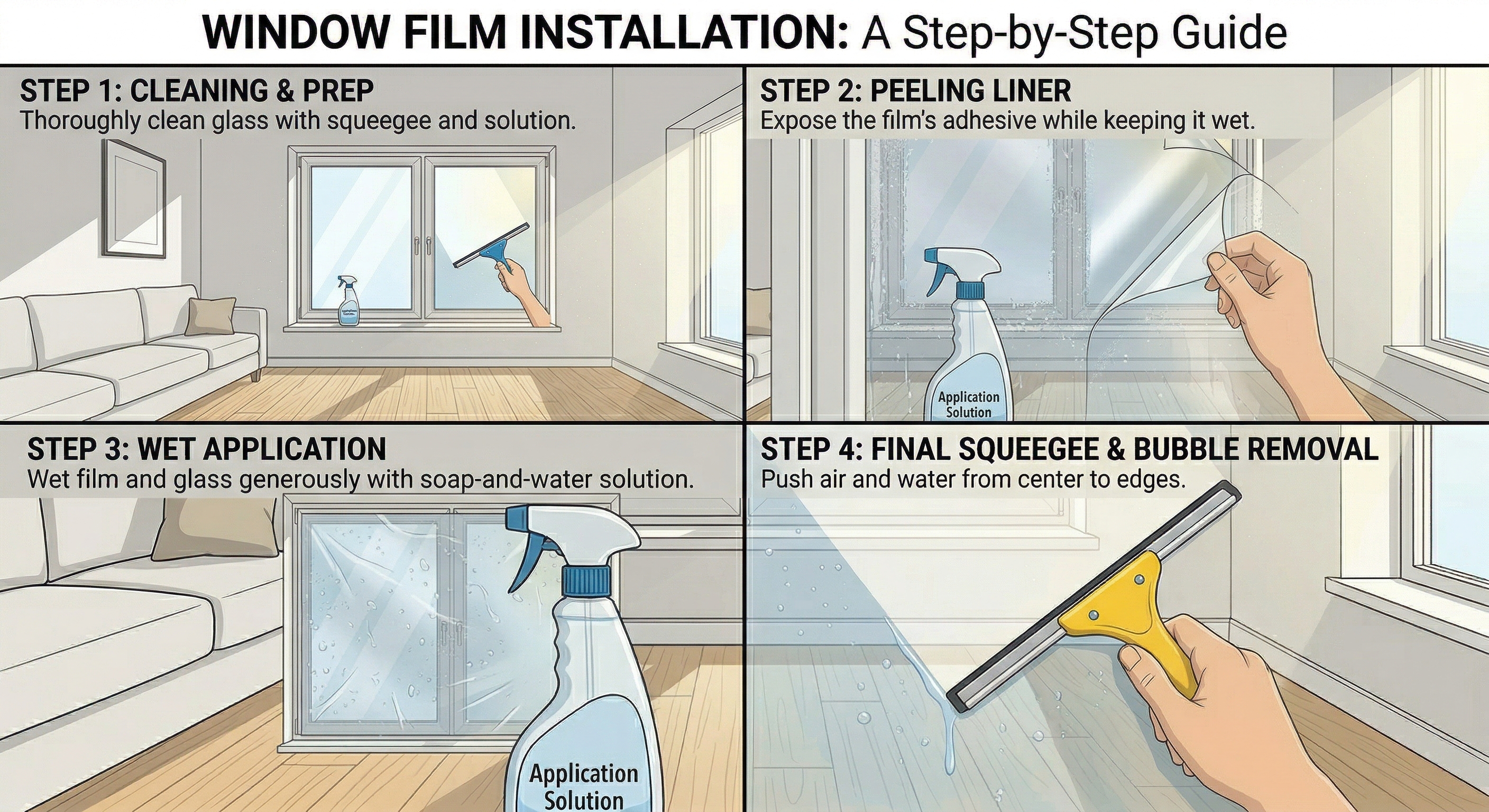
Installing your window film correctly ensures the best glare reduction. Poor installation can create bubbles and reduce effectiveness.
Regular maintenance keeps the film working well for years. Dirt, dust, or scratches can affect its performance.
Start by cleaning your windows thoroughly. Remove all dirt, dust, and grease for a smooth surface.
Measure your window carefully. Cut the film slightly larger than the glass to allow adjustments.
Peel off the protective backing slowly. Avoid letting the adhesive touch itself or fold over.
Spray a mixture of water and a few drops of soap on the glass. This allows you to reposition the film before it sticks permanently.
Place the film on the wet glass surface. Smooth it from the center outwards using a squeegee.
Remove any air bubbles by gently pressing them toward the edges. Small bubbles usually disappear over a few days.
Trim the excess film along the edges. Use a sharp utility knife for a clean finish.
Clean the film with a soft cloth or sponge. Avoid abrasive materials that could scratch the surface.
Use mild soapy water for cleaning. Harsh chemicals can damage the adhesive or film coating.
Check your film periodically for peeling or bubbles. Promptly address any issues to maintain glare reduction.
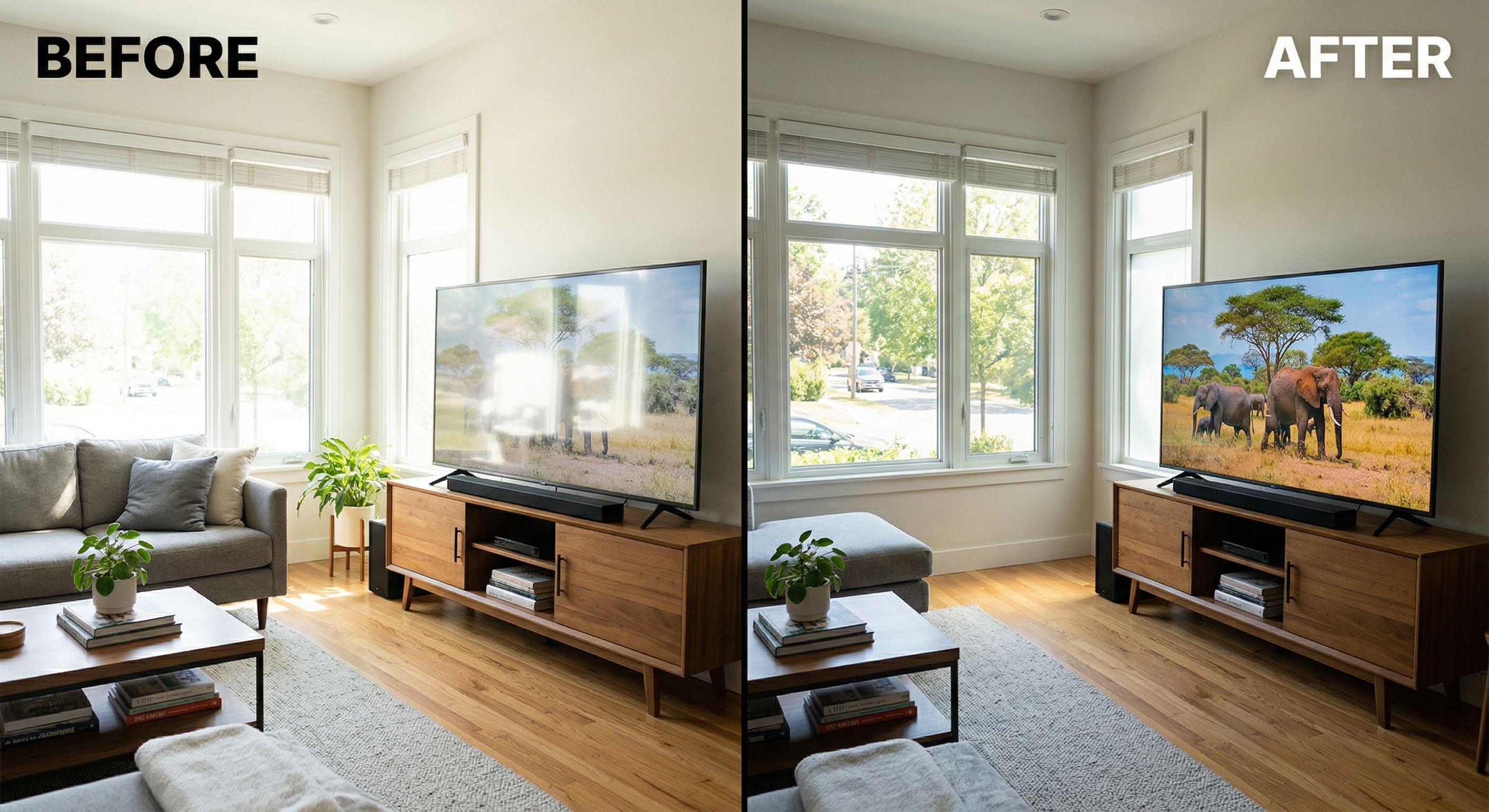
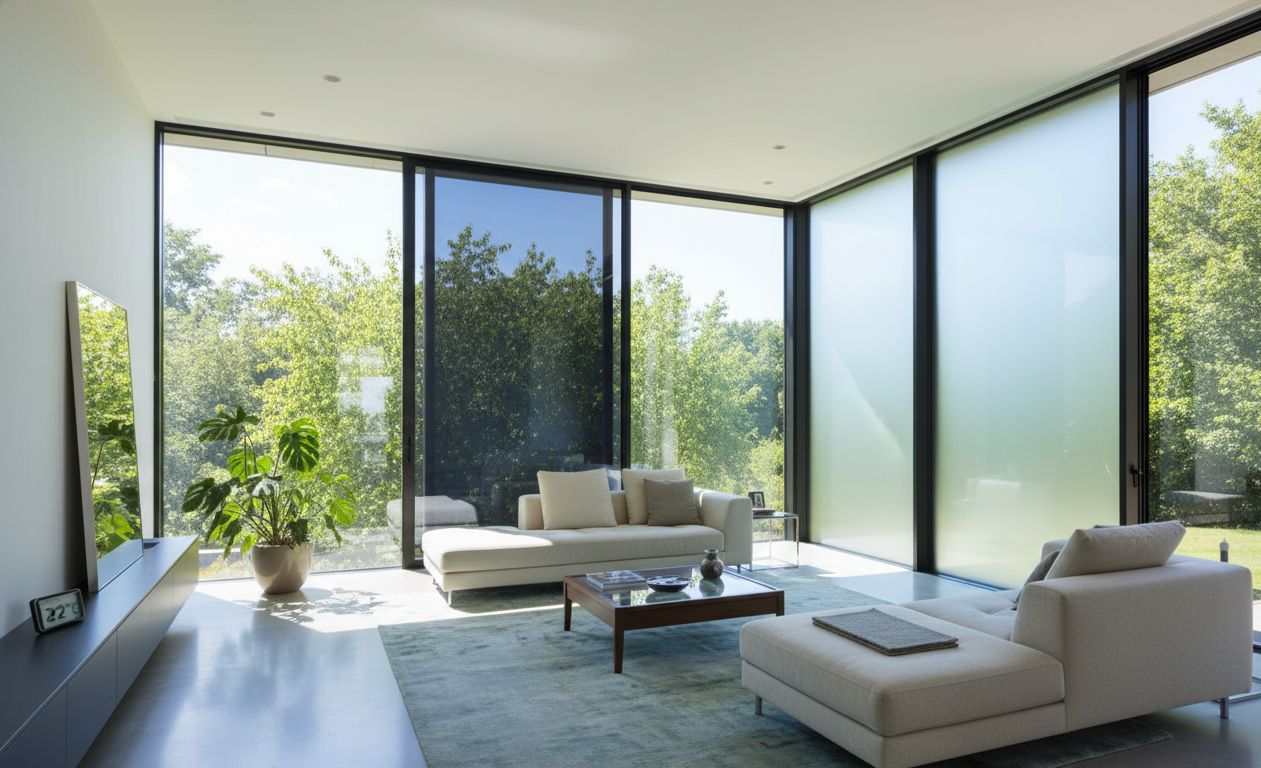
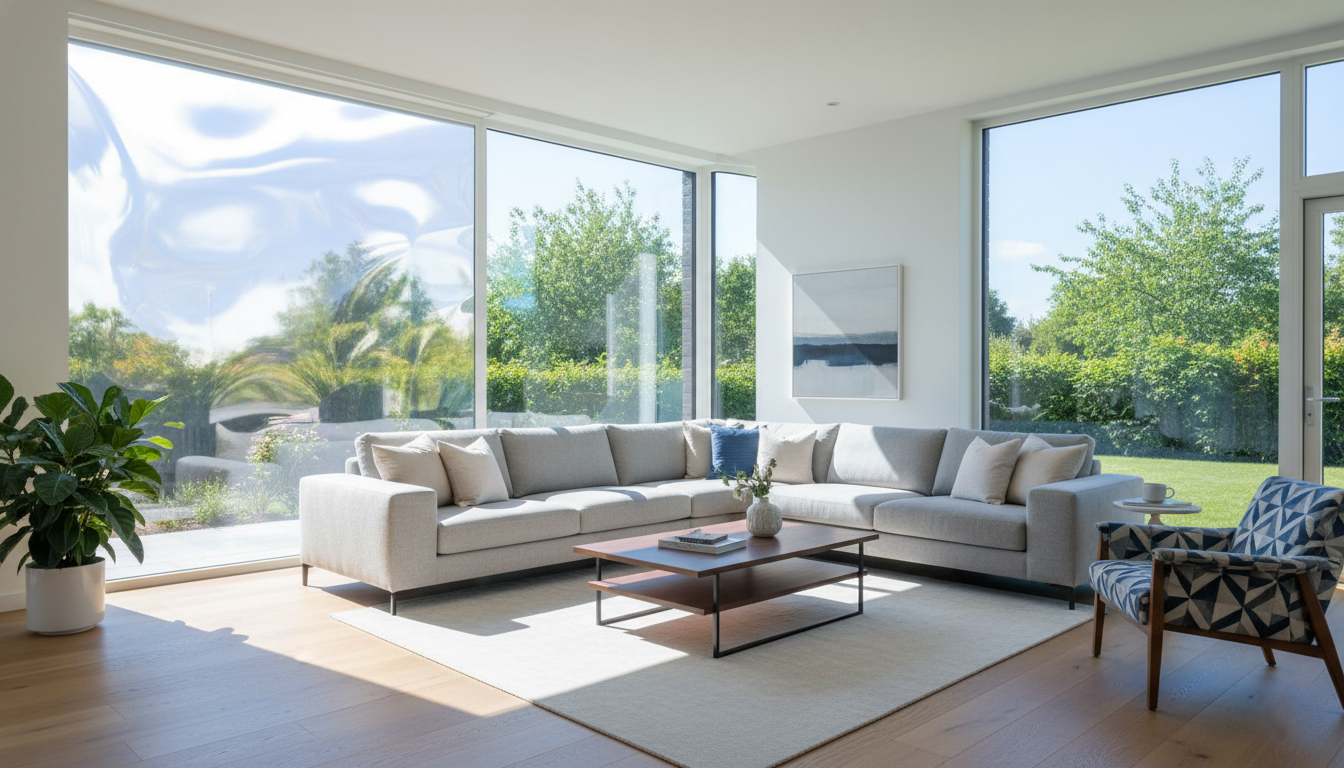
A living room with large windows often has noticeable glare in the afternoon.
After applying window film, the glare is dramatically reduced. Colors appear richer, and TV details are easier to see.
Many homeowners notice a more comfortable viewing experience immediately. The difference is especially clear in rooms with direct sunlight.
Many homeowners try curtains or blinds to reduce TV glare. These methods can block sunlight but often do not completely remove reflections.
Window films work directly on the glass. They control light before it hits your screen, making them more effective than temporary fixes.
Films maintain natural light in your room. Unlike heavy curtains, they let sunlight in while reducing glare.
They also protect your furniture and flooring from UV damage. This adds an extra layer of value beyond just TV viewing comfort.
Blinds and shades can leave gaps where light still enters. Repositioning your TV may not be feasible in smaller spaces or with fixed furniture.
Anti-glare TV screens exist but are often expensive. They also do not protect your home or reduce overall room brightness.
Window films provide consistent glare reduction across all daylight hours. They are a low-maintenance, long-lasting solution that works with any room layout.
Many homeowners find that combining films with minimal blinds or shades gives the best results. This ensures maximum comfort without sacrificing light or style.
Many homeowners have questions before choosing a window film. This section answers the most common concerns.
Yes, DIY installation is possible. Most films come with detailed instructions and are manageable with patience.
However, careful preparation is key. Cleaning the window and applying the film without dust or bubbles is essential.
Films reduce glare without significantly darkening the room. You can enjoy natural light while watching TV comfortably.
Selecting the right opacity ensures your space remains bright. Higher opacity blocks more light but may slightly reduce room brightness.
Quality films can last 10–15 years with proper care. Longevity depends on exposure to sunlight and maintenance.
Inspect your film regularly for peeling or bubbles. Promptly addressing minor issues keeps it effective.
Yes, films come in varying levels of tint and reflection. South- and west-facing rooms may benefit from stronger reflective or UV-blocking films.
Choosing the right type for your room ensures maximum glare reduction and comfort.
Window films offer a simple and effective solution for daytime TV glare. They reduce reflections, protect your furniture from UV damage, and maintain natural light in your home.
Choosing the right film ensures that your living space stays bright and comfortable. Reflective, tinted, or UV-blocking options allow you to customize glare reduction based on your room’s sunlight exposure.
Proper installation and care maximize the film’s effectiveness. Even DIY installations can produce excellent results if done carefully.
Compared to blinds, curtains, or anti-glare screens, window films provide consistent performance throughout the day. They are low-maintenance, durable, and cost-effective over the long term.
If you want to enjoy TV without glare during the day, window films are the ideal solution.
Contact American Window Film to find the perfect window film solution for your home.

No Comments Yet
Let us know what you think