

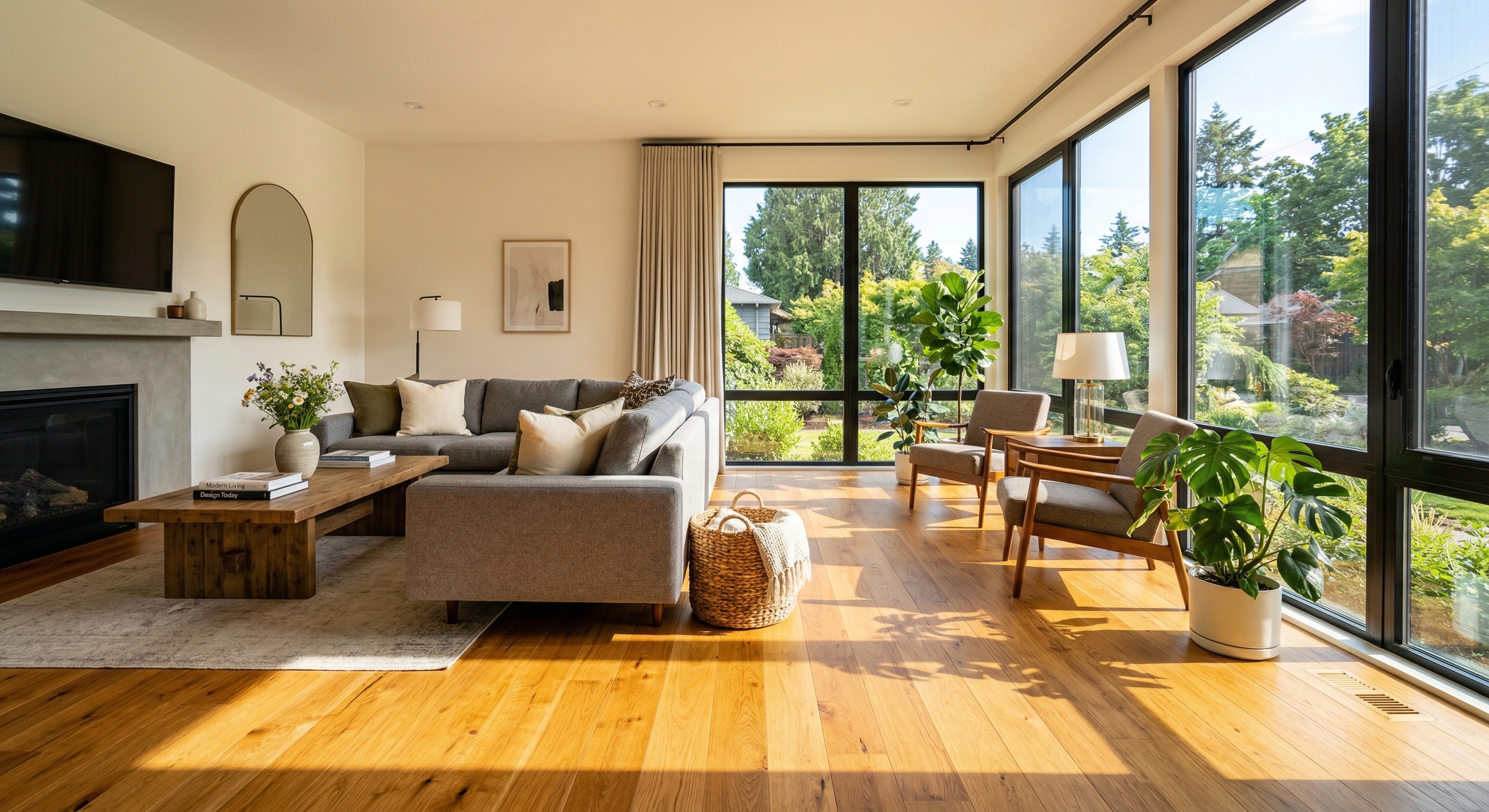
Sunlight can transform the look of hardwood floors over time, leaving them faded, discolored, or uneven. While natural light makes a space feel bright and welcoming, the UV rays and heat that come through windows are the hidden culprits behind long-term wood damage. Many homeowners notice their floors losing color even with regular cleaning and maintenance, which can be frustrating.
Window films offer a simple and effective solution. These thin layers applied to windows block the majority of UV rays and reduce heat, while still allowing natural light to illuminate a room. By filtering harmful sunlight at the source, window films protect wood pigments and finishes, slowing down fading and discoloration.
In this article, we’ll explore how sunlight damages hardwood, how different types of window films work, and the practical steps you can take to safeguard your floors for years to come.
Sunlight is a beautiful natural light source, but it can also be damaging to hardwood floors. Over time, prolonged exposure can change the color, dull the finish, and create uneven patches.
Ultraviolet (UV) rays are the main factor behind fading. They penetrate the finish and break down natural pigments in the wood, altering its color.
UV light also weakens protective coatings, making floors more susceptible to scratches and wear. Even floors that are regularly maintained can slowly lose their original vibrancy.
Visible sunlight and infrared heat also affect wood, though less aggressively than UV. Heat from sunlight causes the wood to expand and contract slightly, which can change the appearance of the finish over time.
Prolonged exposure to bright light accelerates these changes, creating areas that appear lighter or darker than the rest of the floor.
Different wood species react differently to sunlight. Lighter woods often darken, while darker woods may lighten or yellow.
The finish type can further influence these changes, as some coatings oxidize or fade under continuous sunlight. Understanding these effects helps homeowners take action before permanent discoloration occurs.
By recognizing how sunlight affects wood, readers can better appreciate the importance of protective measures. The next section will explain how window films act as a powerful solution to prevent fading and protect hardwood floors.
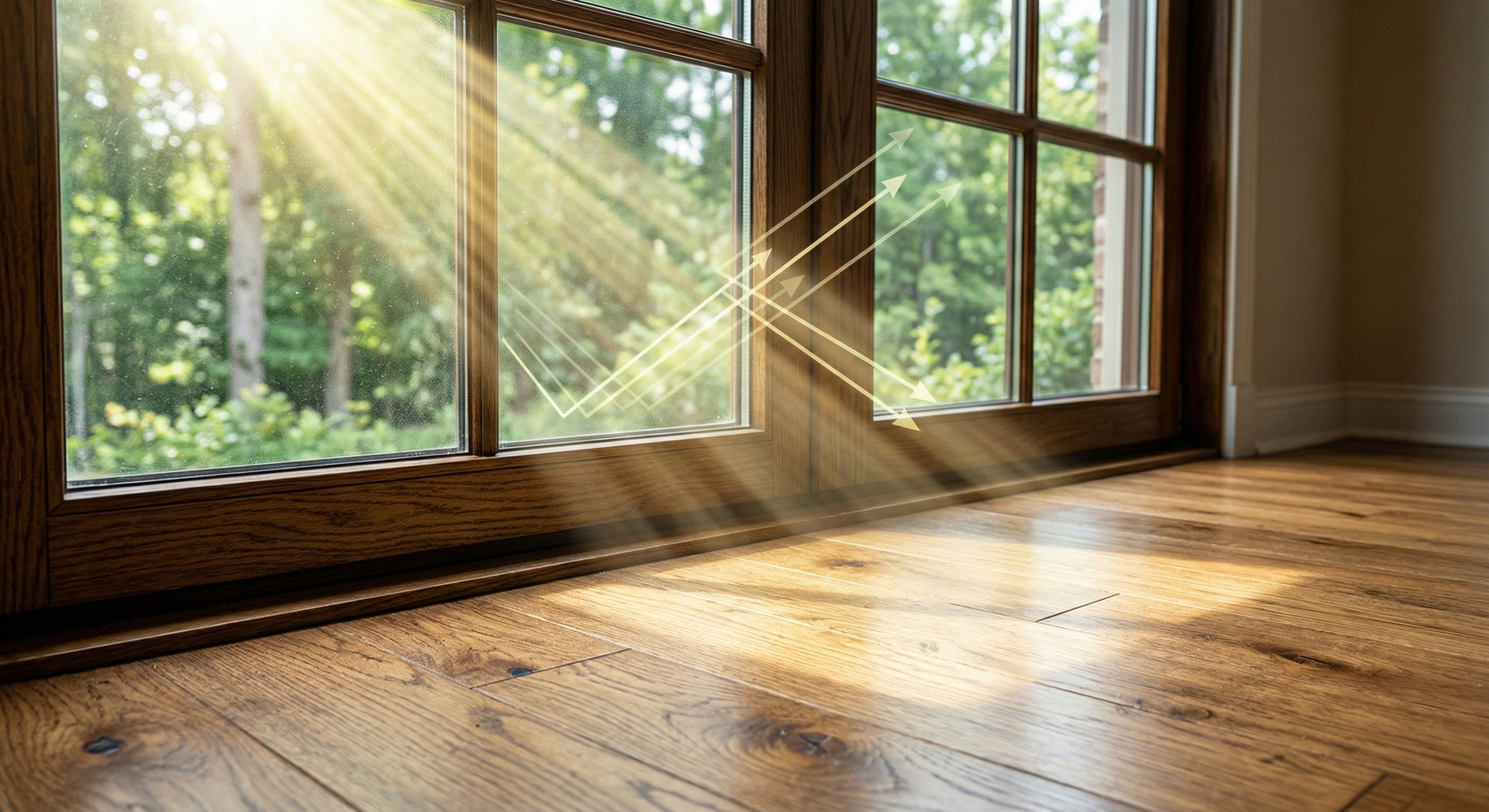
Window films provide a simple and effective way to protect hardwood floors from sunlight damage. They act as a barrier at the window, preventing harmful rays and heat from reaching the wood.
The primary way window films protect floors is by blocking ultraviolet (UV) light. UV rays break down wood pigments and finishes, which leads to fading.
By filtering out the majority of these rays, window films reduce pigment degradation and slow the color change of hardwood over time. This protection is continuous, unlike blinds or curtains that may only block sunlight part of the day.
Window films also reduce heat transfer from sunlight. Infrared light warms the wood surface, which can accelerate chemical changes and fading.
Films that reduce heat keep the floor cooler, minimizing expansion and contraction and helping maintain the integrity of the finish. This creates a more stable environment for the wood and prolongs its lifespan.
Unlike opaque blinds or heavy curtains, window films allow natural light to pass through while still protecting the floor. Rooms stay bright and inviting without exposing wood to harmful rays.
This balance preserves the aesthetic of your home while providing constant protection. Light filtering films can also reduce glare, which adds comfort to the room and prevents hotspots on the floor.
By combining UV filtering, heat reduction, and glare control, window films offer a practical solution that protects hardwood floors from fading. Homeowners can enjoy sunlight and natural light without sacrificing the appearance or longevity of their floors.
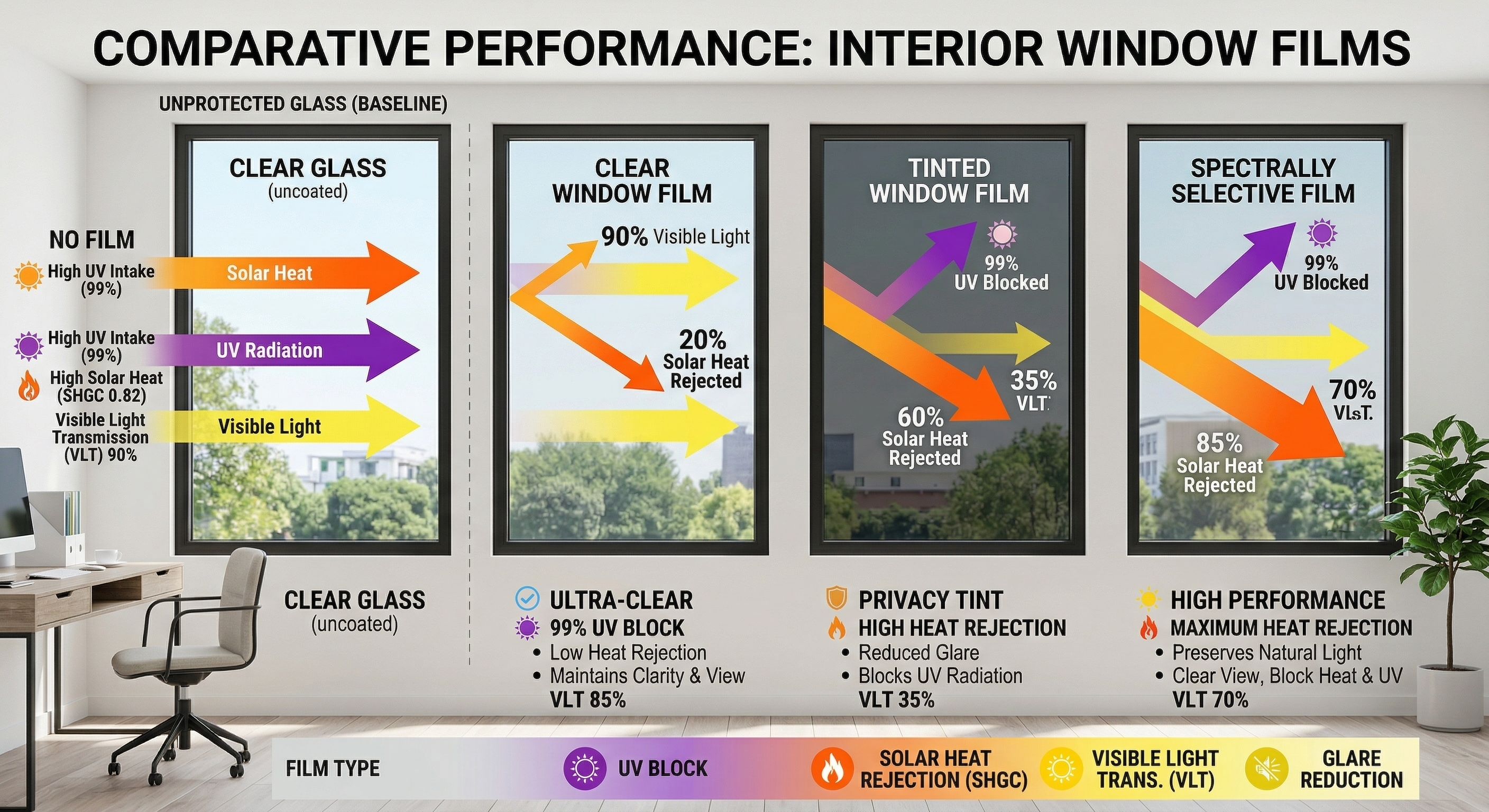
Not all window films are created equal. Different films offer varying levels of UV protection, heat reduction, and light transmission, which affects how well they protect hardwood floors.
Clear UV-blocking films are designed to filter out harmful ultraviolet rays without changing the appearance of the window.
They are ideal for homeowners who want to maintain natural light while ensuring maximum floor protection. These films reduce pigment breakdown in hardwood and prevent discoloration over time.
Tinted films reduce visible light and glare, which also protects floors from fading. Spectrally selective films block specific wavelengths, such as UV and infrared, while allowing natural light to pass through.
These options provide both energy efficiency and enhanced protection, making them suitable for rooms with strong sun exposure or large south-facing windows.
Window films vary in durability depending on materials and thickness. Higher-quality films maintain their UV-blocking capabilities for years and resist peeling, bubbling, or discoloration themselves.
Choosing the right type of film depends on room orientation, sunlight intensity, and personal preferences for light and aesthetics. Professional installation ensures maximum effectiveness and longevity of protection.
By understanding the differences between clear, tinted, and spectrally selective films, homeowners can select the best solution for their hardwood floors. Properly chosen window film provides long-term protection, keeps the floors looking vibrant, and reduces the need for refinishing due to sun damage.
Explore a guide to choosing the best window film for your specific needs and exposure.
Window films offer homeowners a range of advantages beyond simple UV protection. They provide continuous defense against sunlight, reduce maintenance needs, and can improve energy efficiency in your home.
Unlike blinds or curtains that only block sunlight when closed, window films provide protection throughout the day. Floors are shielded from UV rays and heat regardless of whether curtains are drawn.
This constant barrier helps hardwood floors maintain their color and finish over time, even in rooms with strong sun exposure.
Window films require very little upkeep. Once installed, they do not need daily adjustments, and cleaning can be done with a soft cloth and mild cleaning solution.
This low-maintenance approach reduces the need for frequent refinishing of the floors, saving both time and money.
Installing window film is often more affordable than alternatives such as replacing windows with UV-protected glass or applying frequent floor coatings.
Over time, the energy savings and reduced floor maintenance costs make window films a cost-effective investment that protects your hardwood and extends its lifespan.
When compared with other methods like window shades, curtains, or refinishing floors, window films provide both protective and financial benefits. Initial installation costs are offset by the prevention of fading and damage.
For homes with large windows or high sun exposure, the return on investment can be seen in fewer refinishing cycles and prolonged floor aesthetics.
Window films allow homeowners to enjoy natural light without worrying about long-term damage. The combination of constant UV protection, reduced heat exposure, and low maintenance makes window films a practical and effective solution to prevent hardwood floor fading.
Proper installation and care of window films are essential to ensure maximum protection for hardwood floors. Knowing how to install and maintain films can extend their effectiveness and lifespan.
Professional installation guarantees that window films are applied evenly without bubbles or wrinkles. Experts ensure proper alignment and edge sealing, which maximizes UV protection and longevity.
DIY installation kits are available, but they require patience and precision. Mistakes during installation can reduce effectiveness and may require reapplication.
Window films are low-maintenance once installed. Regular cleaning with a soft, non-abrasive cloth and mild soap solution helps maintain clarity and performance.
Avoid harsh chemicals or abrasive tools, which can damage the film and reduce its UV-blocking ability. Maintaining the film properly ensures that hardwood floors continue to receive protection over time.
To maximize UV protection, keep furniture or window coverings from interfering with the film. Ensure that adjacent windows or doors are treated similarly if they receive direct sunlight.
Monitor the condition of the film periodically for signs of peeling or discoloration. Prompt attention to minor issues preserves the protective barrier and maintains floor integrity.
The amount of sunlight varies depending on room orientation and climate. South-facing rooms generally receive more intense light, requiring films with stronger UV and heat-blocking properties.
North-facing or shaded rooms may need lighter films but can still benefit from UV protection. Selecting the right film based on exposure ensures balanced protection across your home.
By following these installation and maintenance tips, homeowners can maximize the benefits of window films. Proper care not only preserves hardwood floors but also ensures a long-lasting investment in home protection and comfort.
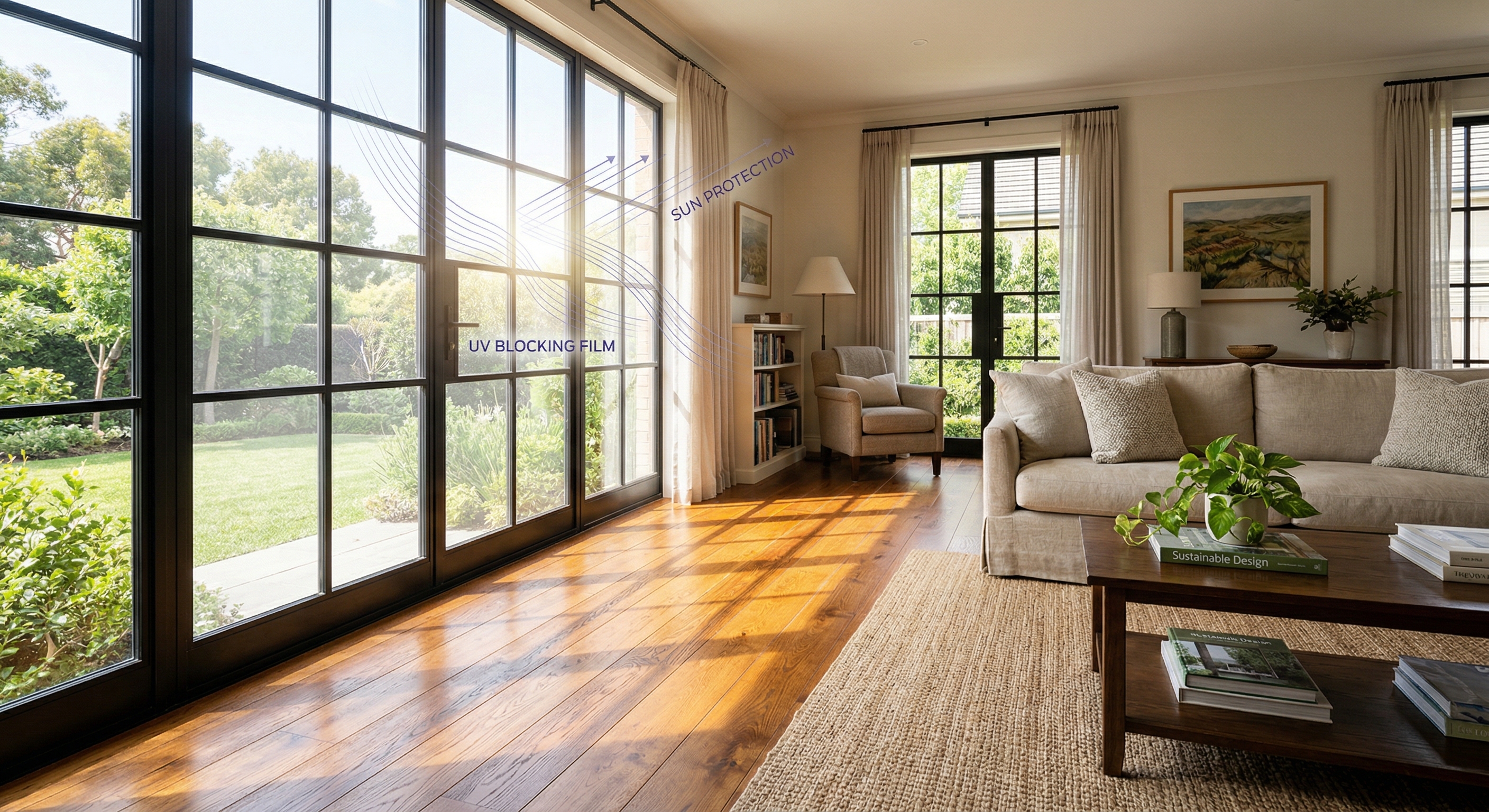
Seeing real-life applications of window films can help homeowners understand their effectiveness. These examples show how different spaces have successfully protected hardwood floors from sunlight.
A home with large south-facing windows installed clear UV-blocking window films. After one year, the owners noticed that the floors no longer showed uneven discoloration, even in areas that previously faded rapidly.
The film allowed natural light to enter while shielding the wood from damaging rays. Furniture placement did not need frequent rotation, and the floors retained their original color.
In a commercial office, windows facing east and west were treated with spectrally selective films. These films reduced glare and minimized heat exposure on wooden flooring.
Employees reported increased comfort near windows, and the office manager observed that floor refinishing was required less frequently than in similar untreated spaces. The protective films helped maintain the office’s polished appearance over several years.
Across both residential and commercial scenarios, window films provided continuous protection without obstructing natural light. The cases demonstrate that proper installation and choosing the right film type are crucial for maximum effectiveness.
Regular monitoring and maintenance ensured the films remained functional and continued to shield hardwood from fading. These real-world examples highlight the value of investing in window films as a preventive solution rather than relying solely on curtains, blinds, or periodic refinishing.
Implementing window films can be an effective long-term strategy for homeowners and businesses alike. By addressing UV and heat exposure at the source, floors remain vibrant, and the need for costly restoration is minimized.
This section addresses common concerns homeowners have about using window films to protect hardwood floors.
Window films significantly reduce UV exposure, which is the main cause of fading, but they cannot eliminate all color changes. Floors may still experience minor changes over many years.
High-quality window films typically last 10 to 15 years. Proper installation and regular cleaning help maintain their effectiveness over this period.
Window films allow natural light to pass through while filtering harmful rays. Some films slightly tint the light, but the overall brightness and view are generally preserved.
No, films differ in UV-blocking capability, heat reduction, and durability. Choosing the right type for your windows and sun exposure ensures maximum protection for hardwood floors.
By understanding these FAQs, homeowners can make informed decisions and get the most benefit from window films while maintaining bright, sunlit spaces.
Window films offer a practical and effective way to protect hardwood floors from sunlight damage. By blocking UV rays and reducing heat exposure, they slow down fading and preserve the natural color of the wood.
Unlike blinds or curtains, window films provide continuous protection throughout the day without interfering with natural light. They are low-maintenance and, when properly installed, can last for many years.
Choosing the right type of film for your home’s sun exposure and room orientation ensures maximum protection. Professional installation and routine care help maintain the film’s effectiveness over time.
For homeowners looking to safeguard their investment, window films are a cost-effective solution that protects floors, reduces the need for refinishing, and keeps interiors vibrant.
Contact American Window Film today to explore UV-blocking solutions for your hardwood floors.
No Comments Yet
Let us know what you think