

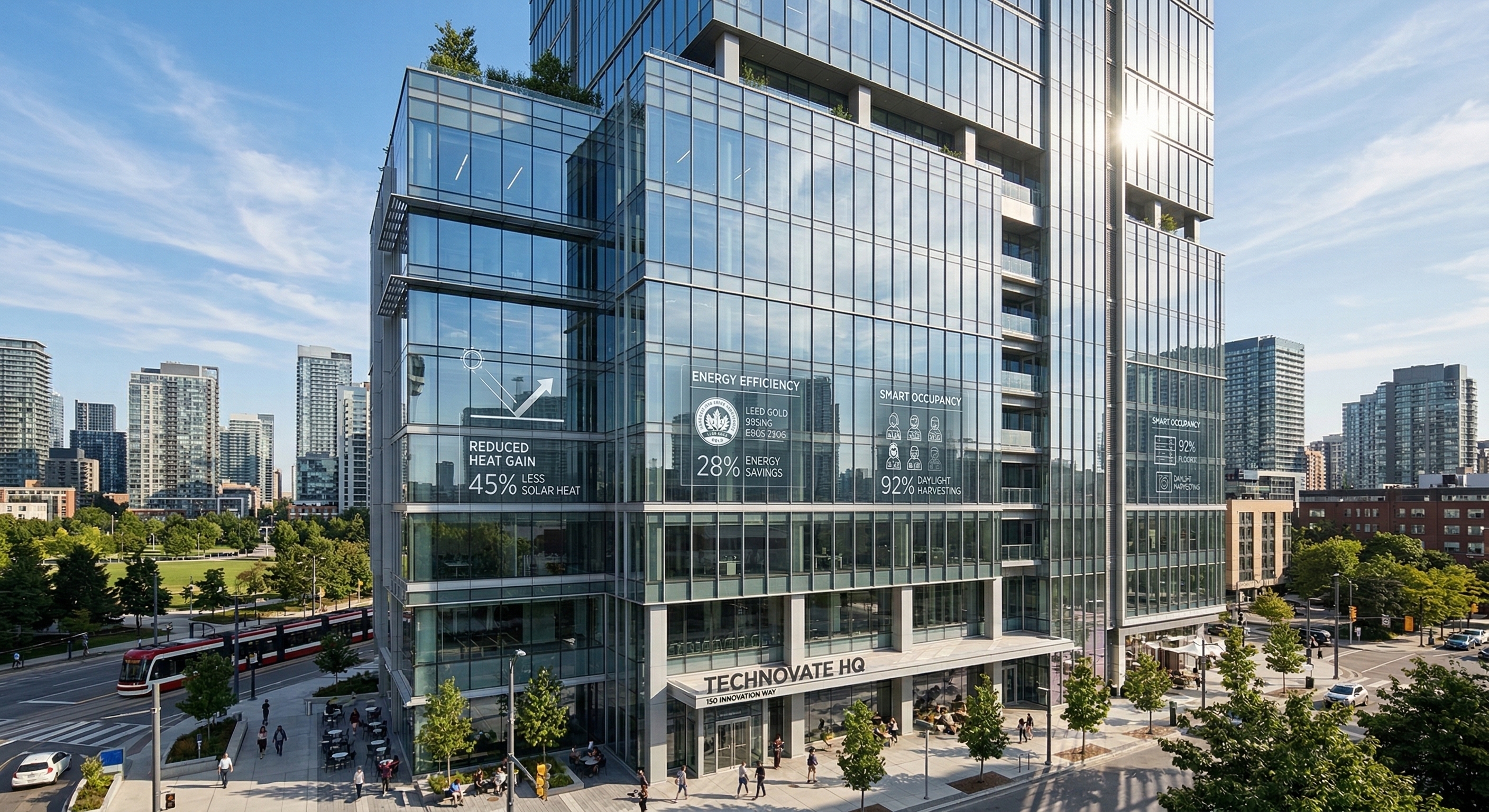
Commercial window film is a simple yet powerful solution for businesses looking to improve comfort, protect interiors, and save on energy costs.
From reducing heat and glare to enhancing privacy and safety, window films offer multiple advantages for offices, retail spaces, and other commercial buildings.
Commercial window film is a thin, durable layer applied directly to glass surfaces in offices, retail spaces, schools, and other commercial buildings. Its main purpose is to improve the performance of existing windows without the cost or disruption of full replacements.
These films come in various types, including solar-control, UV-blocking, insulating, and decorative options. They work by filtering sunlight, reducing heat, and enhancing privacy, while still allowing natural light to enter the space.
Businesses choose window film for its combination of cost-effectiveness, energy savings, and functional benefits. It can immediately reduce cooling costs, protect furnishings from sun damage, and create a more comfortable environment for employees and customers.
Whether your priority is lowering energy bills, improving indoor comfort, or enhancing security and aesthetics, commercial window film offers a flexible solution that adapts to the needs of any commercial building.
Commercial window film is designed to enhance the performance of existing glass by controlling heat, light, and UV exposure.
It works by adding a thin, invisible layer to the window that either reflects, absorbs, or filters sunlight, depending on the type of film. This reduces the amount of heat entering a building, lowering the workload on HVAC systems and improving indoor comfort.
The main types of commercial window films include solar-control, thermal/insulating, and decorative/privacy films.
Solar-control films reflect or absorb infrared light to reduce solar heat gain, keeping interiors cooler during hot months.
Thermal or insulating films provide an extra layer of insulation, which helps retain heat in winter and reduce heat in summer.
Decorative and privacy films can add patterns, branding, or frosted effects while still allowing natural light.
Understanding how window films work helps businesses choose the right solution for energy savings, comfort, and interior protection.
One of the most significant benefits of commercial window film is its impact on energy efficiency and operating costs. By reducing solar heat gain, window films allow air conditioning systems to work less, which can lead to noticeable savings on electricity bills.
Buildings with large glass facades, especially those facing south or west, often experience high cooling costs during summer months. Installing window film can reduce this load by 10–30%, depending on the type and quality of the film.
Beyond cooling, some films provide insulation benefits in winter. Thermal or low-emissivity films help retain heat indoors, reducing heating costs and contributing to year-round energy savings.
Over time, these improvements can offer a strong return on investment, making window films a cost-effective upgrade for commercial properties.
Window films reduce the amount of infrared and solar heat entering a building. For example, a mid-sized office that installs solar-control films can experience a drop in indoor temperatures near windows by several degrees, which eases the strain on air conditioning units.
This translates to lower energy consumption and extended equipment life, as HVAC systems do not need to run as frequently.
Energy savings from window films accumulate over months and years. Businesses often see monthly reductions in cooling costs, which add up to significant annual savings.
Combining window films with other strategies, such as blinds or smart HVAC controls, amplifies the effect. Real-world examples show that the initial investment in quality window film often pays for itself within 18–24 months, depending on building size, orientation, and climate.
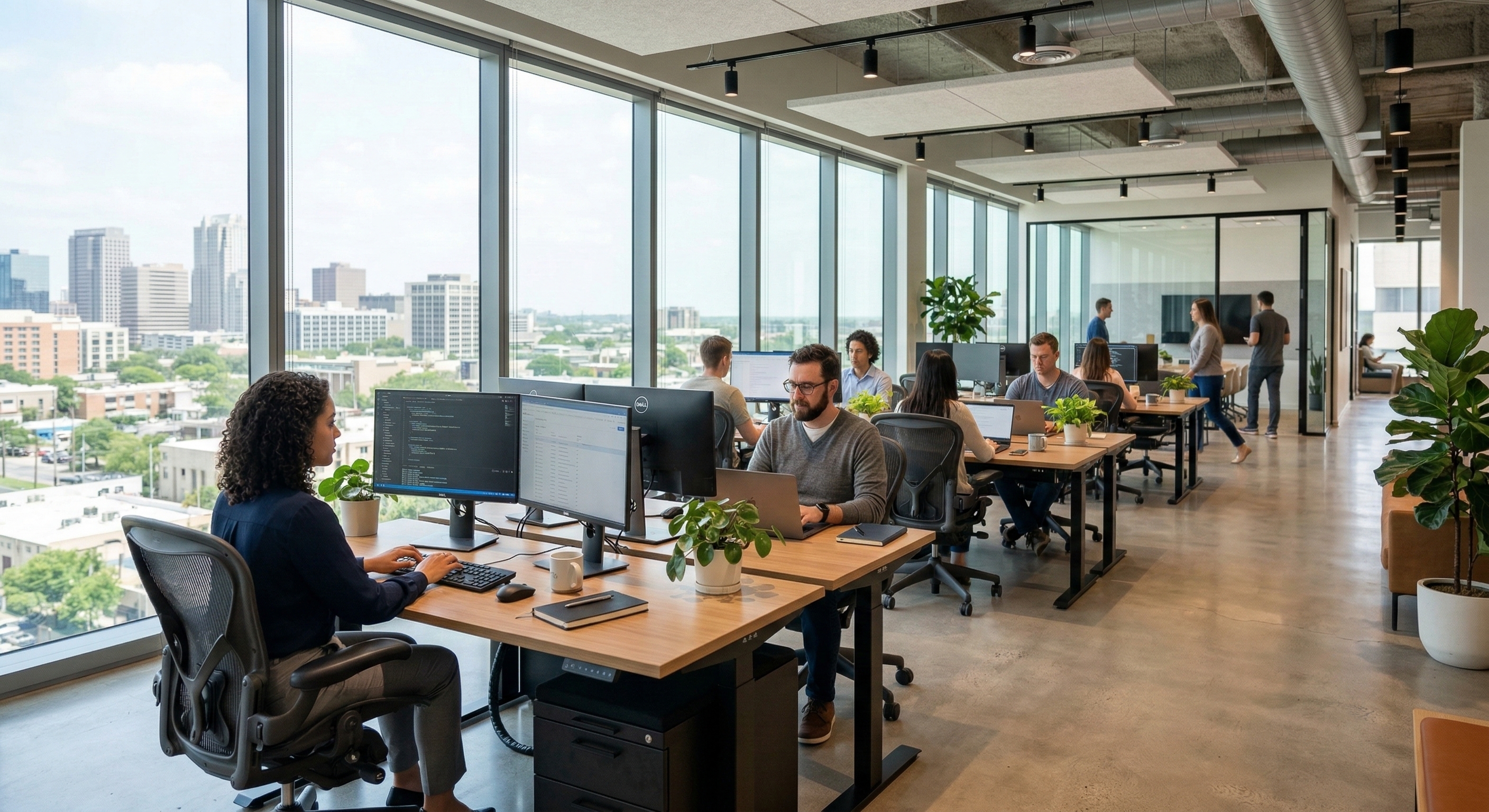
Commercial window films do more than save energy—they enhance comfort and productivity in the workplace. By reducing glare and maintaining consistent temperatures, employees can focus better without distractions caused by bright sunlight or hotspots near windows.
Comfortable indoor environments also reduce complaints and absenteeism, contributing to overall workplace efficiency.
Glare from direct sunlight can cause eye strain, headaches, and difficulty viewing computer screens. Solar-control films filter sunlight and reduce reflective glare without darkening the office excessively.
This means employees can work comfortably near windows, enjoy natural light, and still maintain productivity throughout the day.
Glass offices often have uneven heating or cooling, with areas near windows becoming too hot or too cold. Window films help stabilize indoor temperatures by blocking excessive heat from sunlight.
Combined with proper HVAC management, films create a more uniform climate, preventing hot spots and cold drafts. This consistency improves comfort for everyone in the building and supports higher productivity levels.
A more comfortable workspace positively affects employee morale and well-being. Reduced glare and better temperature control make the office a more enjoyable place to work, while natural light continues to provide health and mood benefits.
Investing in window films is not just about cost savings—it’s about creating an environment where employees can thrive.
Commercial window films provide essential protection against harmful ultraviolet (UV) rays that can damage interiors. UV radiation can fade carpets, furniture, flooring, and merchandise, reducing the lifespan of valuable assets.
Window films block up to 99% of these harmful rays while still allowing natural light to enter, preserving both aesthetics and functionality.
Without protection, prolonged exposure to sunlight can cause colors to fade and materials to deteriorate faster. For example, office furniture and flooring near large glass windows may show noticeable wear in just a few years.
Solar-control and UV-blocking films act as a shield, significantly slowing this process. Retail spaces also benefit, as merchandise displays remain vibrant and appealing for longer periods.
UV rays not only affect furniture but can also degrade office electronics over time. Window films help maintain optimal working conditions by reducing heat and UV exposure around sensitive devices.
This protection can lower replacement costs and prevent disruptions caused by overheating or sun-damaged equipment.
By investing in commercial window film, businesses ensure their interiors remain in top condition, maintaining a professional appearance while protecting valuable assets from the damaging effects of sunlight.

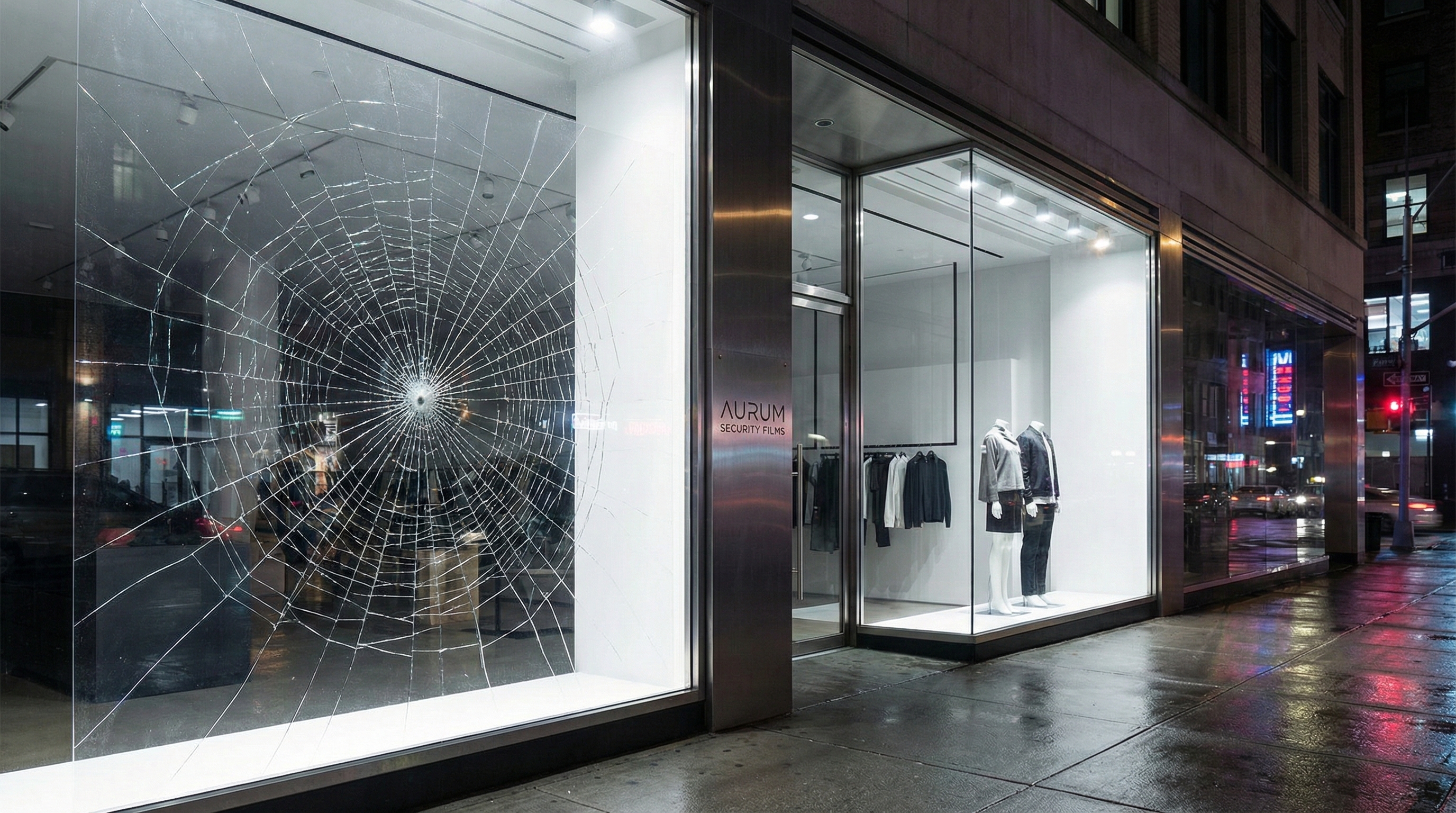
Commercial window films not only improve energy efficiency but also enhance safety, security, and privacy. They can reinforce glass to resist breakage, slow down forced entry, and protect occupants and valuable assets.
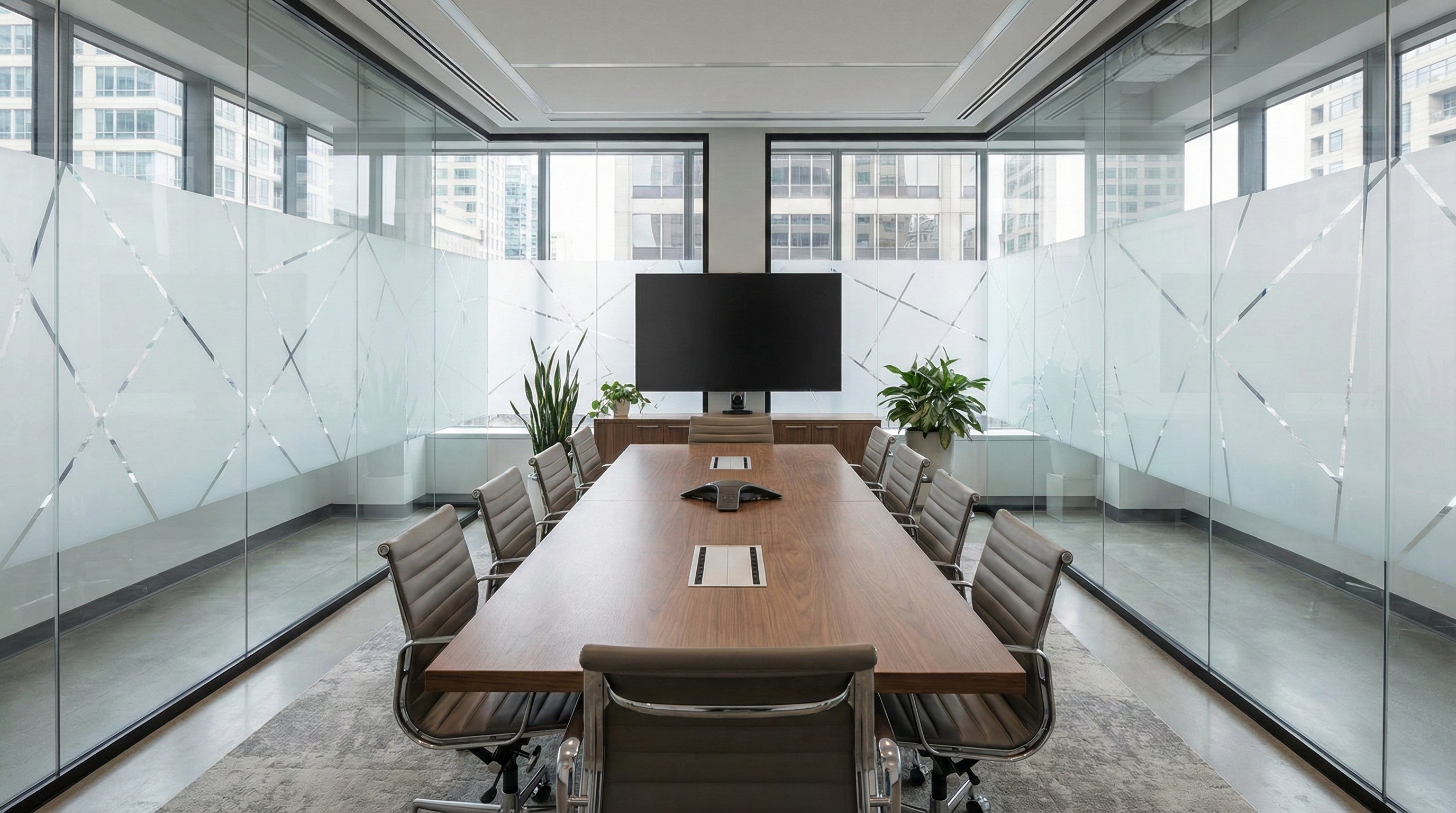
Additionally, decorative and frosted films provide privacy without compromising natural light, making them ideal for offices, meeting rooms, or retail spaces.
Security window films are designed to hold glass fragments together in case of impact or breakage. This reduces the risk of injury from shattered glass during accidents, storms, or attempted break-ins.
For example, offices and storefronts with reinforced films have reported fewer injuries and less property damage after glass incidents. By adding this layer of protection, businesses create a safer environment for employees and customers.
Window films can also enhance privacy and control visibility into sensitive areas. Frosted or patterned films obscure the view while still letting light in, making them perfect for conference rooms, executive offices, or medical facilities.
Decorative films allow businesses to display logos, branding, or artistic designs without sacrificing daylight, combining security and aesthetics seamlessly.
By integrating commercial window films, businesses achieve a balance of safety, security, and privacy while maintaining a professional and welcoming environment.
These benefits, combined with energy savings and interior protection, make window films a versatile investment for commercial properties.
Commercial window films are not just functional—they can also enhance the appearance and branding of a building. By adding decorative patterns, logos, or subtle textures, businesses can create a unique and professional look without compromising natural light.
This makes window films a versatile tool for offices, retail stores, and corporate spaces.
Decorative films allow companies to showcase their brand identity directly on windows. Logos, patterns, or custom graphics can be applied to glass surfaces, enhancing visibility to customers while maintaining a clean and modern appearance.
For example, a retail store can use branded films on storefront windows to reinforce its image while still allowing daylight into the space.
Beyond branding, window films can improve the overall aesthetics of a commercial building. Frosted or textured films add sophistication to conference rooms or executive offices, creating a polished look.
They can also complement interior design elements while providing functional benefits like glare reduction and privacy.
By combining style with utility, commercial window films help businesses maintain a professional appearance, support branding efforts, and improve occupant experience all while contributing to energy efficiency and interior protection.
Commercial window films contribute to sustainable building practices by reducing energy consumption and supporting environmental initiatives.
Less energy used for cooling and heating translates to lower carbon emissions, making window films a simple way to improve a building’s environmental performance.
Window films lower the load on HVAC systems, which decreases electricity use. For example, an office with high-performance solar-control films can reduce its annual cooling energy needs by 10–25%, directly reducing greenhouse gas emissions associated with power generation.
This energy efficiency helps businesses achieve sustainability goals without major renovations.
Many commercial properties pursue certifications such as LEED or other green building programs. Installing window films can contribute points toward energy efficiency and environmental performance categories.
This demonstrates a company’s commitment to sustainability and can enhance its reputation among clients, employees, and stakeholders.
Commercial window films offer measurable environmental benefits while maintaining functionality and comfort in commercial buildings.
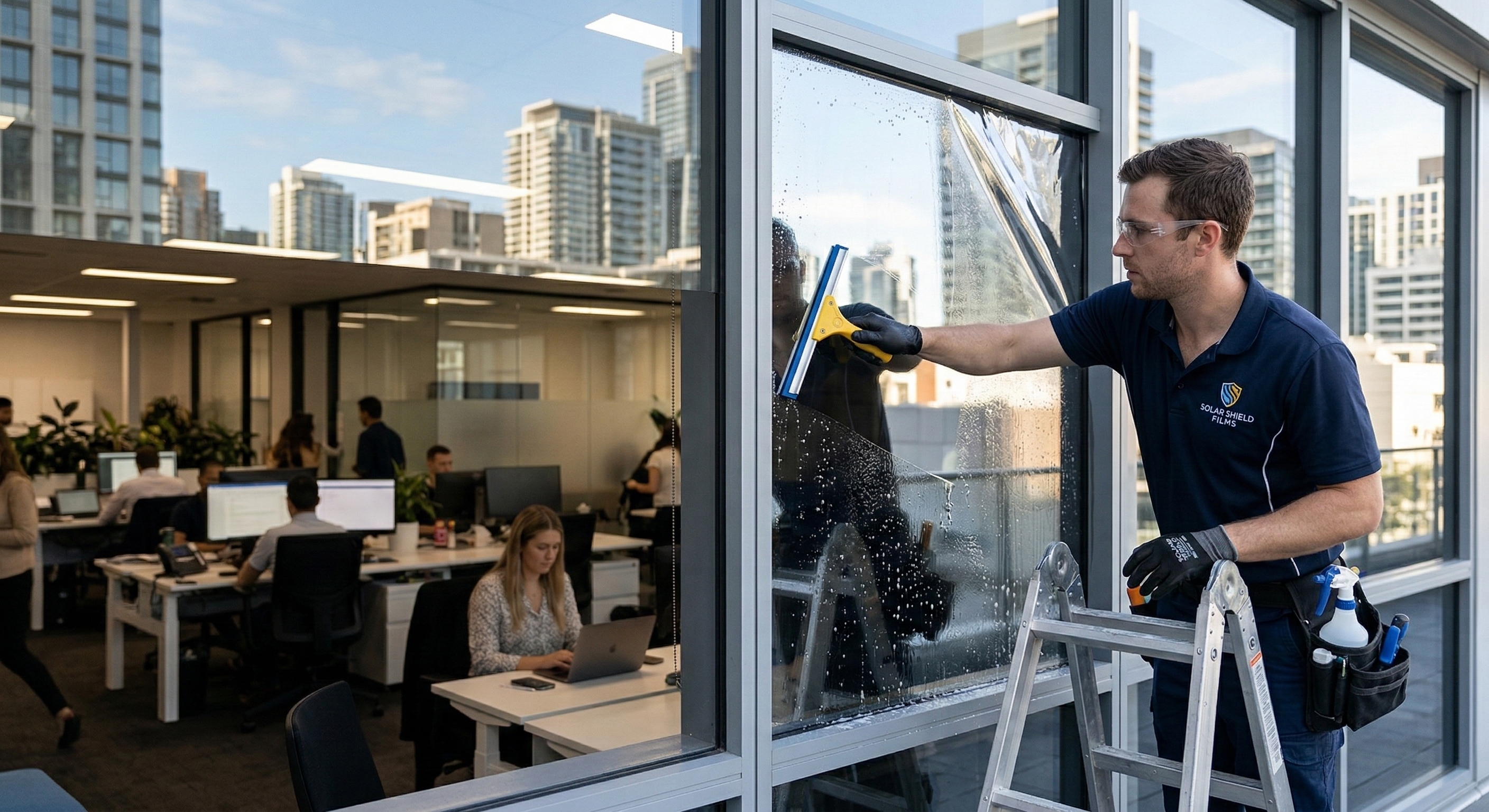
Installing commercial window film is a straightforward process when handled by professionals. Proper installation ensures the film adheres smoothly to the glass and performs effectively for heat reduction, glare control, and UV protection.
Most projects are completed with minimal disruption to business operations.
Trained installers clean the glass thoroughly and apply the film carefully to avoid bubbles, wrinkles, or uneven surfaces. Large commercial spaces can typically be completed within a day or two, depending on the number of windows.
A professional approach ensures consistent results and maximizes the benefits of the window film.
Window films require little maintenance once installed. Cleaning is simple using non-abrasive solutions and soft cloths. Unlike replacing glass, films maintain their performance for many years with minimal upkeep, offering long-term value for commercial properties.
Proper installation and simple maintenance allow businesses to enjoy the full range of benefits from commercial window films, including energy savings, comfort, safety, and interior protection.
Investing in commercial window film delivers measurable returns through energy savings, interior protection, and improved comfort. While the initial cost varies depending on the type of film and building size, the long-term benefits often outweigh the investment.
Typical payback periods for commercial window films range from 18 to 36 months. A mid-sized office installing solar-control films may reduce monthly cooling costs by 10–20%, offsetting the installation expense in less than two years. These savings continue over the life of the film, providing ongoing reductions in energy bills and operational costs.
Real-world examples demonstrate the effectiveness of commercial window films. In one office building, the installation of reflective and solar-control films reduced annual energy usage for cooling by 15%, lowering electricity costs by thousands of dollars. A retail space applied decorative UV-blocking films, protecting merchandise and extending furniture life, while maintaining a bright and inviting environment.
Other businesses have seen additional benefits, including improved occupant comfort, reduced glare on computer screens, and enhanced security for glass areas. These results show that window films provide more than short-term savings—they contribute to long-term efficiency, safety, and workplace satisfaction.
Commercial window films are a practical investment for any building with large glass surfaces. They combine financial savings with protection and comfort, delivering a tangible impact that can be measured and appreciated over time.
Commercial window film offers a wide range of benefits for offices, retail spaces, and other commercial buildings. It improves energy efficiency, enhances comfort, protects interiors from UV damage, and provides safety, security, and privacy. Decorative and branded films add style while supporting sustainability goals.
Businesses of all sizes can see measurable savings and improved workplace environments with the right window film solutions.
No Comments Yet
Let us know what you think