

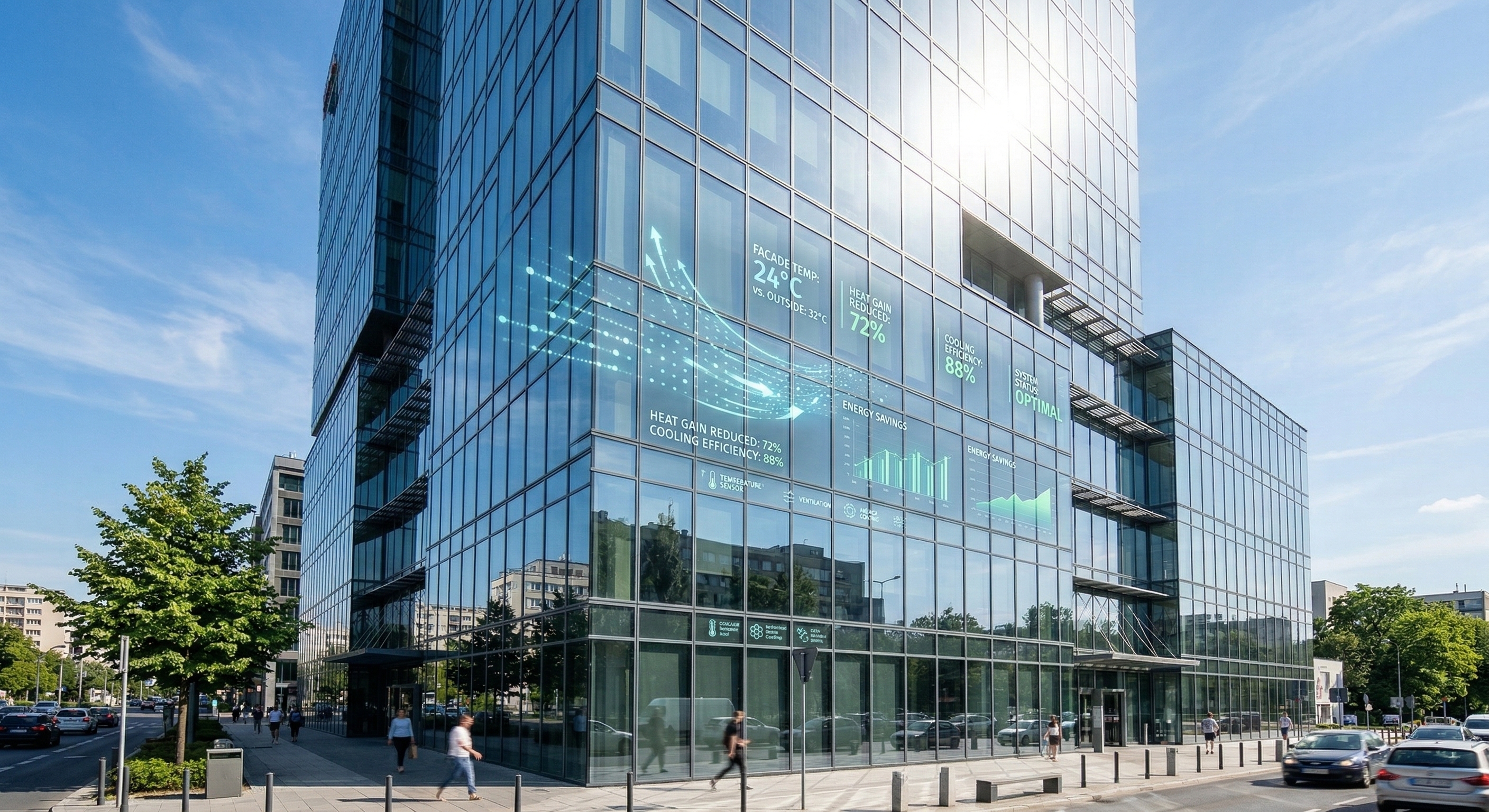
Glass office buildings look sleek and modern, but they can drive up cooling costs. Sunlight streaming through large windows heats the interior, forcing air conditioners to work harder and boosting energy bills.
The good news? You don’t have to replace all your glass or overhaul your HVAC system to see savings. Simple, cost-effective strategies like energy-efficient window films, smart shading, and small HVAC tweaks can cut cooling expenses while keeping your office comfortable and bright.
In this guide, we’ll break down practical ways to reduce cooling costs, avoid common mistakes, and even calculate the potential savings for your office.
Glass office buildings have a modern appeal, but they come with a hidden cost: heat gain. Large windows let in plenty of natural light, which is great for a bright, inviting workspace—but it also allows the sun’s heat to enter. That extra warmth forces air conditioning systems to work harder, which can spike your energy bills.
The problem isn’t just sunlight. Glass has lower insulation compared to walls, meaning it doesn’t keep heat out during summer or retain cool air effectively. South-facing windows often receive the most sunlight, making those areas particularly warm. Even reflective or tinted glass that looks stylish from the outside can fail to block all of the sun’s infrared heat.
Other factors can worsen the problem. Poorly sealed window frames allow air to leak, while high ceilings and open floor plans can make temperature control uneven. Without proper shading or window treatments, glare can become an issue too, prompting people to increase air conditioning just to stay comfortable.
Fortunately, small adjustments can make a noticeable difference. Understanding why glass buildings struggle helps you take targeted action to reduce energy use, protect interiors, and keep employees comfortable—all without compromising the building’s aesthetic appeal.
Keeping a glass office cool doesn’t have to be complicated. Here are practical strategies that can make a noticeable difference:
Implementing even a few of these strategies can lower energy bills, improve comfort, and reduce the strain on your air conditioning system without major renovations.
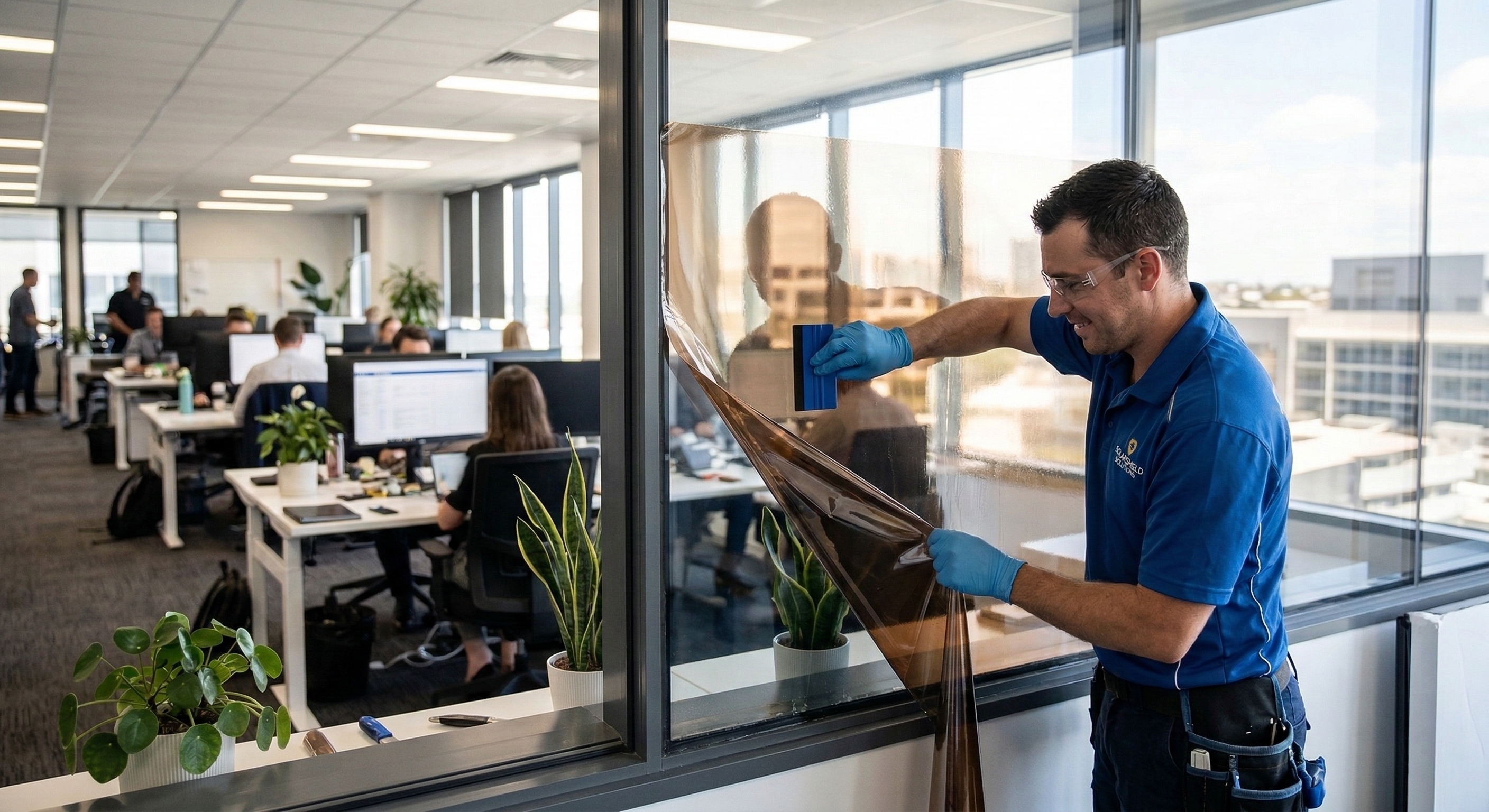
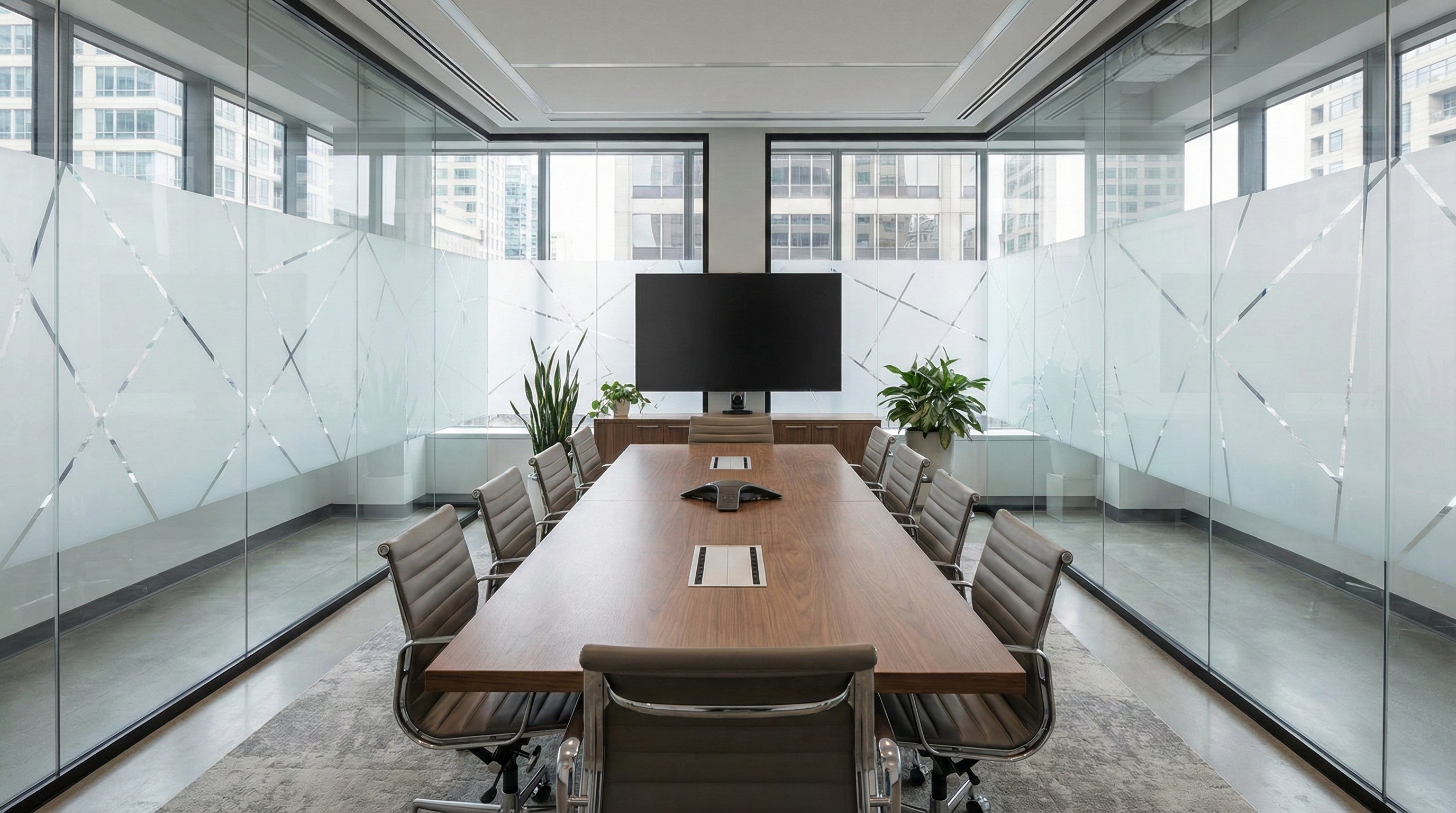
One of the most effective ways to lower cooling costs in glass office buildings is by using energy-efficient window films. These films are thin layers applied directly to the glass that block heat from the sun while still letting in natural light. They are a cost-effective alternative to replacing entire windows and can immediately reduce the workload on your air conditioning system.
Energy-Saving Window Films for Offices — Energy‑Saving Window Films for Offices
Window films come in different types, each designed to address specific needs. Solar-control films reduce the amount of infrared heat entering the building, keeping interior temperatures lower during hot months. UV-blocking films protect furniture, flooring, and office equipment from fading while also contributing to overall comfort. Low-E (low-emissivity) coatings provide an extra layer of insulation, reflecting heat back outside during summer and retaining warmth in the winter.
The benefits of commercial window tinting go beyond temperature control. By reducing solar heat gain, window films help your HVAC system run more efficiently, which can lower energy bills. They also improve occupant comfort by minimizing hot spots near windows and reducing glare on computer screens. In addition, protecting interiors from UV exposure helps extend the life of office furnishings and electronics, which can save replacement costs over time.
Installing window films is straightforward and usually completed without disrupting office operations. Professional installation ensures even application and maximum performance. Many businesses see a noticeable drop in energy consumption within the first month, making window films one of the fastest ways to achieve savings.
In short, energy-efficient window films are a practical and affordable solution for glass office buildings. They reduce heat, protect interiors, improve comfort, and lower cooling costs—all without major renovations. Combined with shading, blinds, and proper HVAC practices, they form a key part of any strategy to keep your office cool and energy-efficient.
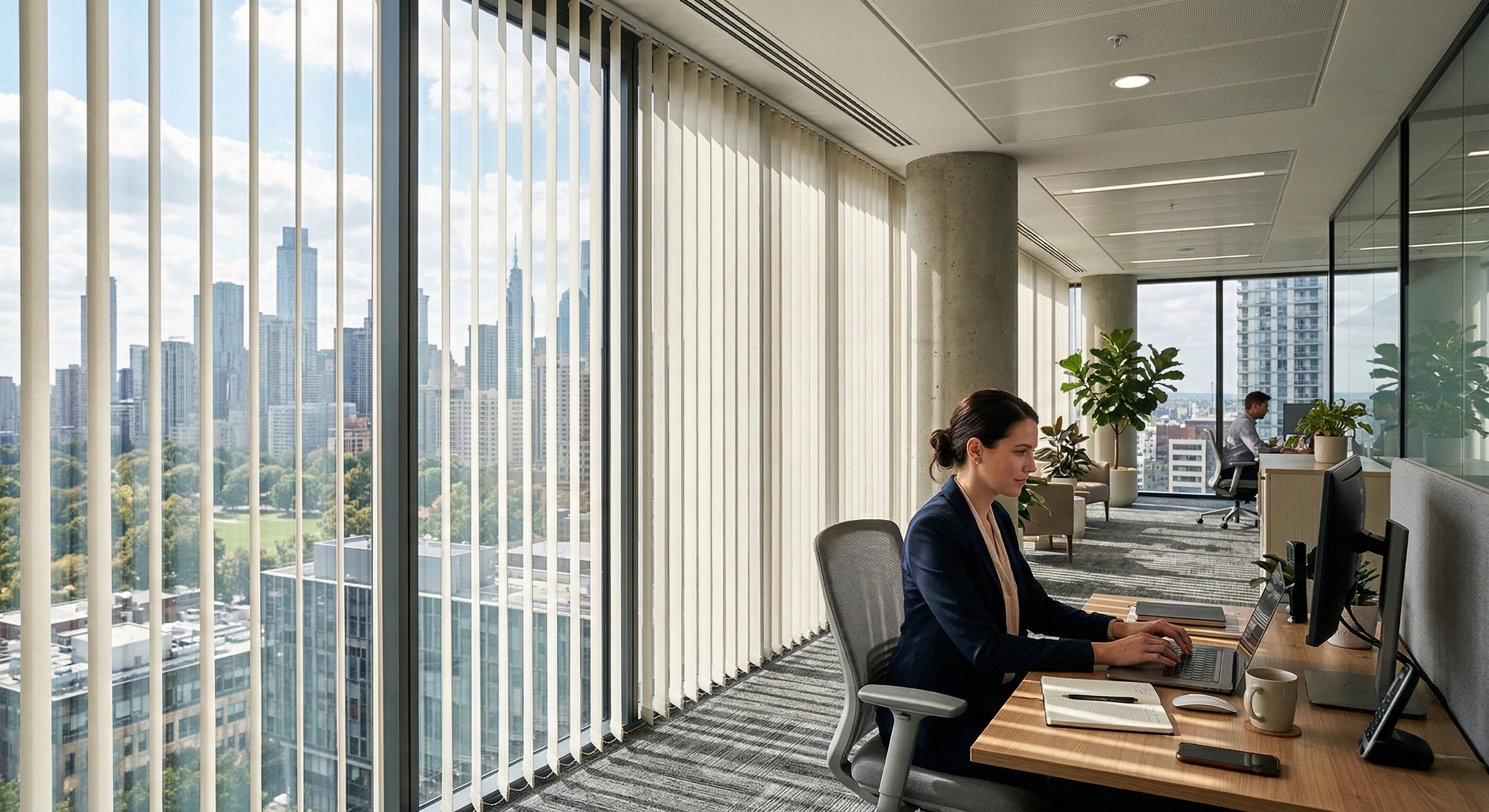
Natural light brightens workspaces and boosts productivity, but in glass office buildings, it can also increase heat and glare. The key is to enjoy sunlight without letting it raise cooling costs or make employees uncomfortable.
One of the easiest ways to control natural light is by using adjustable blinds or shades. Vertical or horizontal blinds allow occupants to manage sunlight throughout the day. Automated or smart shades can respond to changing sunlight levels, ensuring optimal lighting without manual adjustments.
Glare control is another important factor. Too much direct sunlight on computer screens can lead employees to increase air conditioning to stay comfortable. Window films and reflective coatings help reduce glare while maintaining clear views outside. This allows you to preserve the benefits of daylight without the heat penalty.
The orientation of windows also plays a role in cooling efficiency. South-facing glass receives the most intense sunlight during the day, while east and west-facing windows can cause morning or afternoon hotspots. Simple design choices, like adding reflective films or exterior shades, can significantly reduce heat gain from these exposures.
Combining these strategies with existing cooling systems can provide noticeable energy savings. By controlling natural light effectively, you maintain a bright and comfortable office environment while keeping energy costs in check.
Even with energy-efficient window films and shading, your HVAC system plays a critical role in keeping a glass office building comfortable. Optimizing your cooling system can help lower energy costs and reduce wear and tear.
Regular maintenance is one of the simplest ways to improve efficiency. Cleaning filters, checking for leaks, and ensuring proper airflow allow the system to operate without extra strain. Programmable thermostats or smart controls can automatically adjust temperatures during off-hours, preventing unnecessary energy use.
Integrating HVAC upgrades with window film solutions enhances energy savings. When window films reduce solar heat gain, your air conditioning doesn’t have to work as hard. This leads to lower electricity bills and extends the life of your HVAC equipment. Even small improvements, like zoning controls that cool only occupied areas, can make a noticeable difference.
Modern HVAC technologies also offer additional energy-saving options. Variable-speed fans, high-efficiency compressors, and energy recovery ventilators can improve overall system performance. While these upgrades may involve upfront costs, the reduction in cooling expenses often results in a quick return on investment.
Employee comfort is another important factor. Consistent temperatures throughout the office reduce complaints and create a more productive environment. By combining smart HVAC management with passive cooling strategies, you achieve both comfort and cost savings.
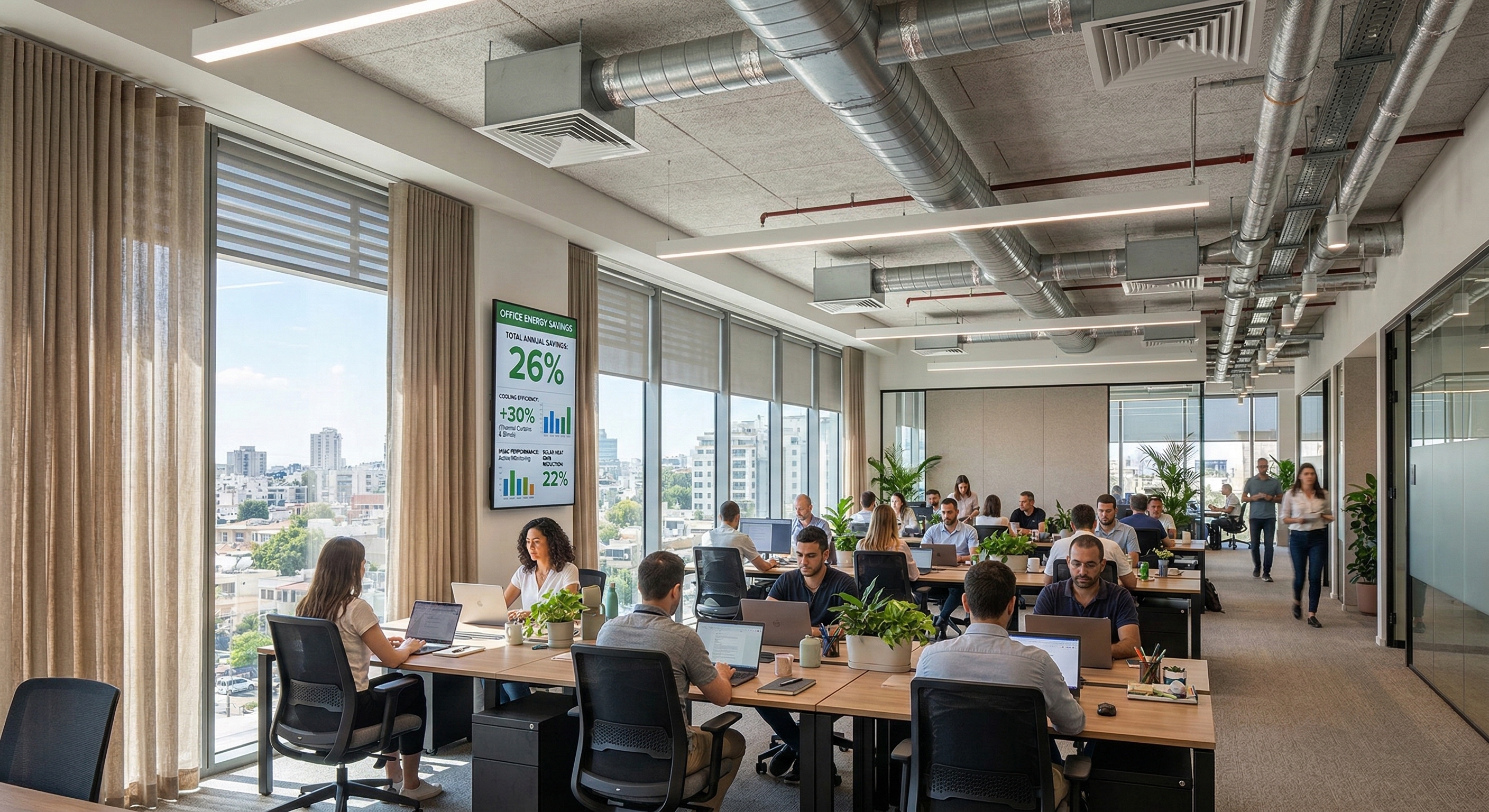
Passive design and insulation are cost-effective ways to keep a glass office building cooler without relying solely on air conditioning. By focusing on natural shading, heat reflection, and interior insulation, you can reduce energy usage while maintaining a comfortable environment.
Exterior shading devices are one of the most effective passive strategies. Awnings, louvers, and canopies block direct sunlight before it reaches your windows. For example, a well-placed awning over south-facing windows can reduce solar heat gain by up to 30%, significantly lowering the cooling load on your HVAC system. Louvers can also be angled to allow daylight in while preventing harsh afternoon sun from overheating the office.
Thermal curtains and insulating panels provide additional control indoors. Thick, reflective curtains can prevent heat from entering through the glass during peak sunlight hours, and insulated panels help maintain cooler indoor temperatures longer. These solutions are flexible, allowing employees to adjust them as needed throughout the day.
Exterior shading works by intercepting sunlight before it enters your building. For instance, a south-facing office with horizontal louvers can reduce glare on computer screens while keeping the room naturally lit. Awnings not only protect from heat but also add visual appeal and extend the life of window films by reducing direct exposure. Strategic placement of shading devices can create noticeable energy savings without major construction.
Interior solutions like thermal curtains reflect sunlight back outside and trap cooler indoor air. Insulating panels can be used in combination with window films for maximum effect. Offices with large glass walls can see temperature drops of several degrees during peak hours, which directly lowers cooling costs. Employees also benefit from more consistent temperatures, reducing complaints about hot spots near windows.
Understanding the potential return on investment (ROI) helps make decisions about window films, shading, and insulation more concrete. By estimating energy savings, office managers can see how quickly upgrades pay off and how they contribute to long-term cost reductions.
Simple payback calculations consider the initial cost of installing window films or shading devices and the expected reduction in cooling costs. For example, a mid-sized glass office might spend $5,000 on professional window film installation. If the film reduces energy consumption by 15% per month on average, the building could recover the investment in less than two years, depending on local energy rates.
Energy savings calculators, offered by many manufacturers and online resources, allow you to input building size, glass type, and location to estimate savings. These tools provide practical guidance, showing which improvements offer the most significant cost reductions.
By comparing energy bills before and after upgrades, you can quantify savings. For instance, offices with solar-control films often see a $200–$400 monthly reduction in cooling costs. Combining window films with blinds or thermal panels can amplify these savings, helping the investment pay for itself faster. Using real numbers helps justify decisions to building owners and staff.
Several online calculators and manufacturer guides simplify ROI assessments. They factor in building orientation, climate, and HVAC efficiency, giving a clearer picture of potential cost reductions. These tools also help prioritize upgrades for maximum impact.
In one case, a 10-story glass office building applied reflective window films and installed exterior louvers. Within the first summer, the building reduced its cooling energy usage by 18%, lowering monthly electricity costs by nearly $1,200. Small improvements like these show that even partial upgrades can create measurable savings.
Even with the right tools and strategies, some common mistakes can reduce the effectiveness of your efforts to lower cooling costs in glass office buildings. Being aware of these pitfalls ensures that investments in window films, shading, and HVAC upgrades deliver the maximum benefits.
Not all window films are created equal. Choosing a decorative film instead of a solar-control or UV-blocking type can protect interiors visually but will do little to reduce heat. For example, a building that installed only tinted films without solar-control technology saw minimal change in cooling costs despite the added expense.
Running the air conditioning constantly without addressing solar heat gain wastes energy. Combining HVAC improvements with window films or blinds creates synergy, reducing strain on the system and lowering bills.
Neglecting passive solutions like blinds or exterior shading reduces overall effectiveness. South-facing windows, in particular, can create hotspots if left unprotected, causing discomfort and higher cooling expenses.
Failing to maintain HVAC systems and window seals can negate the benefits of energy-saving upgrades. Air leaks and dirty filters make cooling less efficient, resulting in higher energy usage and equipment wear.
By avoiding these mistakes, you ensure your investments in cooling strategies deliver comfort, energy savings, and long-term efficiency.
Lowering cooling costs in glass office buildings is possible with a combination of strategies. Energy-efficient window films, proper shading, passive design, and smart HVAC management all work together to reduce energy consumption and improve comfort. By understanding heat gain, optimizing natural light, and avoiding common mistakes, you can make meaningful reductions in cooling expenses without major renovations.
No Comments Yet
Let us know what you think