


Privacy window film is a popular way to add privacy without blocking natural light. Many homeowners and building managers use it instead of curtains or blinds. The challenge is that privacy film does not behave the same way all the time.
During the day, privacy window film often works exactly as expected. People outside struggle to see in, while those inside can still see out. At night, that experience can change. Interior lights and darkness outside affect how the film performs.
This difference causes confusion and frustration. Some people assume privacy window film stops visibility at all times. Others believe it never works at night. The truth sits in between.
In this article, you will learn how privacy window film works during the day and why it behaves differently at night. You will also learn how light balance, film type, and installation choices affect privacy. This will help you choose the right solution for your windows.
Privacy window film is designed to limit visibility through glass while keeping spaces bright. This section explains what privacy film does and why it is commonly used in buildings.
Privacy window film is a thin layer applied directly to glass. It changes how light passes through or reflects off the surface. Depending on the type, the film may reflect light, blur views, or block visibility completely.
The film works without changing the structure of the window. It adds privacy while allowing natural light to enter the space.
Many people want privacy without darkening a room. Curtains and blinds block light and require daily adjustment. Privacy window film provides a fixed solution.
It is often used to reduce visibility from outside, protect personal space, and maintain a clean appearance. It also helps create privacy in open areas.
Privacy window film is used in homes, offices, storefronts, and healthcare spaces. It is common on windows, glass doors, and interior partitions.
Bathrooms, conference rooms, and street-facing windows are popular locations where privacy film adds value.
Privacy window film is most effective during daylight hours. This section explains why daytime conditions create strong privacy for many types of window film.
During the day, sunlight outside is usually brighter than the light inside a building. When this happens, privacy window film reacts to that difference.
Reflective and one-way films bounce light back toward the brighter side. This makes the exterior surface appear mirrored and harder to see through.
Because the outside is brighter, the film reflects more light outward. People outside see their own reflection instead of what is inside.
This reflection blocks clear views into the space. The brighter the sunlight, the stronger the privacy effect becomes.
From inside the building, the light level is lower. This allows people to see through the glass more easily.
The film does not block the view from the darker side. This is why daytime privacy window film allows clear outward visibility while limiting inward views.
Privacy window film behaves differently after dark. This section explains why nighttime conditions reduce the effectiveness of certain privacy films.
At night, lights inside the building are usually brighter than the outside environment. This reverses the light balance that exists during the day.
When interior light becomes stronger, privacy window film reflects more light back into the room instead of outward.
One-way and mirror window films depend on light contrast. When the inside becomes brighter, the reflective effect flips.
People outside may now see inside clearly. At the same time, people inside may see reflections instead of the outside view.
Many people assume privacy window film works the same at all times. Others believe it completely fails at night.
The reality depends on lighting conditions and film type. Understanding this helps avoid unrealistic expectations.
Privacy window film performs differently depending on the time of day. This section provides a simple comparison to help clarify what to expect.
During the day, the outside environment is brighter than the inside. Privacy window film reflects this exterior light.
This creates a mirrored effect on the outside of the glass. People outside struggle to see in, while people inside enjoy clear outward views.
At night, interior lights usually become the brightest source. The reflective effect shifts inward.
This makes it easier for people outside to see inside. Without additional privacy measures, one-way window film offers limited nighttime privacy.

Privacy window film relies on light balance to work effectively. This section explains the basic science behind why light levels matter so much.
Window film reacts to the strongest light source. The side with more light becomes more reflective.
During the day, the brighter side is outside. At night, the brighter side is usually inside. The film responds accordingly.
Reflective window film is designed to bounce light back. When light hits the film, it reflects toward the brightest side.
This reflection creates the mirrored look that blocks visibility from the opposite side of the glass.
A one-way mirror works because one side is much brighter than the other. Privacy window film follows the same rule.
When light levels flip, the one-way effect flips too. This is why lighting control is critical for privacy.

One-way and mirror window films are popular for daytime privacy. This section explains what these films do well and where their limits begin.
One-way window film does not block views all the time. It creates privacy based on light balance.
When the outside is brighter, the film reflects light outward. This makes it difficult for people outside to see in while allowing visibility from inside.
Mirror window film performs best during sunny daytime conditions. Strong exterior light enhances the reflective surface.
This makes mirror film ideal for street-facing windows, offices, and buildings where daytime privacy is the main concern.
Reflective films lose effectiveness when interior lighting becomes brighter. At night, reflections can appear inside the building.
This is why one-way film alone is not a complete night privacy solution. Understanding this limitation helps set proper expectations.
Not all privacy window films rely on reflection. This section explains which options provide privacy at all times.
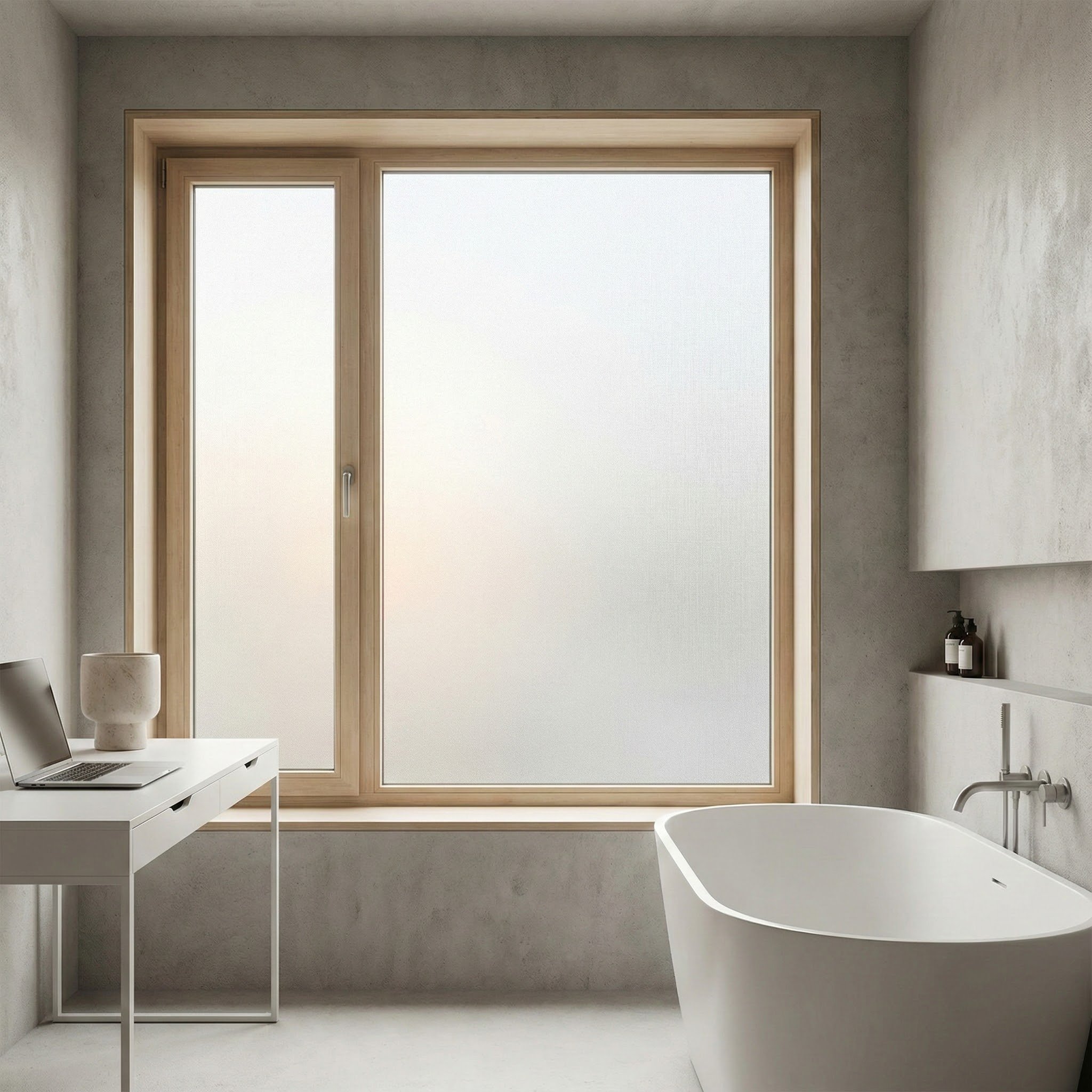
Frosted and opaque films blur or block visibility instead of reflecting light. They work the same during the day and at night.
These films allow light to pass through while preventing clear views in either direction. This makes them ideal for areas that need constant privacy.
Decorative privacy films use patterns or textures to distort visibility. They reduce detail without completely blocking light.
These films offer a balance between privacy and design. They provide consistent privacy regardless of lighting conditions.
The right film depends on how much privacy is needed and when. Daytime-only privacy works well with reflective film.
For 24-hour privacy, frosted or decorative films are a better choice. Matching film to usage avoids disappointment.
Different spaces have different privacy needs. This section helps match the right window film to each type of environment.
Homes often need privacy without blocking daylight. Street-facing windows, bathrooms, and entry doors are common concerns.
Reflective film works well for daytime privacy in living areas. Frosted film is better for bathrooms and spaces that need constant privacy.
Offices often use privacy film for conference rooms and glass partitions. Storefronts may want privacy without hiding displays.
Decorative and frosted films help create private areas while keeping spaces bright. Reflective film works well for daytime office privacy.
Every room serves a different purpose. High-traffic areas may need full privacy, while others only need light screening.
Choosing film based on room use ensures the best balance between privacy and visibility.
Privacy window film is often misunderstood. This section clears up common myths and sets realistic expectations.
Privacy window film does not perform the same at all times. Reflective films depend on light balance.
They work best during the day and lose effectiveness at night when interior lights are brighter.
No privacy film blocks visibility in every situation. Reflective films can allow visibility at night.
Understanding lighting conditions helps avoid surprise and frustration.
Privacy films vary in design and performance. Reflective, frosted, and decorative films serve different purposes.
Choosing the right type matters as much as proper installation.
Nighttime privacy can be improved with the right approach. This section explains practical ways to maintain privacy after dark.
Light balance controls visibility. Reducing interior light near windows helps limit what people outside can see.
Using softer lighting or moving light sources away from glass can improve privacy when reflective film is installed.
Privacy window film works well with shades or blinds at night. The film provides daytime privacy, while coverings add protection after dark.
This combination offers flexibility without sacrificing natural light during the day.
If privacy is needed at all hours, frosted film is often the better choice. It blocks clear views regardless of lighting.
This option works well for bathrooms, offices, and street-level windows that face constant visibility.
Privacy window film is an effective way to control visibility while keeping spaces bright. The key is understanding how different films behave during the day and at night. Reflective and one-way films work best when the outside is brighter. Frosted and decorative films provide consistent privacy at all times.
Choosing the right option depends on your goals. Some spaces only need daytime privacy. Others require full privacy around the clock. Matching the film type to the room and lighting conditions prevents frustration and delivers better results.
Professional guidance helps ensure the film performs as expected. Proper selection and installation make a noticeable difference in comfort and privacy.
If you are considering privacy window film for your building or home, contact American Window Film to get privacy film for your home or office.

No Comments Yet
Let us know what you think