

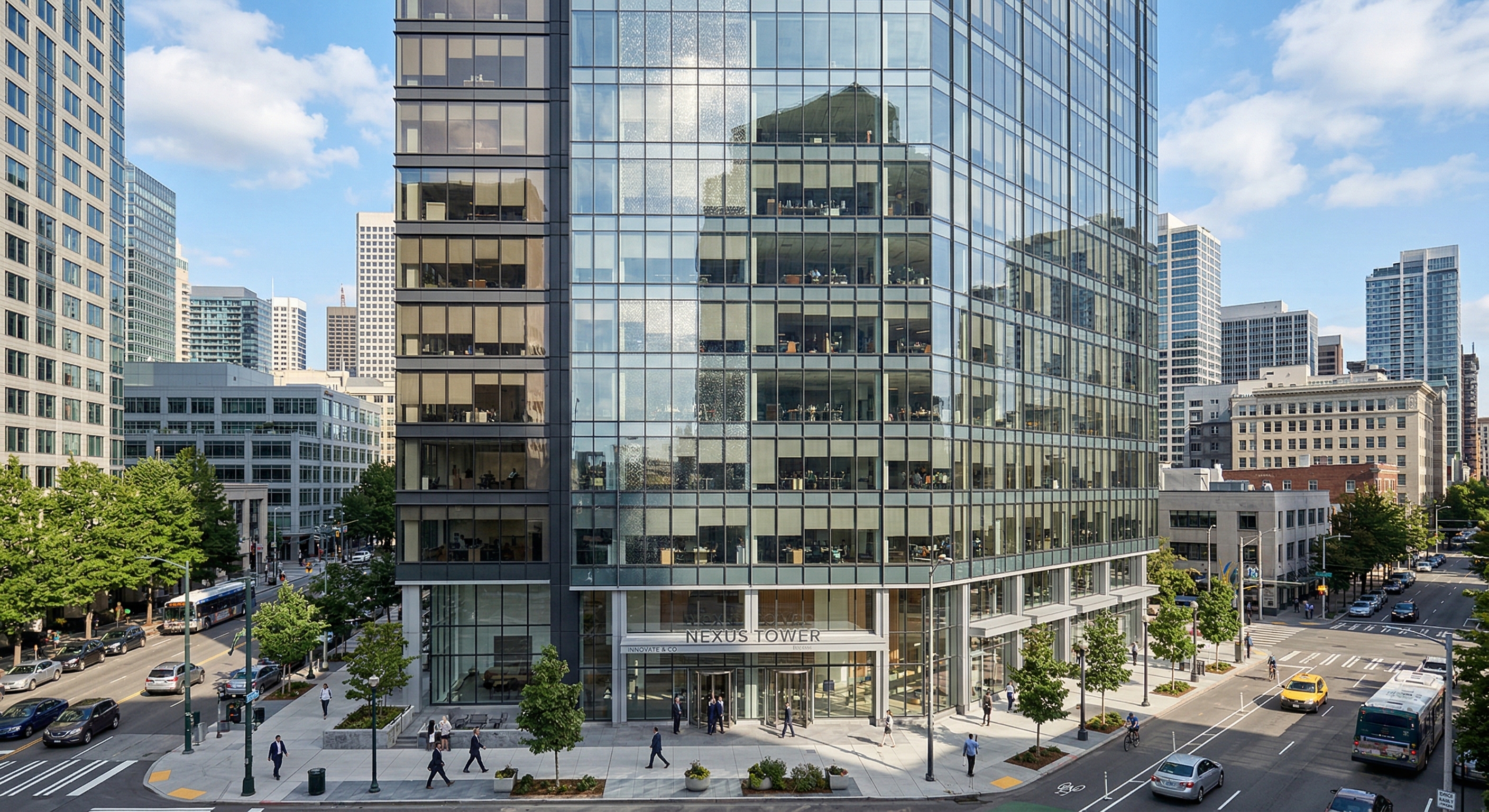
Commercial buildings often have large glass surfaces that face challenges like heat, glare, and fading interiors. Sunlight streaming through windows can make workspaces uncomfortable and increase energy costs.
Choosing the right window film can solve multiple problems at once. The right film can reduce heat, lower cooling bills, protect furniture and flooring, and improve occupant comfort.
In this guide, we’ll explore the most effective types of window films for commercial properties. From solar control and privacy films to security and Low-E options, you’ll learn which solutions suit offices, high-rises, lobbies, and other commercial spaces.
We’ll also cover how to choose the right film for your building, common mistakes to avoid, and real-world examples of businesses benefiting from these solutions. By the end, you’ll know exactly which window film can enhance your commercial space.
Commercial buildings face challenges that can affect comfort, productivity, and operating costs. Sunlight can create glare, heat rooms, and fade interiors over time.
Window films offer a solution that addresses multiple issues at once. They help manage light, protect interiors, and improve energy efficiency.
Window films reduce heat gain, lowering cooling bills in summer. Some films also minimize heat loss during colder months, improving overall energy efficiency.
For example, offices in sunny climates can see a 15–25% reduction in cooling costs with solar control films. These savings can add up significantly over time.
Sunlight contains harmful UV rays that can damage furniture, flooring, and artwork. Window films block these rays, helping preserve the building’s interior appearance.
This protection keeps spaces looking professional and well-maintained. It also extends the life of interior investments, saving money in the long term.
Glare from windows can make it difficult to work on computers or view monitors comfortably. Window films reduce reflection and soften incoming sunlight.
Employees enjoy a more comfortable environment, and productivity can improve as visual strain decreases. Films maintain natural light while reducing the harsh effects of direct sunlight.
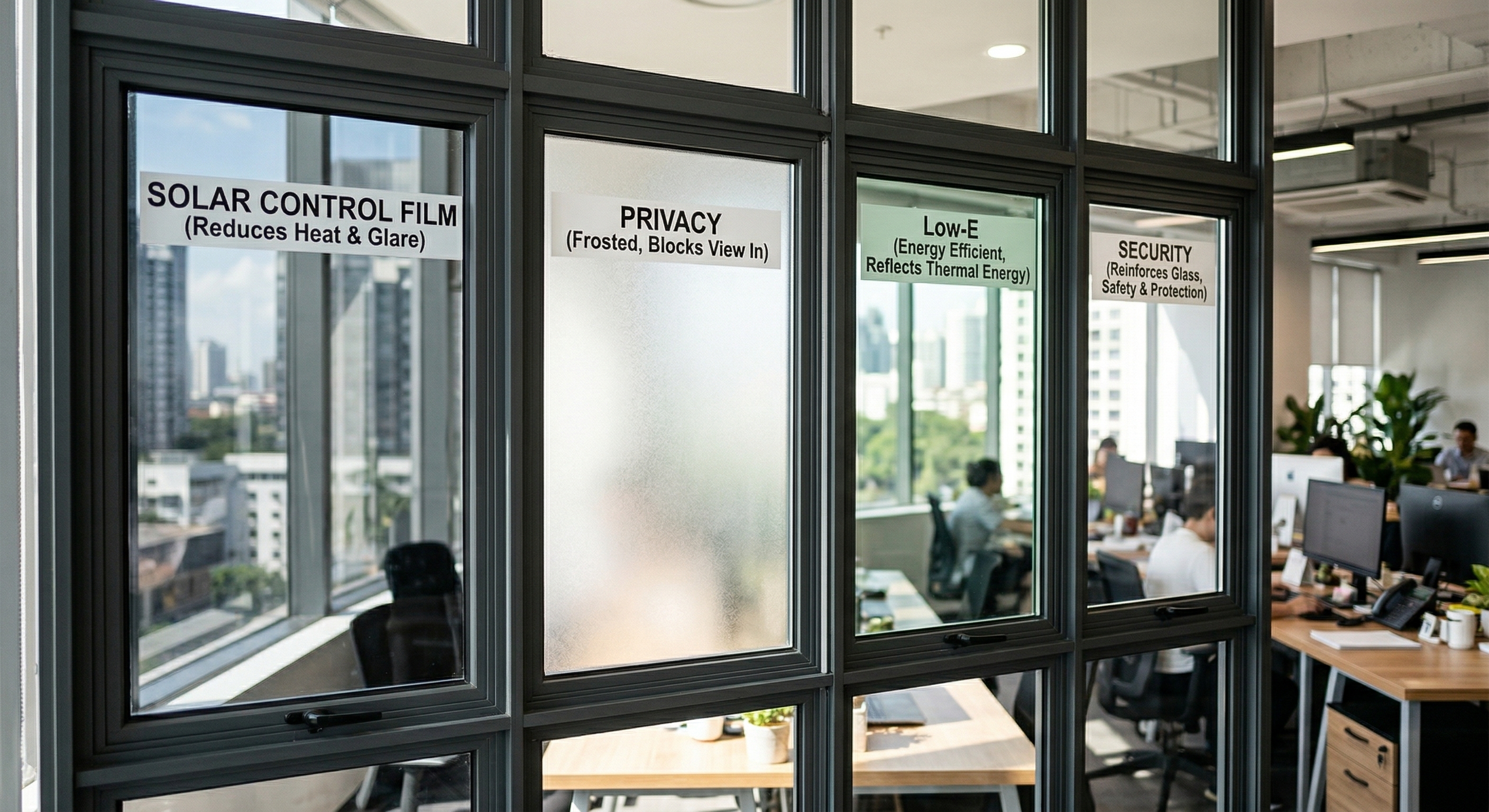
Commercial buildings have diverse needs, so there are multiple types of window films available. Each type addresses specific challenges like heat, glare, security, or privacy.
Choosing the right film depends on the building’s goals, layout, and location. Some businesses require a combination of films to meet multiple objectives.
Solar control films reduce heat and glare while allowing natural light to enter. They are ideal for large glass facades and offices with south- or west-facing windows.
By reflecting infrared light, these films lower cooling costs and improve energy efficiency. Employees benefit from a more comfortable work environment without darkening the office.
Privacy films provide one-way visibility or frosted effects for added discretion. Decorative films can include patterns or textures that enhance the building’s aesthetics.
These films are useful for conference rooms, lobbies, and ground-floor offices where privacy is important. They maintain light flow while keeping sensitive areas shielded from view.
Security films hold glass together in case of impact. They protect employees and visitors while discouraging break-ins or vandalism.
Installing security films adds a layer of safety without altering the appearance of the building. High-rise buildings and public-facing offices benefit most from these films.
Low-E (low-emissivity) films reflect infrared light to reduce HVAC loads. They maintain indoor temperature stability during both summer and winter months.
These films are highly effective for energy-conscious commercial properties. They provide long-term savings and contribute to sustainability goals.
Anti-graffiti films protect glass surfaces from scratches, markings, or vandalism. Specialty films may include bird-safe, smart, or switchable tint options.
They are ideal for high-traffic areas, retail storefronts, and public-facing commercial spaces. These films maintain aesthetics while adding functional protection.
Learn more about commercial film types and their benefits.

Selecting the right window film for a commercial building requires understanding your priorities and building conditions. The correct choice ensures comfort, energy efficiency, and safety.
Start by evaluating how sunlight enters your building. South- and west-facing windows often receive the most direct sunlight and may need stronger solar or Low-E films.
North-facing windows may not require solar control but could benefit from UV or security protection. Understanding exposure helps determine the right film type and opacity.
Decide whether energy savings, glare reduction, privacy, or security is most important. Some buildings may need a combination of films to meet multiple goals simultaneously.
Consider occupant comfort and interior preservation alongside cost. Balancing these factors ensures the film meets both functional and aesthetic needs.
Professional installation ensures precise measurement and a bubble-free application. This is especially important for high-rise offices or large glass facades.
DIY installation is possible with patience and proper preparation. However, mistakes like dust, trapped air, or improper cutting can reduce the film’s effectiveness.
Choosing the wrong film type for your building’s orientation or climate is a frequent mistake. Improper installation can cause peeling, bubbles, or reduced glare and energy performance.
Failing to consider combined needs, such as solar and privacy, may lead to suboptimal results. Proper planning and consultation help maximize the benefits of your window film.
Explore professional commercial window film installation services.
Window films provide multiple advantages beyond just glare reduction. They help commercial buildings save energy, protect interiors, and improve occupant comfort.
Films reduce heat gain in summer and heat loss in winter. This lowers the demand on heating and cooling systems, cutting energy costs significantly.
For example, offices with large glass facades often see a 15–25% reduction in cooling bills after installing solar control or Low-E films.
Glare reduction improves visual comfort for employees. Reducing harsh sunlight on monitors helps decrease eye strain and fatigue.
A more comfortable environment can increase focus and productivity. Employees can work efficiently without constantly adjusting blinds or screens.
UV-blocking films protect furniture, flooring, and artwork from fading. This maintains a professional appearance and preserves valuable interior investments.
Long-term protection helps businesses avoid costly replacements and keeps spaces looking well-maintained.
Security and safety films hold glass together in case of impact. They provide added protection for employees and visitors, reducing the risk of injury.
These films are especially valuable for high-traffic areas, storefronts, and buildings in busy urban environments.
Energy savings and longer-lasting interiors contribute to a solid return on investment. Buildings with window films often meet sustainability goals while reducing operational costs.
Installing the right combination of window films enhances comfort, safety, and efficiency across the entire commercial property.
Not all commercial window films are designed for the same purpose. Comparing options helps you choose the most effective solution for your building.
Solar films excel at reducing heat and glare while maintaining natural light. Privacy films provide discretion in offices and lobbies without blocking sunlight.
Security films strengthen glass against breakage. Low-E films reflect infrared light to reduce HVAC loads and maintain stable indoor temperatures.
Solar films are ideal for energy savings but may not add security. Privacy films improve discretion but do not reduce heat.
Security films protect occupants and assets but offer limited glare reduction. Low-E films optimize energy efficiency but may cost more upfront.
Some buildings benefit from combining multiple films. For example, solar + security films can improve energy efficiency while enhancing safety.
Visual guides or comparison charts can help property managers understand performance, cost, and benefits. Choosing the right combination ensures maximum ROI for commercial window film investments.
See how different commercial window films compare.
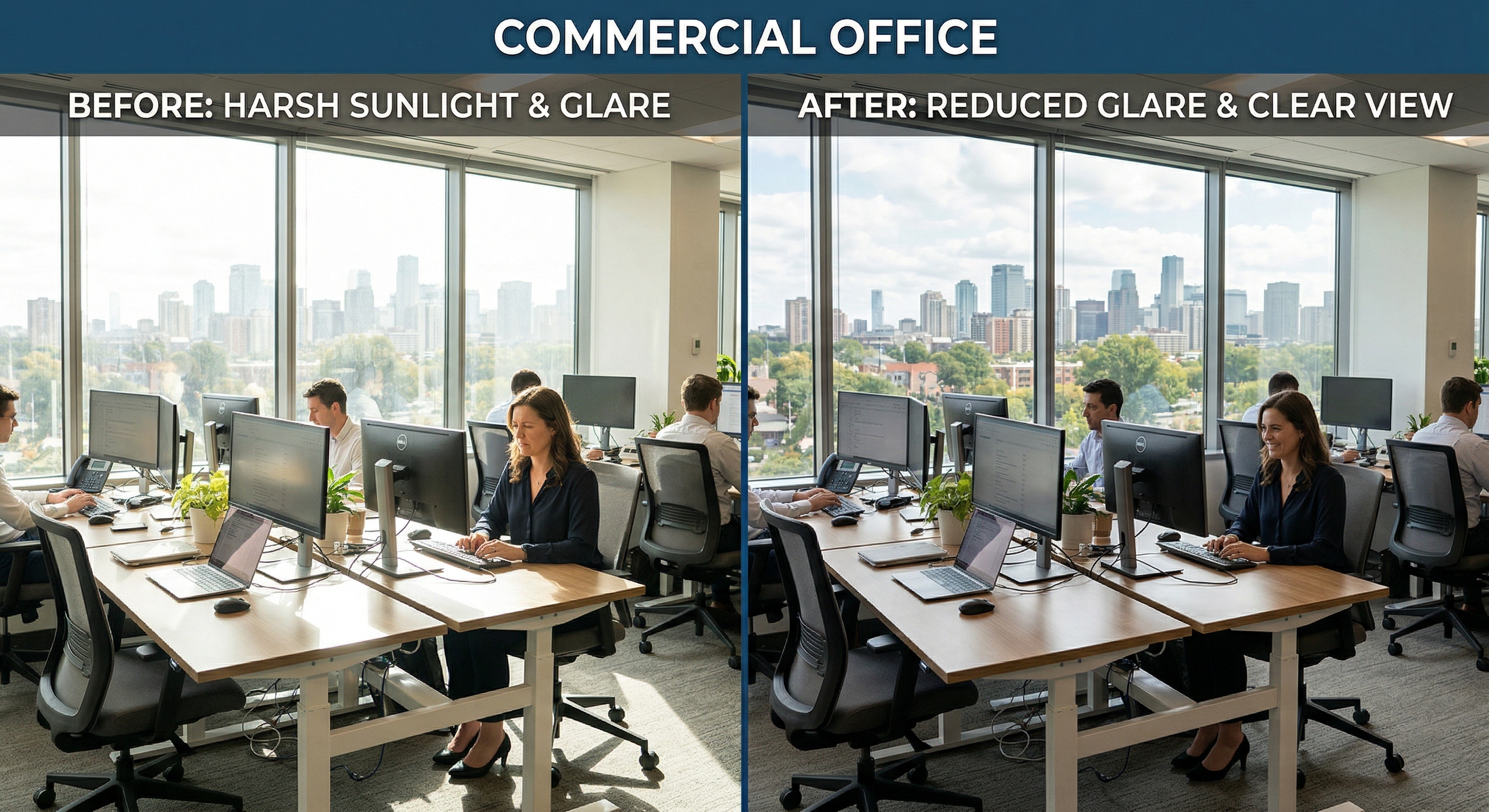
Seeing how businesses use window films in real life helps illustrate their benefits. Several commercial properties have successfully applied different films to solve unique challenges.
A high-rise office in Texas installed solar control films on all south- and west-facing windows. This reduced cooling costs by 18% and minimized glare on employee monitors.
Employees reported a more comfortable work environment. The building also maintained natural light without installing heavy blinds.
A downtown building applied decorative privacy films in conference rooms and ground-floor offices. The films allowed light to enter while maintaining discretion for meetings and sensitive areas.
Visitors appreciated the aesthetic enhancement, while employees enjoyed privacy without darkening the rooms.
A retail storefront in a busy urban area installed security and anti-graffiti films. The films protected glass from accidental damage and vandalism, reducing maintenance costs.
Shop owners reported fewer incidents of window damage, and the building retained a professional, clean appearance.
These examples highlight how different films can solve specific commercial building problems. From energy savings to privacy and safety, selecting the right combination makes a measurable impact.
Real-world results show that proper planning and professional installation maximize both comfort and cost savings. Businesses can customize solutions according to their building type, exposure, and operational priorities.
Yes, solar control and Low-E films reduce heat gain in summer and heat loss in winter. This lowers the workload on HVAC systems and decreases energy bills.
Most commercial window films allow natural light to pass through while reducing glare. You can maintain a bright, comfortable workspace without installing heavy blinds or shades.
Quality films can last 10–15 years with proper care. Lifespan depends on exposure to sunlight, climate, and maintenance.
Yes, window films can be retrofitted to most commercial properties. Professional installation ensures optimal performance and a bubble-free finish.
Yes, security films hold glass together during impacts, and privacy films can be decorative or one-way. These options allow customization based on building needs.
Minimal maintenance is needed. Cleaning with mild soap and a soft cloth keeps films effective and preserves clarity.
Choosing the right window film can transform a commercial building’s energy efficiency, comfort, and safety. Proper selection ensures that heat, glare, and UV damage are managed effectively.
Installing films improves comfort for employees and visitors. Reduced glare on monitors and natural lighting create a more productive environment.
Energy-saving films lower HVAC costs and contribute to sustainability goals. Security and anti-graffiti films add safety and protect valuable interiors.
Real-world examples show measurable benefits, from reduced energy bills to improved occupant satisfaction. The right combination of films provides long-term value for commercial properties.
Selecting films based on building orientation, sunlight exposure, and operational needs ensures maximum performance. Proper installation and minimal maintenance keep films effective for years.
Contact American Window Film to find the best window film solutions for your commercial building.

No Comments Yet
Let us know what you think