

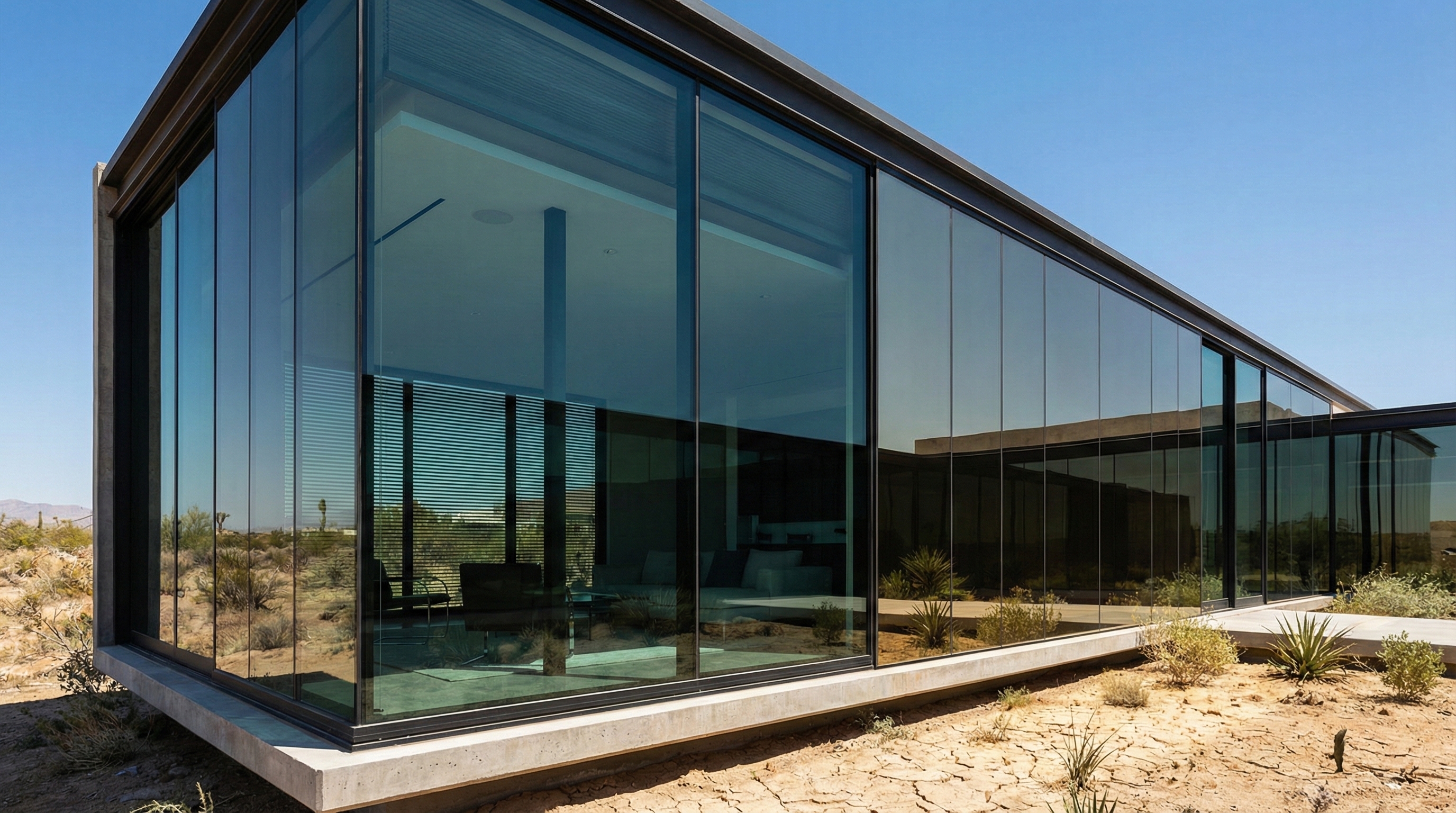
Extreme heat puts serious pressure on buildings. In hot climates, sunlight passing through windows can quickly raise indoor temperatures. This makes rooms uncomfortable and forces cooling systems to work harder.
Standard glass does little to block heat. Even energy-efficient windows allow a large amount of solar heat to enter a space. In regions with long summers, intense sun, or desert conditions, this problem becomes constant.
Window film is one of the most effective ways to manage heat without replacing glass. Heat control window film is designed to reduce solar heat gain while still allowing natural light inside. It helps lower indoor temperatures, reduce glare, and protect interiors from sun damage.
Not all window films perform well in extreme heat. Some films darken the glass without blocking enough heat. Others reflect heat but affect visibility or appearance. Choosing the wrong film can lead to poor performance and wasted investment.
This guide explains what makes window film effective in extreme heat climates. You will learn how heat control film works, which technologies perform best, and how to choose the right option for your building. By the end, you will have a clear answer to what type of window film works best in extreme heat conditions.
Extreme heat climates place unique demands on buildings. Long hours of direct sunlight and high outdoor temperatures cause glass to absorb and transfer heat indoors. This leads to hot spots, uneven temperatures, and higher energy use.
Sunlight carries heat in the form of infrared energy. When sunlight hits glass, much of that heat passes straight through. Windows then radiate heat into interior spaces, raising indoor temperatures even when the glass looks clear.
South- and west-facing windows are especially vulnerable. These surfaces receive the most direct sun exposure during the hottest parts of the day.
Standard windows are not designed for extreme heat control. Even windows labeled as energy efficient allow a significant amount of solar heat to enter.
In hot climates, this forces air conditioning systems to run longer and harder. Over time, this increases energy costs and puts stress on HVAC equipment.
Heat control window film adds a protective layer to existing glass. It reflects and absorbs solar heat before it enters the building. This helps reduce indoor temperatures and creates more consistent comfort.
Window film also reduces glare and blocks harmful UV rays. In extreme heat climates, these benefits combine to improve comfort, protect interiors, and lower cooling demand.
Heat control window film is designed to manage how sunlight interacts with glass. It targets the parts of sunlight that cause heat buildup while allowing natural light to remain.
Sunlight is made up of different types of energy. Infrared light is responsible for most heat. Ultraviolet light causes fading and material damage. Visible light is what allows spaces to feel bright and open.
Heat control window film blocks a high percentage of infrared and ultraviolet light. At the same time, it allows visible light to pass through. This balance helps reduce heat without making rooms feel dark.
SHGC measures how much solar heat passes through a window. A lower SHGC means less heat enters the building.
In extreme heat climates, a low SHGC is important. It reduces the amount of heat that windows allow inside, which helps maintain cooler indoor temperatures.
TSER shows how much total solar energy is blocked by the glass and film combined. Higher TSER values indicate better heat rejection.
When comparing window films for extreme heat, TSER is one of the most useful performance metrics. It gives a clear picture of how well a film reduces solar heat.
When choosing window film for extreme heat, performance numbers matter. Understanding a few key metrics helps you compare options and select a film that delivers real heat reduction.
Infrared rejection measures how much heat-causing energy a film blocks. Higher infrared rejection means better heat control, especially in direct sunlight.
Visible light transmission shows how much natural light passes through the glass. In hot climates, the goal is high infrared rejection with balanced light transmission. This keeps spaces cooler without making them feel dark.
TSER, or total solar energy rejected, is one of the most important metrics in extreme heat climates. It reflects how much overall solar energy is blocked by the window system.
A higher TSER rating means less heat enters the building. For regions with intense sun and high temperatures, prioritizing TSER leads to better comfort and energy savings.
SHGC affects how much solar heat contributes to indoor temperature rise. Lower SHGC values reduce cooling demand.
In extreme heat climates, even small reductions in SHGC can lead to noticeable energy savings. This helps air conditioning systems operate more efficiently and maintain stable indoor temperatures.
Not all window films are designed to handle extreme heat. Different technologies offer different levels of heat rejection, appearance, and performance. Understanding these options helps narrow down the best solution for hot climates.
Solar control window film is designed to reduce heat and glare from direct sunlight. It absorbs and reflects solar energy before it enters the building.
These films are commonly used in both residential and commercial buildings. They provide noticeable heat reduction and improved comfort in hot environments.
Ceramic window film uses advanced, non-metal technology to block heat. It offers strong infrared rejection without creating a reflective or mirrored appearance.
Ceramic films are popular in extreme heat climates because they maintain clear views and stable performance, even under intense sun exposure.
Reflective window film uses metallic layers to reflect solar energy away from the glass. It is effective at reducing heat during daylight hours.
These films are often chosen for buildings with strong sun exposure. Appearance and lighting conditions should be considered when selecting reflective film.
Low-E window film helps control heat transfer by reflecting heat back toward its source. In hot climates, it reflects exterior heat away from the building.
This type of film is useful for improving energy efficiency and maintaining more consistent indoor temperatures throughout the day.
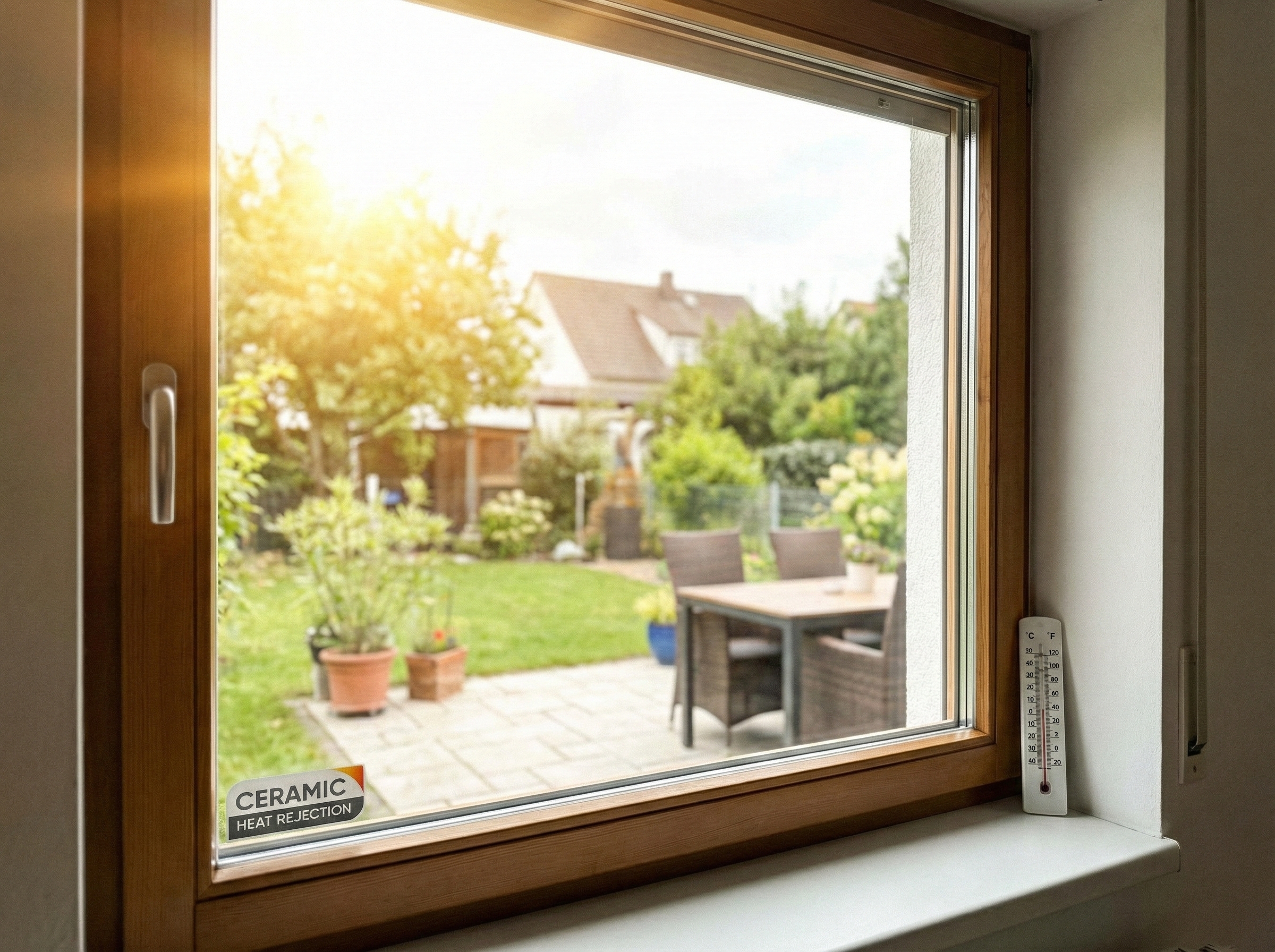 Ceramic window film is often considered the best option for extreme heat climates. It delivers strong heat rejection without changing the appearance of the glass. This makes it a preferred choice for both homes and commercial buildings in hot regions.
Ceramic film uses nano-ceramic particles to block infrared energy. Infrared light is the primary source of heat from the sun. By targeting this spectrum, ceramic film reduces heat before it enters the building.
Unlike metallic films, ceramic film does not rely on reflectivity. It absorbs and disperses heat while allowing visible light to pass through.
Ceramic window film offers several benefits in high-temperature environments.
These features make ceramic film effective even in regions with prolonged heat and strong sun exposure.
Ceramic film is ideal when heat reduction is needed without darkening windows. It works well for residential spaces, offices, and buildings with design or appearance requirements.
In extreme heat climates, ceramic film often outperforms dyed or basic solar films. It delivers consistent results and long-term reliability.
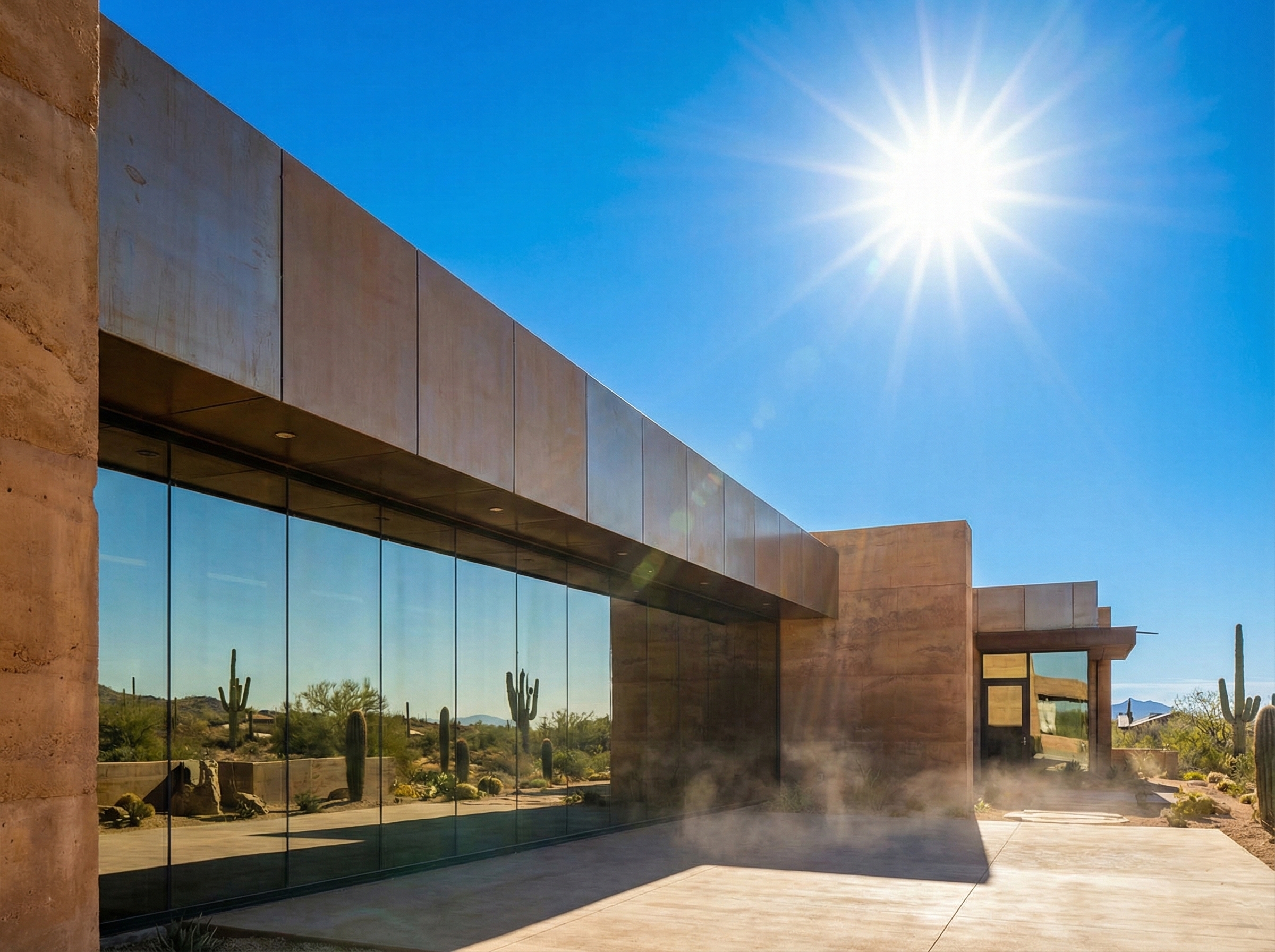
Reflective window film is designed to bounce solar energy away from glass. In desert and high-sun regions, this can significantly reduce heat during peak daylight hours.
Reflective film uses metallic layers to reflect a portion of sunlight. This reduces the amount of solar heat absorbed by the glass and transferred indoors.
During bright daylight conditions, reflective film can deliver strong heat reduction. This makes it effective for buildings with constant sun exposure.
Reflective film performs best when exterior light levels are higher than interior lighting. During the day, it limits heat and glare effectively.
In the evening, when interior lights are brighter, the reflective effect is reduced. Heat control remains, but privacy and appearance may change.
Reflective films create a mirrored or shiny look on the exterior of the glass. This appearance may not suit all buildings or design preferences.
In residential areas or buildings with aesthetic restrictions, reflective film may require approval. Design and visual impact should always be considered.
Extreme heat climates are not all the same. The best window film depends on sun exposure, building type, and how the space is used. Choosing based on real conditions leads to better performance and long-term results.
Desert regions experience strong sunlight for most of the year. Windows face constant exposure, especially on south- and west-facing sides.
Ceramic window film is often the best choice in these environments. It delivers high heat rejection without creating a reflective appearance. Reflective film may also work, but appearance and glare should be considered.
Tropical climates combine heat with high humidity. Reducing solar heat helps air conditioning systems manage both temperature and moisture.
Ceramic and solar control films work well in these regions. Films with balanced light transmission help reduce heat without darkening interiors.
Homes often prioritize comfort, natural light, and exterior appearance. Ceramic window film fits these needs well and blends with residential design.
Commercial buildings may focus more on energy performance and glare reduction. Solar control and reflective films are commonly used for offices with large glass surfaces.
South- and west-facing windows receive the strongest sun exposure. These areas benefit most from high-performance heat control film.
Targeting these windows first can deliver noticeable comfort improvements and energy savings, especially in extreme heat climates.
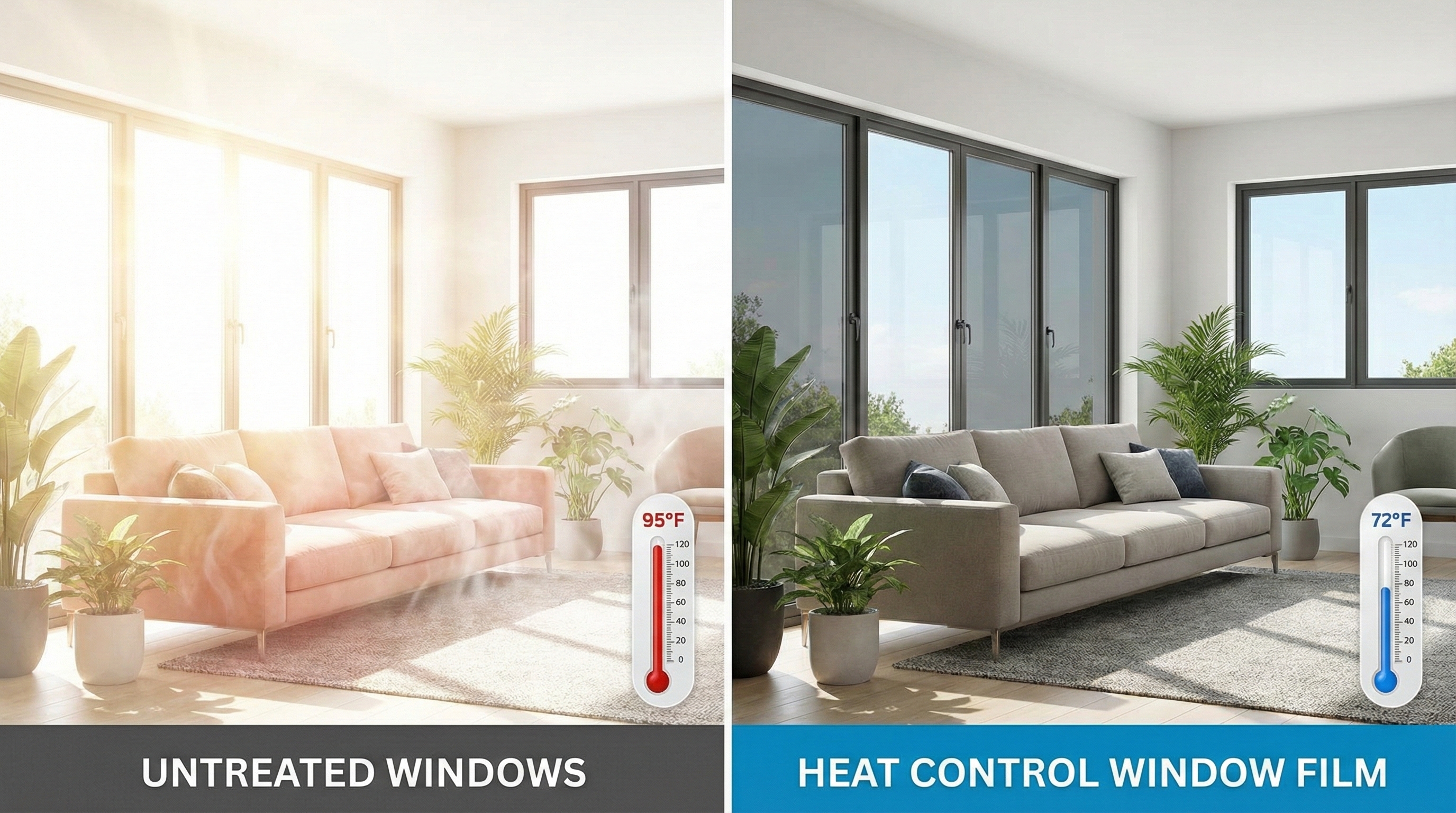
Heat control window film delivers benefits that go beyond temperature reduction. In extreme heat climates, it plays a key role in improving comfort and managing energy use.
By blocking a large portion of solar heat, window film helps keep indoor spaces cooler. Rooms feel more comfortable throughout the day, even during peak sunlight hours.
This creates more consistent temperatures across the building. Hot spots near windows are reduced, making spaces easier to use.
When less heat enters through windows, air conditioning systems do not need to work as hard. This reduces energy consumption and lowers cooling costs.
In extreme heat climates, this can lead to noticeable savings over time. Reduced HVAC strain also helps extend the lifespan of cooling equipment.
Window film reduces glare from direct sunlight. This improves visibility and comfort in workspaces and living areas.
By controlling heat and glare together, window film creates a more comfortable environment without sacrificing natural light.
Extreme heat places extra stress on window film. Proper installation and material quality play a major role in long-term performance, especially in hot environments.
High temperatures can accelerate wear if film is not designed for intense sun exposure. Poor-quality film may discolor, bubble, or peel over time.
Extreme heat also increases thermal expansion on glass surfaces. This makes precise installation even more important to prevent edge failure.
Professional installation ensures the film is applied evenly and securely. Installers account for glass type, window size, and exposure when applying film.
In extreme heat climates, correct installation helps prevent premature failure. It also ensures the film performs as intended under constant sun exposure.
High-quality window film can last many years when properly installed. Interior films in hot climates often maintain performance longer due to reduced exposure to weather.
Routine cleaning with non-abrasive materials helps preserve appearance and effectiveness. With proper care, heat control window film remains a durable, long-term solution.
Choosing the wrong window film can limit performance and lead to frustration. In extreme heat climates, avoiding common mistakes is essential for long-term results.
Many people assume darker film blocks more heat. While darkness can reduce glare, it does not always mean better heat rejection.
High-performance films, such as ceramic window film, can block significant heat while remaining relatively clear. Performance should be evaluated using heat metrics, not appearance.
Different types of glass respond differently to window film. Applying the wrong film to certain glass types can reduce performance or create stress.
Sun exposure also matters. South- and west-facing windows need higher-performing film than shaded or north-facing glass.
Even the best window film can fail if installed poorly. Bubbles, peeling, or edge damage reduce effectiveness and appearance.
Professional installation is especially important in extreme heat climates. It ensures durability and reliable performance over time.
Window film often raises questions for property owners in hot climates. Below are clear answers to common concerns.
Yes. High-quality heat control window film can significantly reduce solar heat gain. In extreme heat climates, it helps lower indoor temperatures and improve comfort when properly selected and installed.
Not necessarily. Many modern films block heat without darkening the glass. Ceramic window film is a popular option for maintaining natural light while reducing heat.
When the correct film is applied to the correct glass type, the risk is very low. Professional installers evaluate glass conditions to ensure compatibility.
Quality window film can last many years, even in hot climates. Professional installation and proper maintenance help extend its lifespan.
The best window film for extreme heat climates is one that delivers strong heat rejection without sacrificing comfort or appearance. In most cases, ceramic window film stands out as the top choice.
Ceramic film blocks a high percentage of infrared heat while allowing natural light to pass through. It performs consistently under intense sunlight and does not create a reflective or mirrored look. This makes it ideal for both residential and commercial buildings in hot regions.
Reflective window film can also be effective in desert and high-sun environments. It offers strong daytime heat reduction but may not suit every building due to its appearance and performance changes in low-light conditions.
Solar control and low-E films provide additional options depending on building design, sun exposure, and budget. The right choice depends on your climate, window orientation, and performance goals.
Choosing the correct window film improves indoor comfort, reduces cooling costs, and protects interiors from sun damage. For expert recommendations and professional installation tailored to extreme heat climates, contact American Window Film to find the best window film solution for your building.


No Comments Yet
Let us know what you think