

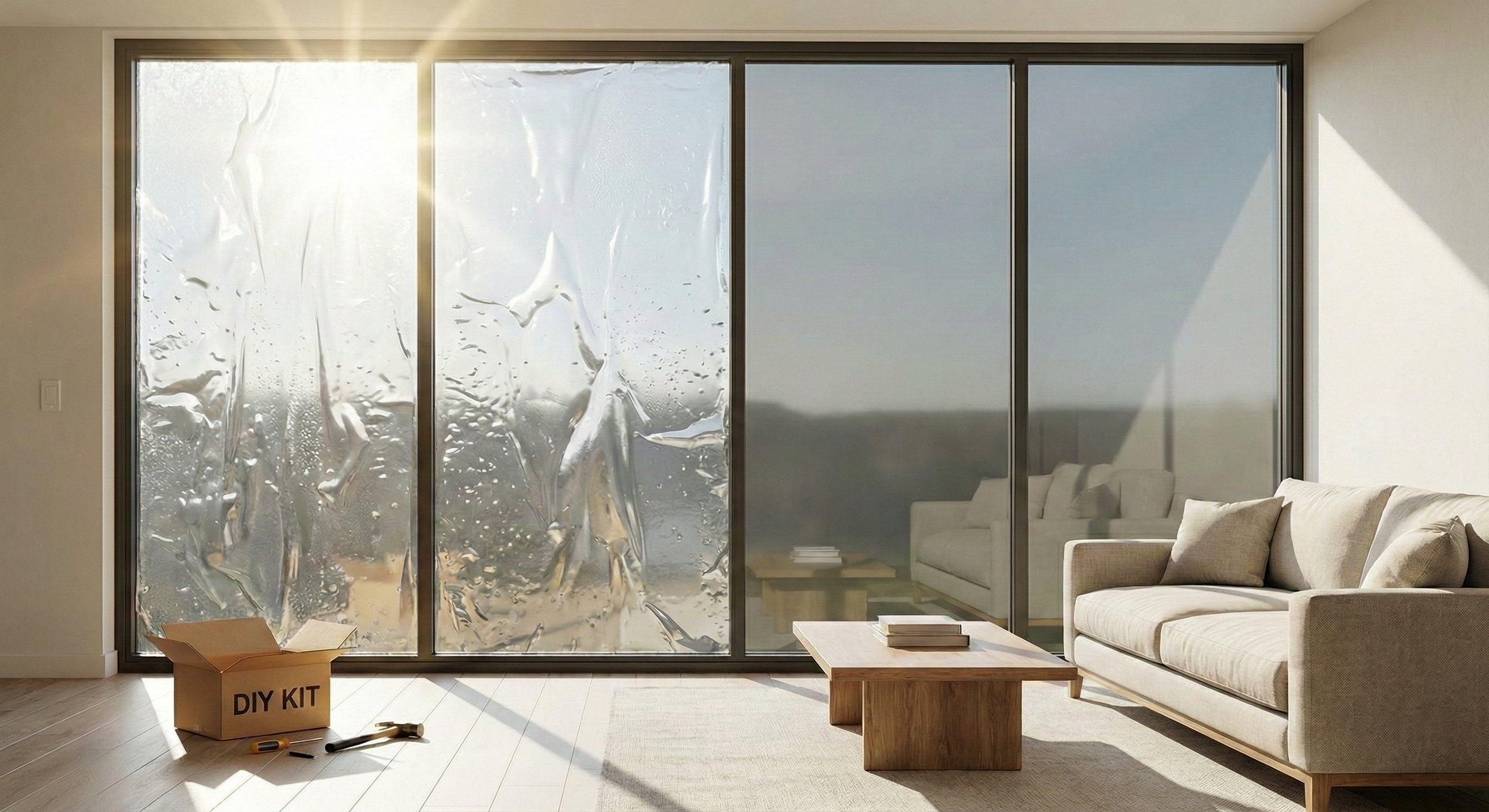
Many homeowners and business owners attempt to install window film themselves to save money. While it may seem simple, DIY installation often leads to costly mistakes. Improper preparation, incorrect measurements, and the use of the wrong tools are just a few examples that can compromise the performance of window film.
These errors can result in bubbles, wrinkles, peeling, or reduced energy efficiency. Poorly applied film may also fail to block harmful UV rays or protect furniture and flooring.
In this article, we explore the most common DIY mistakes and explain why professional installation from experts like American Window Film is the best way to ensure long-lasting, flawless results for both residential and commercial properties.
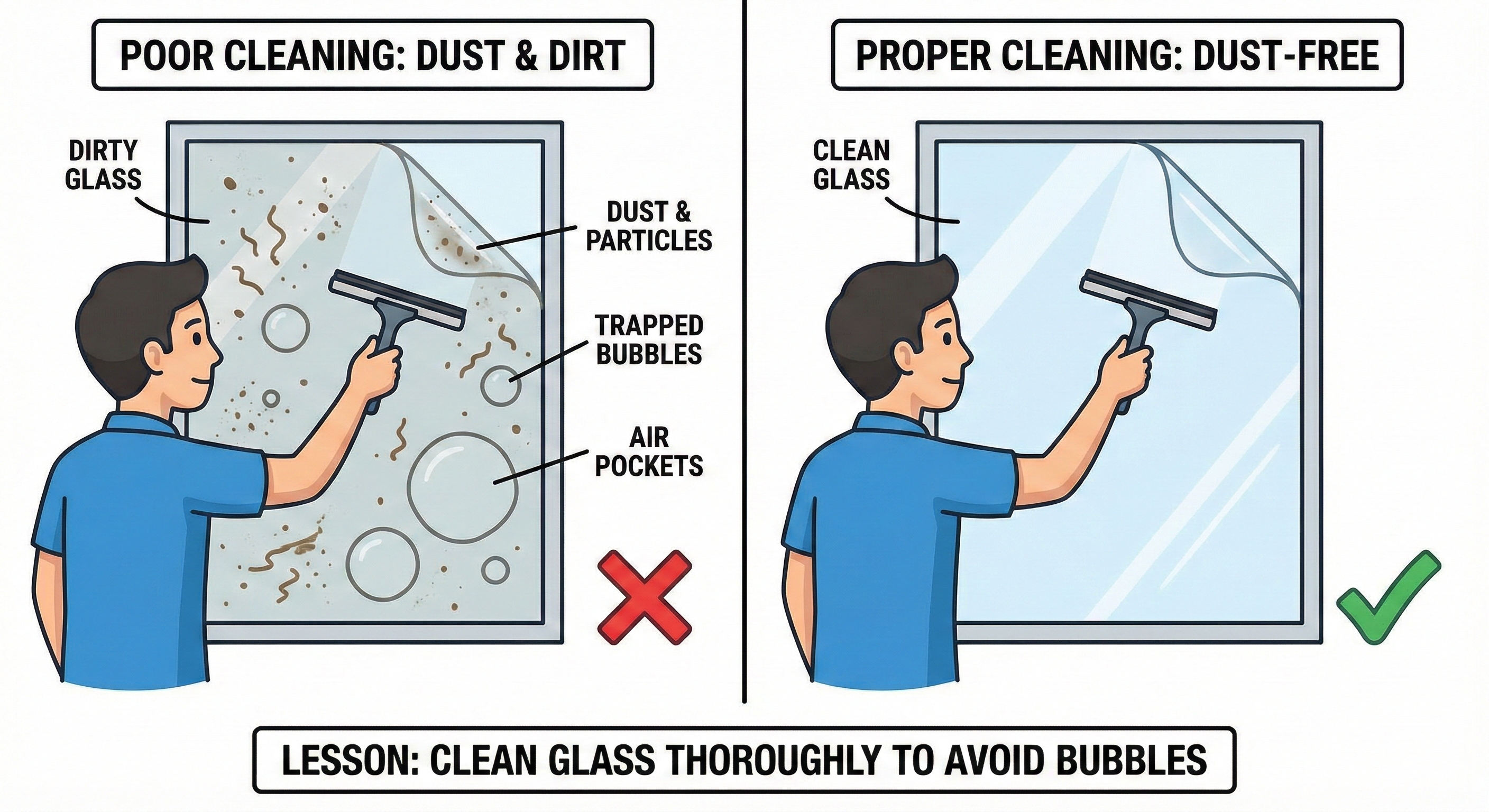
Proper glass preparation is the most common area where DIY installers make mistakes. Even a small amount of dust, dirt, or residue can cause bubbles and prevent the film from adhering correctly. These issues often lead to uneven surfaces, peeling edges, and reduced effectiveness of the window film.
Skipping thorough cleaning or using the wrong cleaning solution can leave behind particles that become trapped under the film. These particles create imperfections that are difficult to fix once the film is applied. Over time, small errors like these can cause the film to lift or peel, reducing its ability to block heat, glare, and UV rays.
DIY installers sometimes use household sprays or paper towels instead of professional-grade cleaners and lint-free cloths. This can scratch the glass or leave streaks that interfere with the film’s adhesion. Proper cleaning techniques are essential to create a smooth surface that allows the film to stick evenly and perform at its best.
By taking the time to clean the glass thoroughly and using the right tools and solutions, installers can avoid common problems that compromise the longevity and effectiveness of window film. Proper preparation is the foundation of a successful installation and ensures optimal performance.
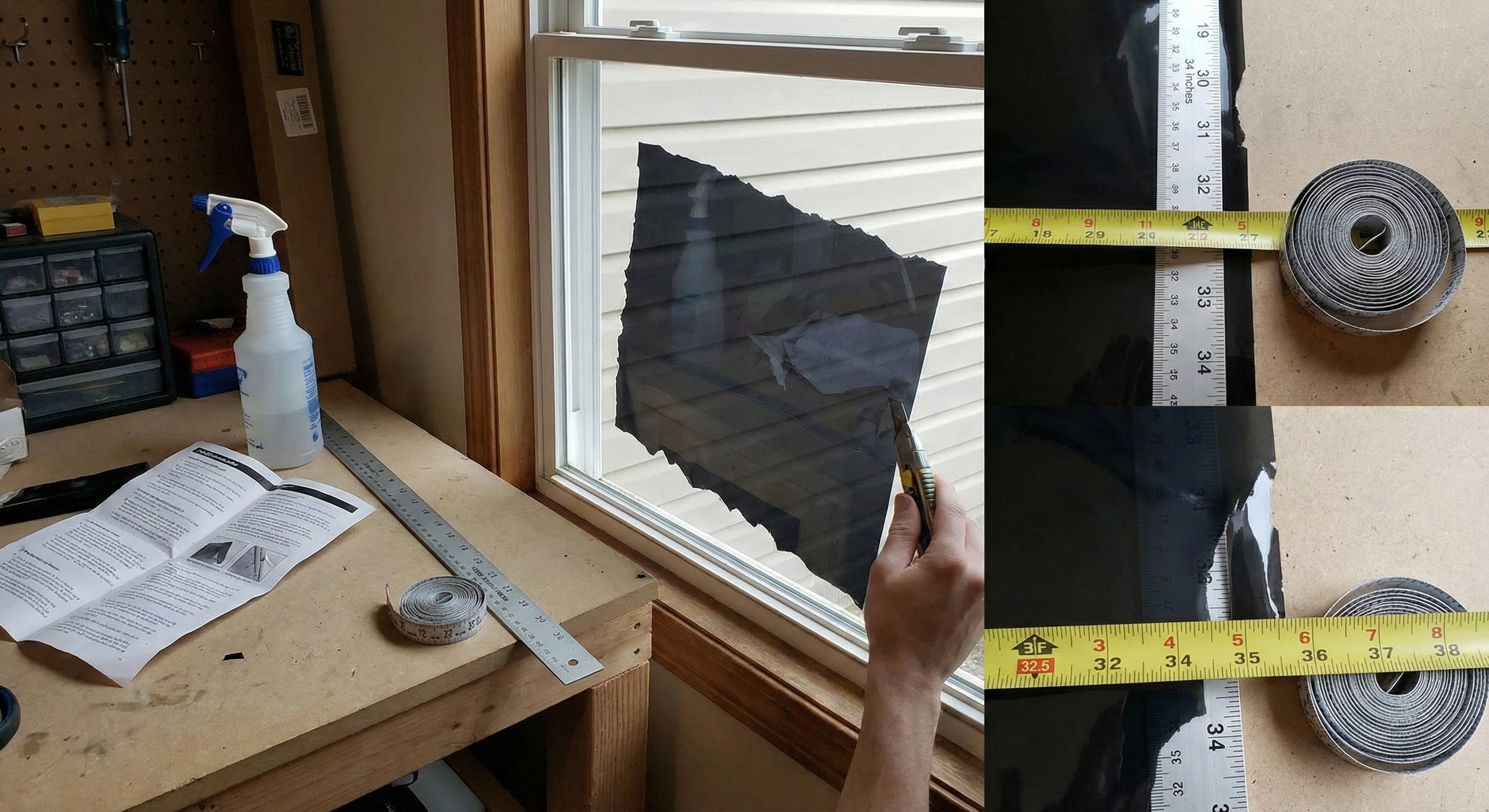
One of the most common mistakes DIY installers make is improper measuring and cutting of window film. Even small errors can lead to wasted material, uneven edges, and gaps that reduce the effectiveness of the installation.
Accurate measurements are essential for a precise fit. Many DIY installers underestimate the dimensions of the window or fail to account for borders and curves. Mistakes in measurement can result in film that is too small to cover the window fully or too large, creating excess that must be trimmed, which increases the risk of mistakes.
Cutting the film incorrectly can create jagged edges, uneven lines, or corners that do not adhere properly. Using household scissors or knives without a straight edge can make these problems worse. Even slight imperfections in cutting can cause peeling or air pockets that compromise performance and appearance.
Incorrect measuring and cutting not only affect the look of the film but also its functionality. Gaps, overlaps, or uneven edges can reduce heat reduction, glare control, and UV protection. The longevity of the film can also be affected, leading to premature peeling or bubbling over time.
Proper measurement and precise cutting are critical steps for a successful installation. Taking time to plan and measure accurately helps prevent mistakes and ensures the window film performs effectively for years.
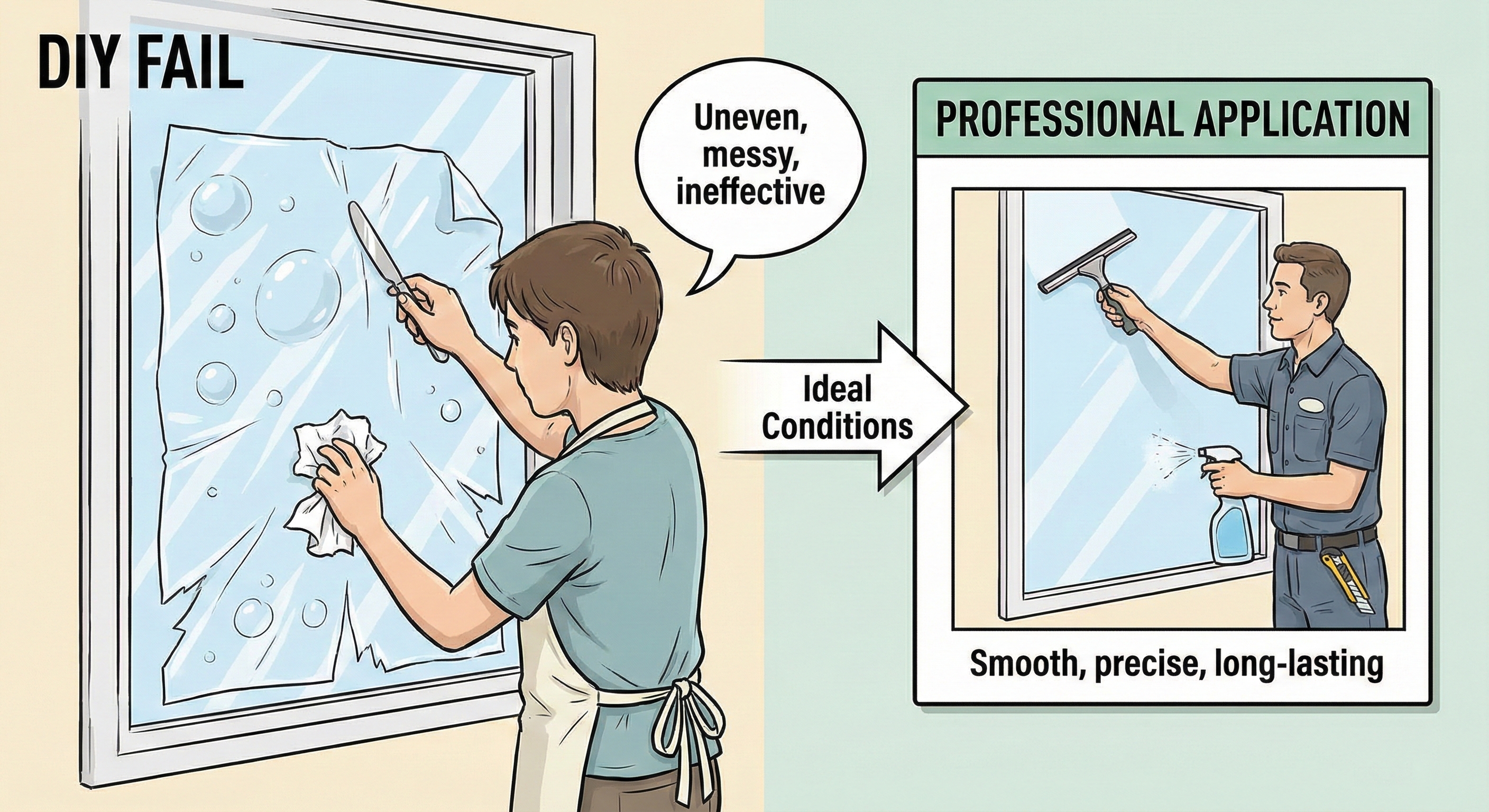
Many DIY installers make mistakes by using household items or improvised tools instead of the proper equipment for window film installation. These errors can lead to scratches, wrinkles, and bubbles that reduce the film’s performance and longevity.
Using knives, kitchen utensils, or rough squeegees can easily scratch the glass or the film itself. Scratches not only affect the appearance but also weaken the film’s adhesion, increasing the likelihood of peeling or bubbling over time.
Incorrect application techniques, such as applying too much pressure in some areas or too little in others, can cause uneven surfaces. Air pockets and wrinkles are common results of uneven application, which compromise the film’s ability to block heat, glare, and UV rays effectively.
Applying too much or too little soapy solution can also create problems. Too much solution can prevent the film from sticking properly, while too little can make it difficult to reposition the film during installation. Finding the right balance is critical for a smooth, bubble-free finish.
Proper tools, materials, and techniques are essential to achieve a successful installation. Careful application prevents common DIY mistakes, ensuring the window film performs optimally for both protection and comfort.
The environment plays a critical role in the success of a window film installation. DIY installers often make mistakes by applying film in conditions that are too hot, cold, or dusty, which can compromise adhesion and performance.
Installing window film when it’s too hot or too cold can cause the adhesive to fail. Extreme temperatures may make the film brittle, stretch it improperly, or prevent it from sticking evenly. High humidity can also trap moisture under the film, creating bubbles and reducing longevity.
Even tiny dust particles or debris on the glass or in the air can become trapped under the film. This leads to imperfections, bubbles, and a rough surface. Without proper control of the installation environment, the film may peel or fail prematurely.
Choosing the right time and environment for installation is essential. Ideal conditions include moderate temperature, low humidity, and a clean, dust-free workspace. Taking the time to prepare the installation environment significantly reduces common DIY errors and ensures the window film performs as intended.
Choosing the wrong type of window film is a common mistake for DIY installers. Not all films are compatible with every window or intended purpose, and using an inappropriate film can reduce performance and even cause damage.
Certain films are designed for specific glass types or environments. For example, some films may not adhere properly to tempered glass or may react poorly in high-sunlight areas. Using the wrong material can result in bubbling, peeling, or uneven adhesion.
Selecting the wrong film can compromise the very benefits you expect. Heat-reducing films may not block UV effectively, while decorative films may fail to provide sufficient glare control. Incorrect films can also reduce energy efficiency and shorten the lifespan of the installation.
Incompatible or low-quality films can lead to costly repairs, repeated installations, and even damage to window surfaces. DIY installers may not realize the importance of matching the film type to window specifications, which can result in frustration and unnecessary expense.
Careful consideration of the right film for the window type, climate, and intended benefit is essential. Selecting the proper film ensures optimal performance, protection, and longevity.
While DIY window film installation may seem cost-effective, professional installers consistently deliver superior results. Experts have the training, tools, and experience to avoid common mistakes, ensuring the film performs optimally for years.
Professional installers understand the nuances of window film application. They know how to clean and prep glass thoroughly, measure and cut film accurately, and apply it under ideal conditions. This expertise prevents bubbles, wrinkles, and peeling that often occur with DIY attempts.
Professional installation comes with added benefits like warranties and quality guarantees. High-quality films installed correctly maintain their heat reduction, glare control, and UV-blocking capabilities. Improper DIY installations often void warranties or reduce the effectiveness of the product, resulting in wasted money and time.
Residential and commercial projects have different requirements. Large commercial windows or high-traffic areas demand specialized tools and techniques. Professionals ensure the right type of film is selected for each project, considering factors like glass type, sun exposure, and building codes. This expertise ensures consistent performance and long-lasting protection.
For both residential and commercial installations, American Window Film provides expert service that guarantees flawless results. Their team uses professional-grade tools, precise techniques, and industry knowledge to deliver installations that maximize energy efficiency, comfort, and interior protection. Homeowners and businesses benefit from a professional finish that DIY methods simply cannot replicate.
Choosing professional installation not only prevents common DIY mistakes but also ensures your investment in window film provides the intended benefits. With experts like American Window Film, you gain peace of mind, superior performance, and lasting protection for every window.
DIY window film installation may seem like a cost-saving option, but common mistakes can lead to bubbles, peeling, and reduced performance. Professional installers deliver precise, long-lasting results that protect interiors, improve comfort, and maximize energy efficiency.
For all residential and commercial window film and tinting needs, contact American Window Film to provide expert service, high-quality materials, and flawless installations that stand the test of time.

No Comments Yet
Let us know what you think