

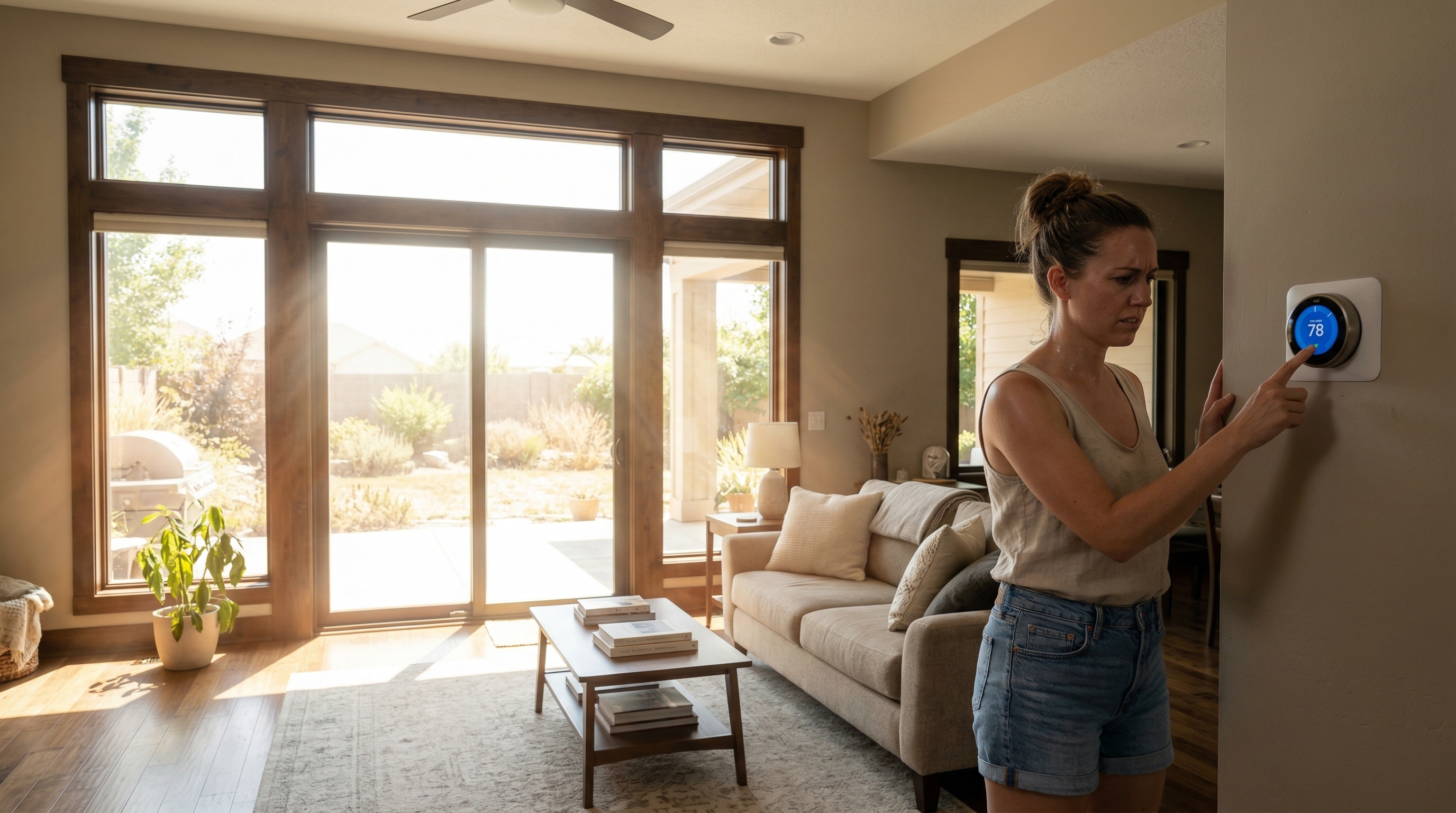
When summer hits, energy bills don’t just rise, they jump fast. Many homeowners are left wondering what changed so suddenly.
The biggest reason is simple. Your air conditioner starts working overtime. As outdoor temperatures climb, your AC runs longer cycles just to keep indoor spaces comfortable.
Your AC isn’t designed to run nonstop, but in summer, it often does. It turns on more frequently and stays on longer to fight constant heat.
This increased workload directly impacts your electricity bill. The longer your system runs, the more energy it consumes.
Afternoons are usually the worst. Sunlight is strongest, and heat builds up quickly inside your home.
Even if your AC is running, it struggles to keep up during these peak hours. That’s when energy usage spikes the most.
Some daily habits make things worse without you realizing it. Leaving blinds or curtains open during the day allows more heat inside.
Using appliances like ovens adds extra warmth indoors. Poor airflow or blocked vents can also make cooling less effective.
These small factors add up over time. They make your home harder to cool, which pushes your energy costs even higher.
At this point, it’s easy to blame your AC. But what if the real issue isn’t your system at all?
At some point, you’ve probably thought your AC isn’t doing its job. It’s running, but your home still feels warmer than it should.
The truth is, your AC might not be the real problem. It could be working exactly as designed, but fighting a losing battle.
Your air conditioner cools the air inside your home. It does not stop heat from entering in the first place.
So even if your system is running constantly, new heat keeps coming in. That makes it feel like your AC is underperforming.
There’s a big difference between removing heat and preventing it. Most homeowners focus only on cooling, not on blocking heat sources.
If heat keeps entering your home all day, your AC has to remove it again and again. That cycle never really stops during summer.
Think of your home like a bucket with a hole in it. Your AC is trying to fill it with cool air.
At the same time, heat is constantly leaking in. No matter how hard your AC works, it struggles to keep up.
This is why some homes never feel fully comfortable in summer. It’s not always about the AC—it’s about what’s letting heat in.
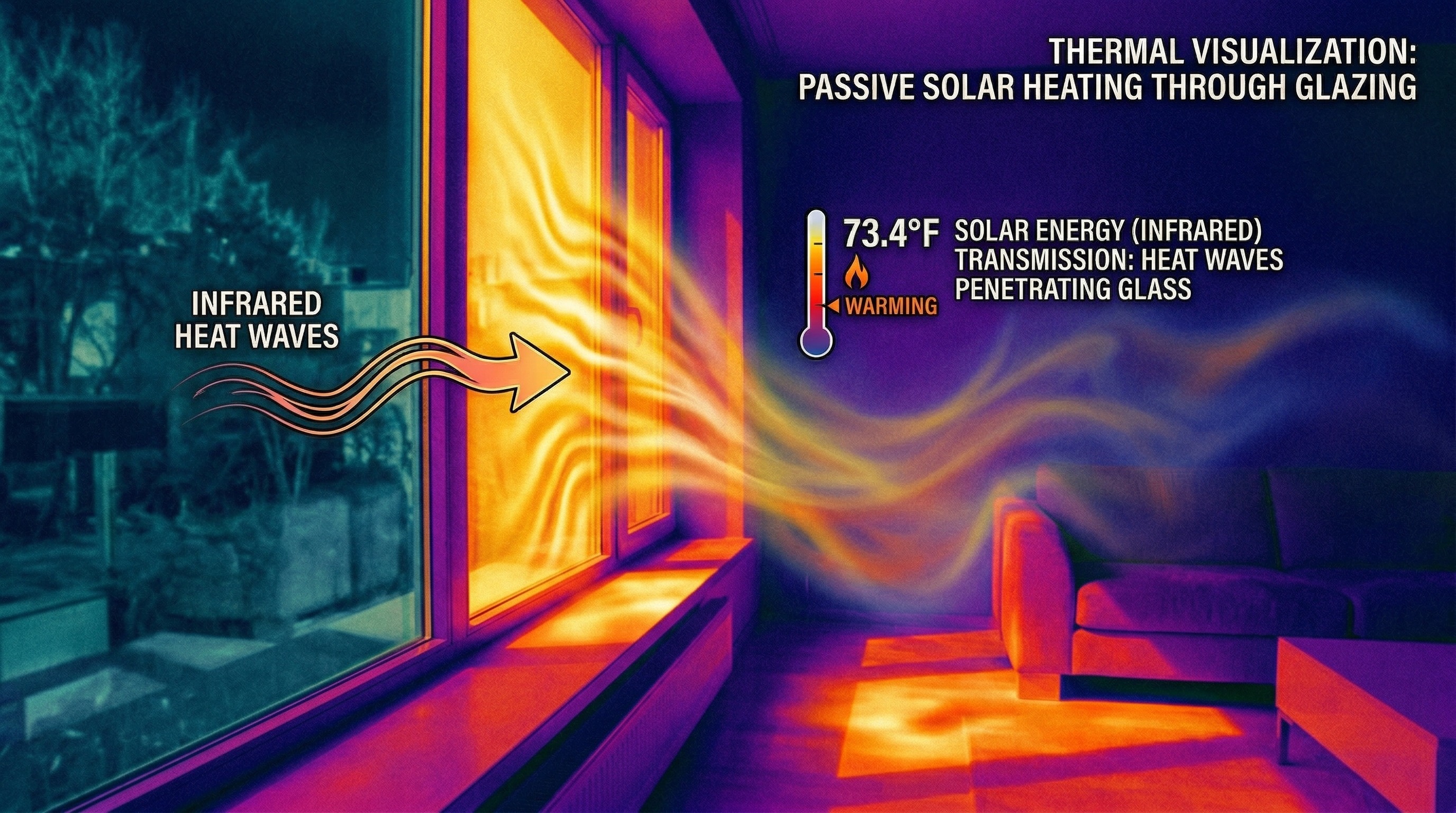
You might not notice it, but your windows are one of the biggest sources of heat in your home. They let in far more than just light.
Sunlight carries heat energy that passes straight through glass. Once inside, that heat gets trapped and starts building up.
Solar heat gain is the heat your home receives from sunlight. When sunlight hits your windows, a large portion of that energy comes indoors.
This isn’t just light warming the room slightly. It’s a steady stream of heat entering your space for hours.
Not all sunlight is visible. A big part of it is infrared radiation, which you can’t see but can definitely feel.
This is the same type of heat that makes your skin feel hot under direct sunlight. When it passes through your windows, it raises indoor temperatures quickly.
Glass is not a good insulator. It allows heat to pass through easily, especially in standard residential windows.
Once the heat enters, it doesn’t escape as easily. It gets trapped inside, creating a greenhouse-like effect.
This is why rooms with large or sun-facing windows often feel much hotter. The heat builds up faster than your AC can remove it.
It’s one thing to know heat is entering your home. It’s another to understand what that actually does to your energy bill.
Every bit of heat that comes through your windows has to be removed by your AC. That’s where the real cost starts adding up.
When heat keeps entering your home, your AC doesn’t get a break. It keeps cycling on and off to maintain the set temperature.
This constant operation increases energy usage quickly. Even small temperature gains can force your system to work much harder.
Here’s what typically happens during a summer day. Sunlight enters through your windows and raises the indoor temperature.
Your AC turns on to cool things down. But while it’s running, more heat keeps coming in.
This creates a loop that repeats all day. Your system is always catching up, but never fully getting ahead.
Not all rooms heat up the same way. Spaces with large windows or direct sunlight exposure tend to get much hotter.
Upper floors are also more affected since heat rises and accumulates. These areas force your AC to work even harder to balance the temperature.
That uneven cooling is a sign of ongoing heat gain. And it’s one of the biggest reasons your energy bills climb so high in summer.
By now, you know that windows can let in a lot of heat. But how do you know if they’re the reason your energy bills are so high?
There are a few clear signs to look for. If you notice even a couple of these, your windows are likely a major factor.
Stand near a window on a sunny afternoon. If it feels noticeably warmer compared to other parts of the room, that’s heat entering through the glass.
This localized heat buildup is one of the most obvious signs. It often makes certain areas uncomfortable even when the AC is running.
If your AC seems to run non-stop during the day but slows down at night, sunlight is likely the cause. Heat entering through windows peaks when the sun is strongest.
This forces your system to work harder during those hours. Over time, that pattern leads to higher energy bills.
Some parts of your home may feel much hotter than others. Rooms that face the sun or have larger windows are usually the worst.
Upstairs spaces also tend to trap more heat. This uneven temperature is a strong indicator of heat gain through windows.
If you deal with strong glare on screens or harsh sunlight in your living spaces, that’s another sign. It means a significant amount of solar energy is entering your home.
That same sunlight isn’t just bright, it’s also bringing in heat. And that heat adds to your cooling load.
Once you realize your windows are letting in heat, the next question is obvious. How do you actually stop it?
Most homeowners try a few quick fixes first. Some help a little, but they don’t solve the core problem.
Curtains, blinds, and shades are the most common options. They can block sunlight and reduce glare inside your home.
But there’s a catch. The heat has already passed through the glass before these coverings can stop it.
So while they make rooms darker, they don’t fully prevent heat buildup. Your AC still has to deal with that trapped warmth.
Wall and attic insulation help slow down heat transfer. They’re important, but they don’t address what’s happening at your windows.
Glass remains one of the weakest points in your home’s thermal barrier. Heat moves through it much more easily than insulated walls.
This means even a well-insulated home can still struggle with overheating. Especially during peak sunlight hours.
To truly reduce heat, you need to stop it before it enters your home. That means addressing the glass itself.
Solutions that block or reflect heat at the window level are far more effective. They reduce the load on your AC instead of adding to it.
This is where many homeowners start looking for a smarter, long-term fix. One that doesn’t rely on constant cooling to stay comfortable.
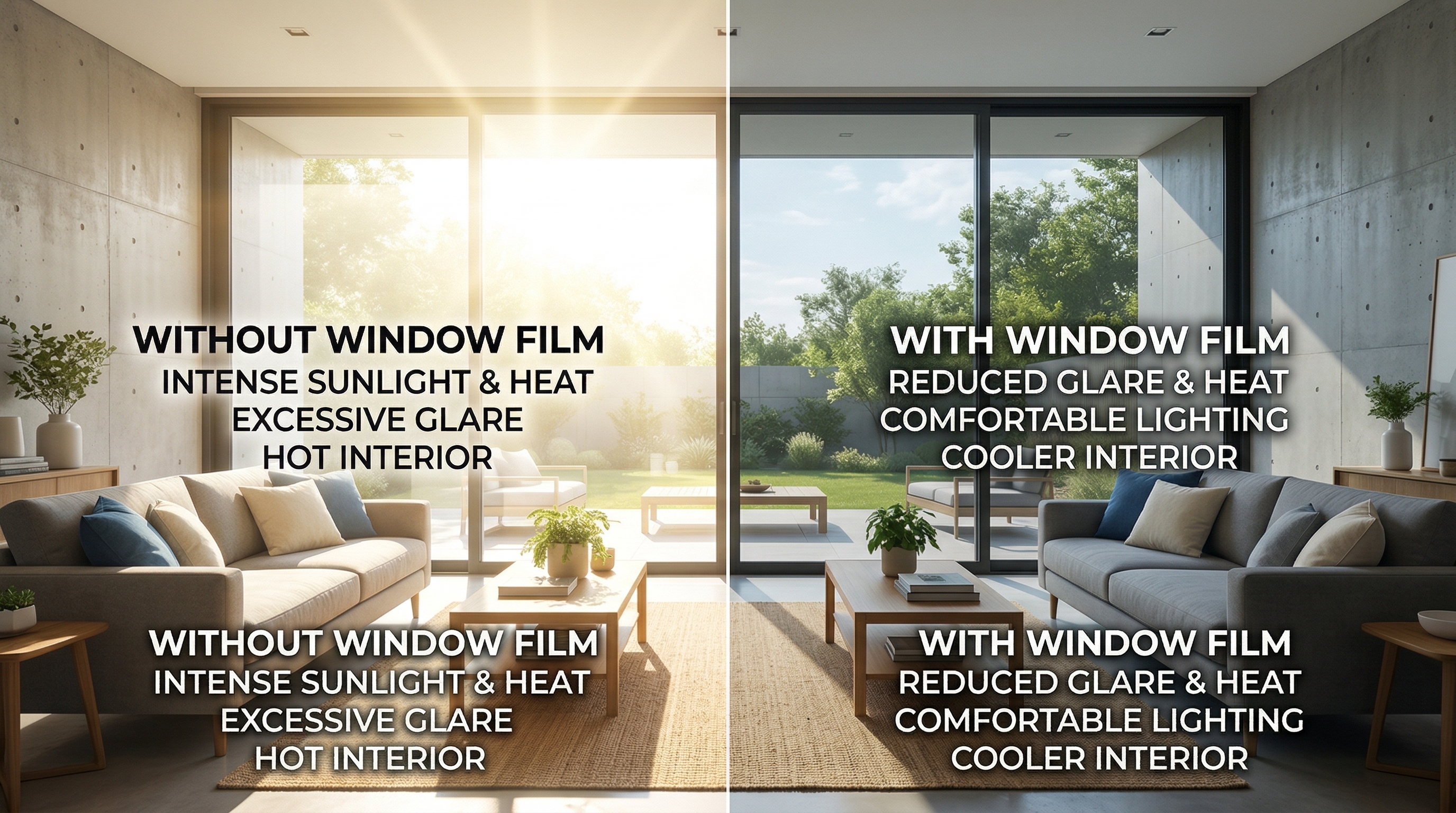
If the goal is to stop heat before it enters your home, you need a solution that works directly on your windows. That’s where window film comes in.
Window film is a thin layer applied to the inside of your glass. It’s designed to block a large portion of solar heat while still letting in natural light.
Window film works by filtering out infrared heat from sunlight. This is the part of solar energy that raises indoor temperatures the most.
Instead of letting that heat pass through, the film reflects and absorbs it. This keeps your home cooler without relying only on your AC.
Curtains and blinds only block light after it enters your home. By that point, much of the heat is already inside.
Window film works at the glass level. It reduces heat before it has a chance to build up indoors.
This makes a noticeable difference in how your space feels during the day. Rooms stay brighter but much more comfortable.
Blinds and curtains can help with glare and privacy. They also darken the room, which some people prefer.
But when it comes to heat control, they fall short. They don’t stop solar heat from passing through the glass.
Window film targets the source of the problem. It reduces the amount of heat entering in the first place.
One of the biggest advantages is that you don’t need to replace your windows. Window film upgrades the performance of the glass you already have.
It’s a faster and more cost-effective option compared to full window replacement. You get better comfort and lower energy use without major changes to your home.
At this point, the big question is simple. Does window film actually make a noticeable difference in your energy bills?
The answer is yes, and the impact can be significant when heat gain is reduced at the source.
By blocking a large portion of solar heat, window film reduces how often your AC needs to run. Less runtime means lower energy consumption.
Many homeowners see cooling energy savings of up to 30 percent. The exact number depends on your home, window size, and sun exposure.
High-quality window films can block a major percentage of solar heat. This includes the infrared heat that causes indoor temperatures to rise quickly.
In many cases, up to 70 to 80 percent of solar heat can be reduced. That creates a noticeable difference, especially in rooms that get direct sunlight.
When your home stays cooler naturally, your AC doesn’t have to work as hard. It cycles less often and runs for shorter periods.
This not only lowers your energy bills but also reduces wear and tear on your system. Over time, that can help extend the life of your HVAC unit.

Lower energy bills are a big win, but that’s not the only thing you’ll notice after adding window film. The comfort improvements show up almost immediately.
These everyday benefits often make just as much of a difference as the cost savings.
Harsh sunlight can make it difficult to watch TV or work on a computer. Glare forces you to adjust screens or close curtains during the day.
Window film cuts down that glare without darkening your space. You still get natural light, but without the discomfort.
Sunlight doesn’t just bring heat. It also carries ultraviolet rays that can damage your interiors over time.
Furniture, flooring, and fabrics can fade with constant exposure. Window film blocks a large portion of these harmful rays and helps preserve your space.
One of the biggest improvements is how balanced your home feels. Rooms that used to be too hot become more usable throughout the day.
You won’t have to rely as much on your AC to fix uneven temperatures. The entire space feels more stable and comfortable.
By now, you’ve seen how much heat can enter through windows and how it affects your energy bills. The next step is figuring out if window film is the right fit for your home.
In most cases, the answer is yes, especially if you’re dealing with constant heat and rising cooling costs.
If your home heats up quickly during the day, your windows are likely a major factor. Rooms that feel uncomfortable despite running the AC are a strong signal.
High energy bills during summer are another clear sign. If your cooling costs keep rising, heat gain through glass is often the reason.
Homes with large windows or open glass areas see the biggest impact. Sun-facing windows, especially those exposed for long hours, bring in the most heat.
Older windows without modern coatings are also less efficient. These allow more heat to pass through compared to newer glass.
Replacing windows can improve energy efficiency, but it comes with a high cost. It’s a bigger project that takes more time and investment.
Window film offers a more practical alternative. It upgrades the performance of your existing windows at a fraction of the cost.
While some options are available for DIY, professional installation gives better results. It ensures proper fit, finish, and long-term performance.
A professional can also recommend the right type of film based on your home. That makes a big difference in how effective the solution is.
High energy bills in summer don’t happen by accident. In many homes, windows are a major reason heat keeps building up indoors.
When that heat enters all day, your AC has to work harder to remove it. That cycle is what drives your cooling costs higher month after month.
The key is not just cooling your home, but stopping heat before it gets inside. Once you address that, everything else becomes easier and more efficient.
Window film offers a simple way to do exactly that. It helps reduce heat, improves comfort, and lowers the strain on your AC without major changes to your home.
Every day you wait, your system keeps working harder than it should. And your energy bills keep reflecting that.


No Comments Yet
Let us know what you think