


Heat buildup near windows is a common problem in homes and commercial buildings. Sun-facing windows can make rooms uncomfortable, increase cooling costs, and create uneven temperatures throughout the space. Many people notice that certain rooms feel much warmer than others, especially during sunny afternoons.
Modern window films are often recommended as a solution, but the question many people ask is simple. How much heat can window films actually block? Understanding the answer requires knowing how heat enters through glass and how today’s window film technology works.
Unlike older dark tints, modern window films are designed to target solar heat more precisely. They reduce heat without blocking natural light or changing how windows look. This makes them a practical option for improving comfort while keeping spaces bright.
Knowing what kind of heat is blocked, how performance is measured, and what results to expect helps set realistic expectations. With the right information, it becomes easier to decide whether window film is the right solution for your space.
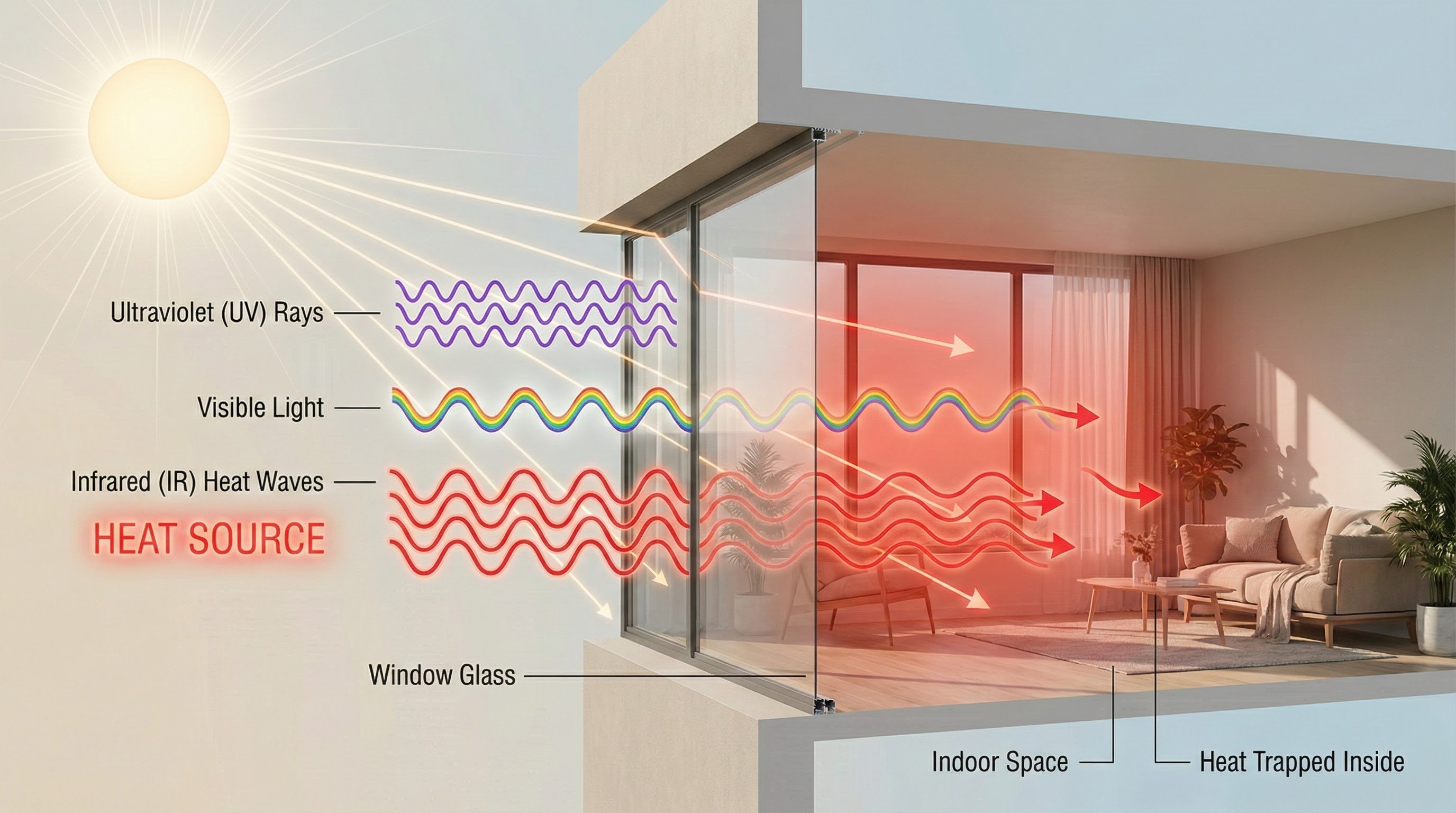
Windows play a major role in how heat enters a building. While they provide natural light and views, they also allow solar energy to pass through the glass. Understanding how this heat transfer happens explains why certain rooms feel hotter than others.
Sunlight is made up of three main components. Visible light is what allows us to see and brightens interior spaces. Ultraviolet light causes fading and material damage over time. Infrared radiation carries most of the heat we feel from the sun.
When sunlight hits a window, visible light and infrared heat pass through the glass. Even when the glass looks clear, infrared energy can raise indoor temperatures. This is why rooms can feel hot without appearing overly bright.
Walls and roofs are insulated to slow heat transfer. Windows, even high-quality ones, are far less effective at stopping solar heat. Large glass areas allow significant heat gain, especially on south- and west-facing sides of a building.
As the sun moves throughout the day, heat enters through windows at different angles. This leads to hot spots and uneven temperatures. Window film helps address this weakness by reducing heat at the glass before it spreads indoors.
When people hear the term “heat blocking,” it can be misleading. Window film does not act like insulation that traps heat outside completely. Instead, it reduces the amount of solar heat that passes through the glass.
Most of the heat from sunlight comes from infrared radiation, not visible light. Modern window films are designed to target infrared energy specifically.
By reducing infrared transmission, window film lowers the amount of heat entering the space. At the same time, visible light can still pass through. This is why rooms can stay bright while feeling cooler.
Older window films relied on dark tints to reduce heat. While this worked to some extent, it also reduced natural light and changed the look of the windows.
Modern window films use advanced materials to block heat without heavy tinting. Heat reduction comes from managing solar energy, not from making rooms darker. This allows for better comfort without sacrificing daylight or views.
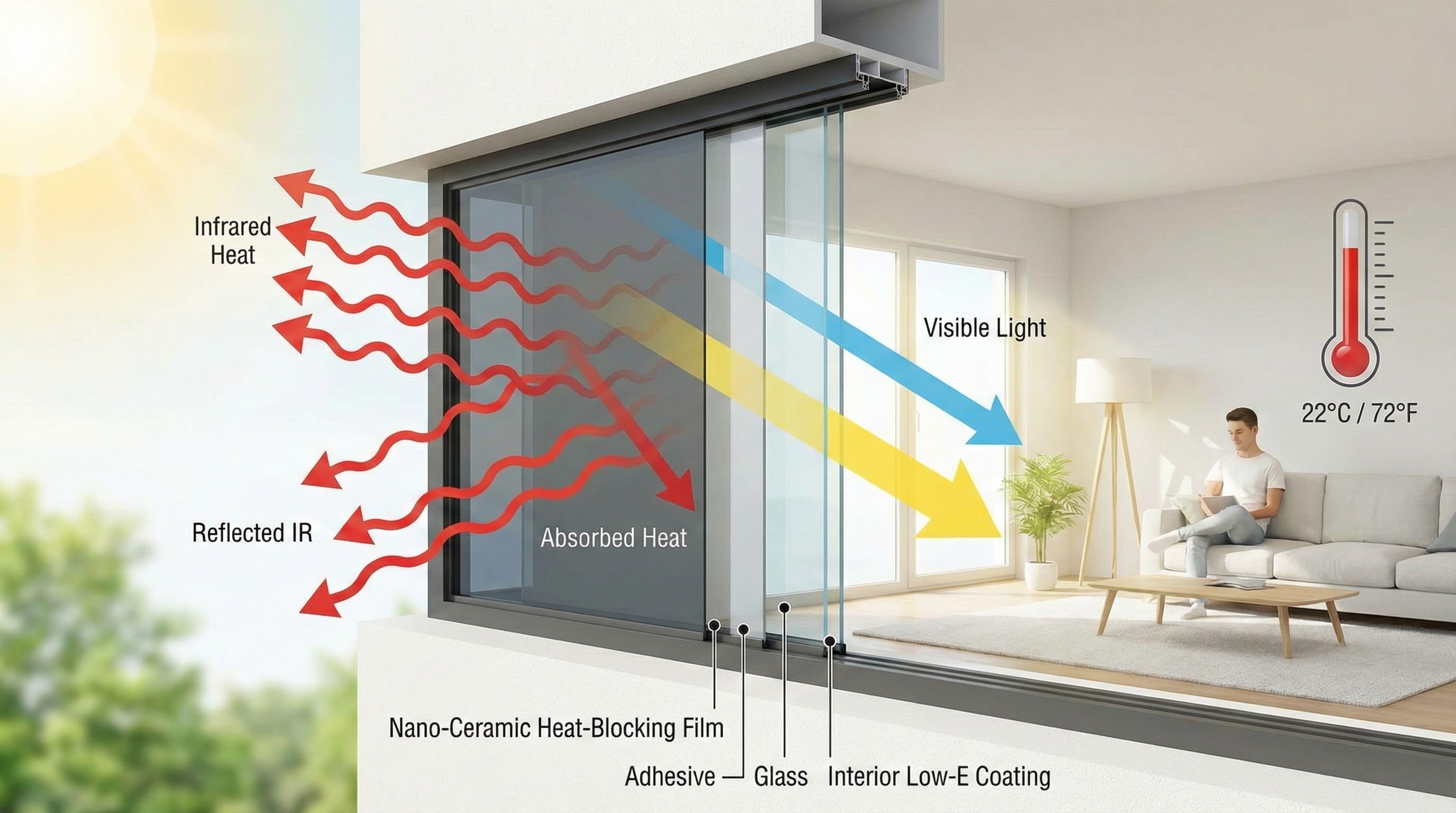
Modern window films can block a significant portion of solar heat entering through glass. The exact amount depends on the type of film, the existing glass, and how much direct sunlight the window receives. Understanding realistic performance ranges helps set the right expectations.
High-quality window films are designed to reduce solar heat gain by targeting infrared energy. In many cases, modern films can block a large percentage of heat that would otherwise pass through untreated glass.
This heat reduction is most noticeable on windows that receive strong, direct sunlight. Rooms feel more comfortable, and hot spots near windows are reduced. The improvement is often immediate after installation.
Heat reduction results are not identical in every building. Factors such as window orientation, size, and sun exposure play a major role. A west-facing window in direct afternoon sun will see greater benefits than a shaded window.
Climate also matters. Buildings in warmer regions experience stronger solar heat gain, which makes the impact of window film more noticeable. Interior layout and airflow can also affect how heat is felt in a space.
The type of glass already installed affects how much heat window film can block. Single-pane, double-pane, and coated glass all interact differently with solar energy.
Professional installation ensures the film performs as designed. Proper film selection and correct application are essential for achieving the best heat reduction and long-term results.
Window film performance is often described using technical terms. These numbers are important, but they can be confusing without context. Knowing what each metric means helps you understand how well a film will reduce heat in real-world conditions.
If you want a deeper breakdown of how different film technologies affect heat and light, this guide on types of window films and how they work explains performance differences in simple terms.
Total Solar Energy Rejected, or TSER, measures how much total solar energy a window film blocks. This includes infrared heat, visible light, and ultraviolet energy.
A higher TSER means more overall heat reduction. TSER is one of the most useful numbers for comparing window films when heat control is the main goal.
Infrared rejection shows how effectively a film blocks heat-carrying infrared radiation. Since infrared energy is the main source of solar heat gain, this metric is critical for comfort.
Modern window films are engineered to target infrared wavelengths. High infrared rejection helps reduce hot spots and lowers the amount of heat entering through sun-facing windows.
Visible Light Transmission, or VLT, measures how much natural light passes through the window. Higher VLT means a brighter interior.
For many buildings, the goal is to balance heat reduction with daylight. Modern window films are designed to block heat while maintaining useful natural light. This allows spaces to stay bright without overheating.
Not all window films block heat the same way. Different film technologies are designed to handle solar heat in different ways. Understanding these differences helps you choose the right option for your building.
This comparison of reflective, ceramic, and nano-carbon window films shows how modern films achieve strong heat rejection without relying on dark tints.
Dyed window films reduce heat by absorbing sunlight. They usually appear darker and work by limiting the amount of light entering the space.
While dyed films can reduce some heat, they are less effective than newer technologies. They may also fade over time and significantly reduce natural light.
Reflective and metallic films use thin metal layers to reflect solar energy away from the glass. These films can be very effective at blocking heat, especially on windows with direct sun exposure.
However, they often change the appearance of the building. Reflective films can create a mirror-like look during the day, which may not be desirable for all properties.
Ceramic and spectrally selective films are considered the most advanced options. They are designed to block infrared heat while allowing visible light to pass through.
These films provide strong heat reduction without heavy tinting or reflectivity. This makes them ideal for buildings that want to stay bright and maintain clear views while improving comfort.
Rooms with strong sun exposure are often the most uncomfortable areas in a building. West- and south-facing windows can allow large amounts of heat inside, especially during peak sunlight hours. Window film can make a noticeable difference, but it is important to understand what it can and cannot do.
Window film reduces the amount of solar heat entering through the glass. After installation, many people notice that rooms feel more balanced and less intense near windows.
Hot spots close to the glass are reduced. Sun-facing rooms often become more usable throughout the day. Glare is also reduced as a side benefit, which improves overall comfort.
Window film does not replace insulation or air conditioning. Heat can still enter a building through walls, roofs, and other areas.
In extremely hot conditions, window film may not make a room feel cool on its own. Instead, it reduces the heat load so cooling systems work more efficiently. This makes indoor temperatures easier to manage rather than eliminating heat entirely.

Many people want to know how much cooler a room will feel after window film is installed. While exact temperature changes vary, most buildings experience noticeable comfort improvements.
Window film reduces the amount of heat entering through the glass, which helps stabilize indoor temperatures. Rooms that previously felt hot or stuffy often feel more balanced after installation.
The biggest difference is usually felt near windows. Instead of intense heat radiating from the glass, the area feels more comfortable. This can make rooms usable for longer periods during the day.
Several factors affect how much cooler a space feels. Window size, sun exposure, and climate all play a role. The type of film and existing glass also influence results.
Airflow and room layout matter as well. While window film reduces heat gain, proper ventilation and cooling help maximize comfort. Together, these factors determine the overall improvement you experience.
Homes with large windows often experience uneven temperatures. Some rooms feel comfortable, while others become warm and uncomfortable during sunny hours. Window film helps balance these conditions by reducing solar heat at the glass.
By limiting heat entering through windows, window film helps keep indoor temperatures more even. Rooms near sun-facing windows feel closer in temperature to the rest of the home.
This consistency improves comfort throughout the day. Living areas, bedrooms, and home offices become more usable without relying heavily on blinds or curtains.
When less heat enters the home, air conditioning systems do not have to work as hard. This can help reduce cooling cycles and improve overall efficiency.
Over time, reduced strain on cooling systems can contribute to lower energy usage. Homeowners often notice improved comfort without constantly adjusting the thermostat.
Commercial buildings often have large glass areas that allow significant solar heat gain. This can lead to uncomfortable workspaces, uneven temperatures, and higher cooling demands. Window film offers practical benefits for managing heat in these environments.
Open offices with large windows can develop hot zones near the glass. Employees seated in these areas may feel uncomfortable, even when the rest of the space feels fine.
Window film helps reduce heat entering through sun-facing windows. This creates more consistent temperatures across the workspace and improves overall comfort for occupants.
Conference rooms and lobbies often feature floor-to-ceiling glass. These spaces can become warm quickly, especially during peak sun hours.
By reducing solar heat at the glass, window film helps keep these areas more comfortable. This makes meeting spaces more usable and improves the experience for visitors and staff.
There are several misconceptions about how window film works. Clearing these up helps set realistic expectations and makes it easier to understand the real benefits.
Many people assume darker films block more heat. While darker films reduce light, they are not always the most effective at stopping heat.
Modern ceramic and spectrally selective films can block significant heat while remaining light and clear. Heat reduction depends on technology, not just darkness.
Window film helps reduce the amount of heat entering a building, but it does not replace cooling systems. It works alongside air conditioning by lowering the heat load.
With less heat coming through windows, cooling systems operate more efficiently. This improves comfort but does not eliminate the need for air conditioning.
Not all window films are equal. Performance varies based on materials, design, and installation quality.
Choosing the right film for your building and sun exposure makes a big difference. Professional guidance ensures the film delivers the expected level of heat reduction.
Window film is often chosen as a comfort and efficiency upgrade rather than a cosmetic change. For many buildings, the reduction in solar heat makes a noticeable difference in how spaces feel and function.
Many of these comfort improvements are discussed in detail in this overview of 3M window film benefits and types, which highlights how professional films manage heat in buildings.
By reducing the amount of heat entering through windows, window film helps create more comfortable indoor environments. Rooms near sun-facing windows feel less intense, and temperatures are more consistent throughout the space.
Lower heat gain also means cooling systems do not have to work as hard. Over time, this can contribute to improved energy efficiency and reduced wear on HVAC equipment.
Window film is especially valuable for buildings with large glass areas or strong sun exposure. Homes with hot rooms, offices with open layouts, and commercial spaces with floor-to-ceiling windows often see the biggest benefits.
Choosing the right film is key. Performance varies by film type, glass condition, and orientation. A professional assessment helps ensure the solution matches your comfort goals.
Modern window films can block a significant portion of solar heat by targeting infrared energy at the glass. While exact results vary, most buildings experience noticeable improvements in comfort and temperature balance.
The key advantage of today’s films is efficiency without compromise. They reduce heat without darkening rooms or blocking natural light. This makes them a practical solution for both residential and commercial spaces.
Understanding performance metrics and setting realistic expectations helps ensure satisfaction. With the right film and professional installation, window film becomes a long-term solution for managing heat through glass.
If you are dealing with heat buildup from sun-facing windows, contact American Window Film for expert recommendations and professional installation tailored to your building.


No Comments Yet
Let us know what you think