


Ceramic window films are often described as a premium solution for controlling heat and light in buildings. Many people hear the term but are not sure what makes ceramic films different from traditional window films. The science behind them is what sets them apart.
Sunlight brings in natural light, but it also carries heat and ultraviolet energy. When this energy passes through glass, it can raise indoor temperatures and reduce comfort. Older window films reduced heat by darkening the glass or using metallic layers. These methods worked, but they also changed the appearance of windows and limited natural light.
Ceramic window films use advanced materials to solve this problem in a smarter way. They are designed to manage heat without relying on dark tints or reflective metals. This allows buildings to stay bright while improving comfort and energy efficiency.
Understanding how ceramic window films work helps building owners and managers make better decisions. Knowing the science behind the technology explains why ceramic films perform so well in both residential and commercial spaces.
Ceramic window film is made using advanced, non-metallic materials that are embedded directly into the film. These materials are designed to control heat and light without changing the appearance of the glass. This makes ceramic films different from traditional window films that rely on dyes or metal layers.
If you want a quick breakdown of how ceramic compares to other film types, this guide on reflective vs ceramic vs nano-carbon window films explains the differences in plain language.
Ceramic window films contain microscopic ceramic particles. These particles are evenly dispersed throughout the film layer. They are engineered to interact with specific parts of sunlight, especially infrared heat.
Because the particles are extremely small, the film remains clear. This allows natural light to pass through the window while unwanted heat is reduced. The result is improved comfort without a dark or reflective look.
Unlike metallic window films, ceramic films do not use metal to control heat. This non-metallic design prevents common issues like reflectivity and signal interference.
Being non-conductive also helps ceramic films maintain stable performance. The film does not corrode or change over time in the way some metal-based films can. This contributes to long-term clarity and durability.
Ceramic window films combine advanced material science with practical performance. This is why they are often chosen for modern buildings where comfort, appearance, and efficiency all matter.
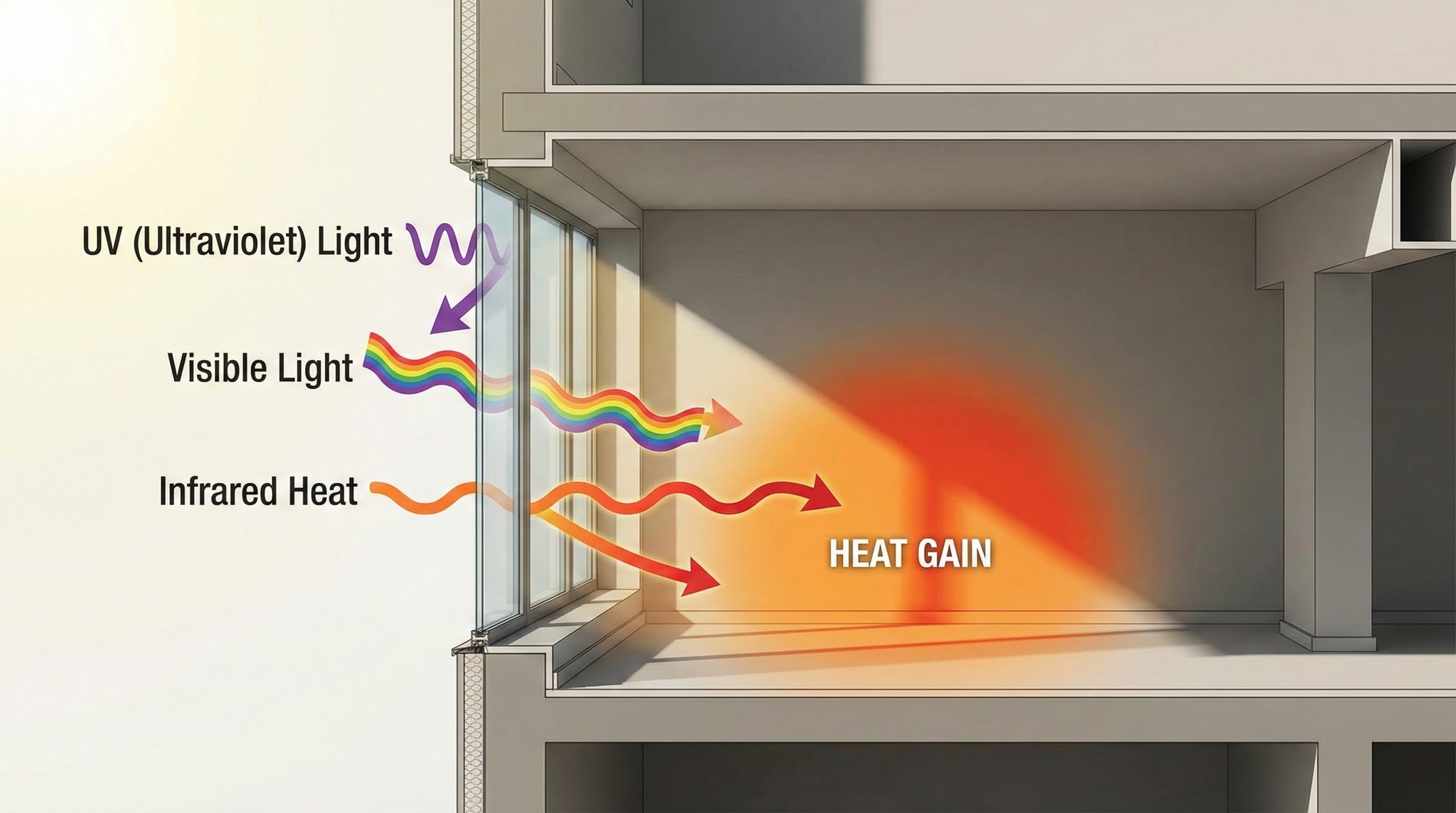
To understand how ceramic window films work, it helps to know how sunlight interacts with glass. Sunlight is made up of different types of energy, and not all of them affect buildings in the same way.
Sunlight reaching a window includes ultraviolet light, visible light, and infrared radiation. Ultraviolet light is not visible, but it can damage interiors over time. It causes fading of furniture, flooring, and artwork.
Visible light is what allows us to see and enjoy natural daylight. This part of sunlight helps create bright and comfortable spaces. Infrared radiation is also invisible, but it carries most of the heat from the sun.
When infrared energy passes through glass, it raises indoor temperatures. This is what makes rooms feel warm or uncomfortable near windows, especially during sunny days.
Standard glass does not block infrared heat very well. As a result, buildings can experience heat buildup even when the glass looks clear. Ceramic window films are designed to target this specific problem by addressing infrared energy rather than blocking visible light.
Understanding this difference explains why ceramic films can reduce heat while keeping interiors bright.
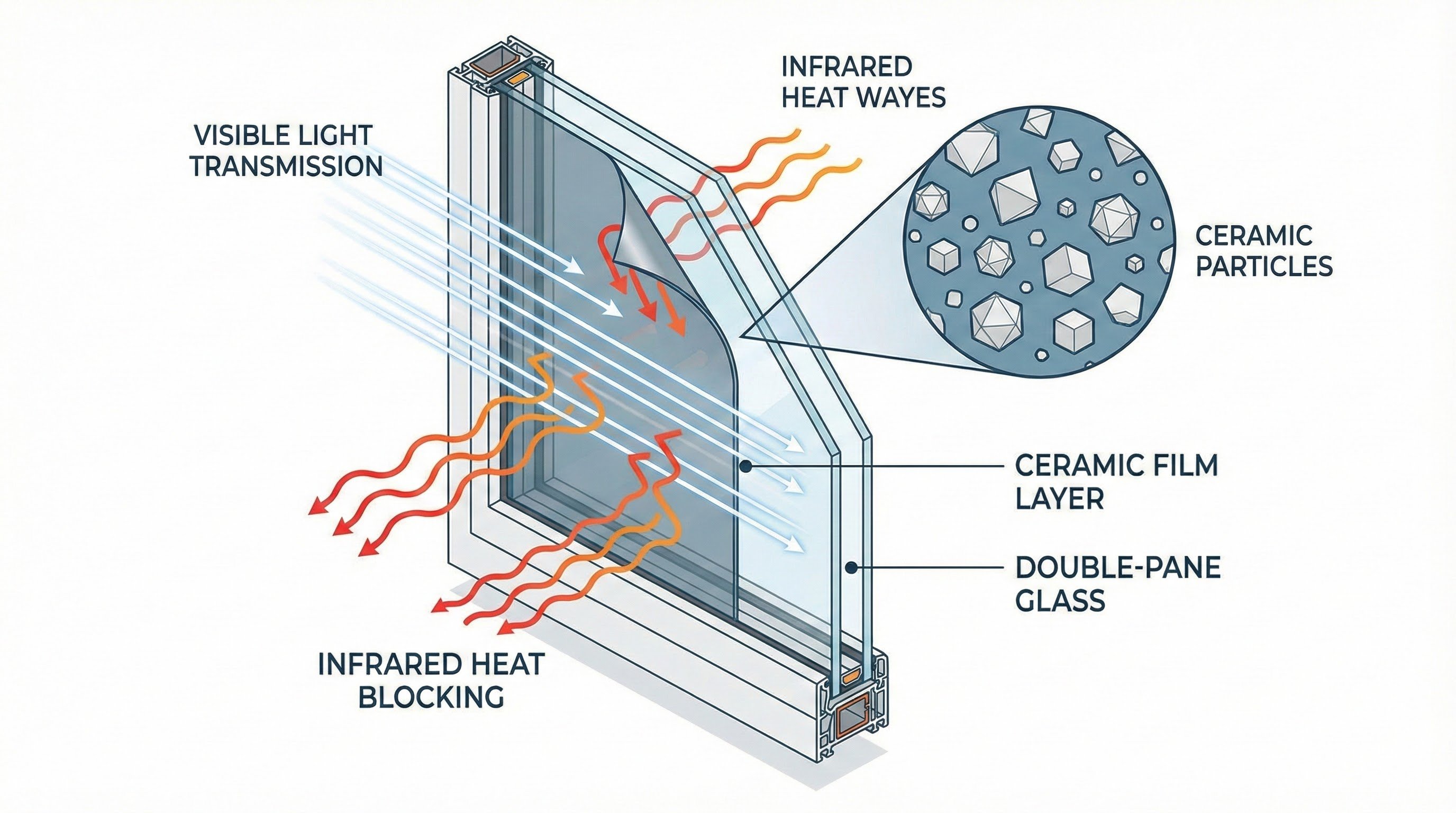
Ceramic window films are designed to manage heat in a more precise way than traditional films. Instead of blocking all sunlight, they focus on controlling the part of sunlight that causes discomfort. This allows buildings to stay bright while reducing indoor heat.
The ceramic particles inside the film interact primarily with infrared radiation. When infrared energy reaches the glass, these particles either absorb it or reflect it away from the interior.
This process reduces the amount of heat that passes through the window. Because the ceramic particles are engineered to target infrared energy, visible light can still pass through. This is why ceramic films can lower heat without making windows look dark or tinted.
Visible light transmission refers to how much natural daylight enters the space. Ceramic window films are designed to maintain high levels of visible light while filtering out heat.
By allowing daylight to pass through, ceramic films preserve views and keep interiors bright. This makes them ideal for spaces where natural light is important, such as offices, living areas, and shared building spaces.
Spectrally selective performance means the film can distinguish between different parts of sunlight. Ceramic films selectively reduce infrared and ultraviolet energy while allowing visible light to remain.
In real buildings, this means better comfort without sacrificing daylight. Rooms feel cooler, glare is reduced, and spaces stay visually open. This balance is what makes ceramic window films a preferred choice for modern architectural glass.
Nano-ceramic technology takes ceramic window film performance to a higher level. It refers to the use of extremely small ceramic particles that are engineered for precise and consistent results. These particles improve clarity, durability, and heat control.
The term “nano” refers to the size of the ceramic particles. These particles are measured on a microscopic scale and are much smaller than those used in older film technologies.
Because of their size, nano-ceramic particles can be evenly distributed throughout the film. This creates uniform performance across the entire window. It also prevents cloudiness or distortion, keeping the glass looking clear.
Smaller particles interact with sunlight more efficiently. They are better at targeting infrared energy without interfering with visible light.
Larger particles can scatter light unevenly, which may reduce clarity. Nano-ceramic particles avoid this issue by maintaining transparency while delivering strong heat rejection.
This combination of clarity and performance is a key reason nano-ceramic window films are widely used in modern buildings.
Window film specifications can look confusing at first, but they are important for understanding how ceramic window films perform in real buildings. Knowing what these metrics mean helps you compare options and choose a film that delivers the right balance of comfort and light.
For a simple explanation of film layers and how they affect heat and light control, this post on types of window films and how they work is a helpful reference.
Visible Light Transmission, or VLT, measures how much natural light passes through the window after the film is installed. A higher VLT means more daylight enters the space.
Ceramic window films often offer high VLT while still controlling heat. This allows interiors to remain bright and visually open. For buildings that rely on natural light, this is a major advantage.
Infrared rejection shows how effectively a film blocks heat-carrying infrared energy. Since infrared radiation is the main source of solar heat gain, this metric is key to indoor comfort.
Ceramic films are engineered to target infrared energy specifically. High infrared rejection helps reduce hot spots near windows and lowers overall indoor temperatures.
UV rejection measures how much ultraviolet light is blocked by the film. Ultraviolet rays cause fading and damage to interior finishes over time.
Ceramic window films block a high percentage of UV radiation. This helps protect furniture, flooring, artwork, and fabrics while also improving occupant comfort.
TSER represents the total amount of solar energy blocked by the window film. It includes infrared, visible, and ultraviolet energy.
While TSER is a useful comparison tool, it should be viewed alongside VLT and infrared rejection. The best ceramic films balance these metrics to reduce heat without sacrificing natural light.
Not all window films work the same way. Comparing ceramic window films with traditional options helps explain why ceramic technology is often preferred for modern buildings.
Dyed window films reduce heat by absorbing sunlight. This often requires darker shades to be effective. Over time, dyed films can fade or discolor because the dye breaks down under constant sun exposure.
Ceramic window films do not rely on dyes. They manage heat through advanced ceramic particles, which allows the film to remain clear and stable. This results in better long-term appearance and more consistent performance.
Metallic and reflective films use thin metal layers to reflect heat. While effective, they can change the exterior appearance of a building. They may also create a mirror-like look during the day.
Ceramic films are non-metallic. They reduce heat without adding reflectivity or shine. This makes them ideal for buildings where appearance and clear views are important.
Because ceramic films maintain high visible light transmission, they preserve natural views through the glass. Interiors stay bright, and the exterior of the building keeps its original look.
This combination of performance and aesthetics is a major reason ceramic window films are widely used in both residential and commercial buildings.

Ceramic window films are designed to meet the demands of modern buildings. They offer effective heat control while maintaining the appearance and comfort that building occupants expect.
Many buildings use advanced glass such as double-pane or coated glass. Ceramic window films are compatible with these glass types when properly selected and installed.
Because ceramic films are non-metallic, they work well with a wide range of architectural glass. This makes them a flexible option for both new and existing buildings.
Ceramic window films perform well in a variety of climates. In hot regions, they help reduce heat buildup and improve indoor comfort. In moderate climates, they limit solar heat gain without blocking useful daylight.
They are also effective on windows with strong sun exposure, such as east- and west-facing glass. This helps maintain consistent comfort throughout the day.
Ceramic window films maintain a neutral appearance from both inside and outside the building. During the day, views remain clear. At night, the film does not create strong reflective effects.
This balanced appearance makes ceramic films suitable for buildings where aesthetics are just as important as performance.
Ceramic window films are built for long-term performance. Their advanced materials help them maintain clarity and effectiveness even after years of sun exposure.
Because ceramic films do not rely on dyes or metals, they are less likely to fade or change color over time. The ceramic particles are stable and do not break down under ultraviolet exposure.
This helps the film maintain a consistent appearance. Windows stay clear, and the film continues to perform as intended without becoming cloudy or discolored.
High-quality ceramic window films are designed to last for many years when professionally installed. They are tested to withstand heat, sunlight, and daily environmental exposure.
Many ceramic films come with long-term warranties that cover performance and appearance. This provides added confidence for building owners looking for a durable and reliable solution.
Ceramic window films are often misunderstood. Clearing up these common myths helps explain what ceramic films really do and why they perform so well in buildings.
A common misconception is that ceramic window films darken windows. In reality, ceramic films are designed to maintain high visible light transmission.
This means windows remain clear and interiors stay bright. Heat reduction comes from infrared control, not from blocking daylight.
Because ceramic films are non-metallic, they do not interfere with wireless signals. Wi-Fi, cellular signals, and other communications pass through unaffected.
This makes ceramic films suitable for offices and buildings that rely heavily on connectivity.
While ceramic films can look clear, their performance comes from advanced material science. The ceramic particles actively manage heat and UV energy.
This is very different from simple clear or dyed films, which offer limited heat control.
Ceramic window film is often considered a premium option, but its benefits make it a strong long-term investment for many buildings. Understanding where it delivers the most value helps determine if it is the right choice for your space.
If your main goal is lowering heat and glare in a building, you can also explore solar film for commercial buildings to see how professional-grade films are used for real comfort and efficiency gains.
By reducing infrared heat, ceramic window films help maintain more stable indoor temperatures. This improves comfort near windows and reduces hot spots.
Better heat control can also lower cooling demand. Over time, this can contribute to improved energy efficiency and reduced operating costs.
Ceramic window films are well suited for buildings with large glass areas. Offices, residential spaces, and shared environments benefit from improved comfort and preserved natural light.
They are also ideal for buildings where appearance matters. Because ceramic films maintain clear views and a neutral look, they fit well with modern architectural design.
Ceramic window films use advanced material science to solve a common building challenge. By targeting infrared heat instead of blocking visible light, they improve comfort while keeping interiors bright and visually open.
The technology behind ceramic films explains why they perform better than traditional dyed or metallic options. From nano-ceramic particles to spectrally selective performance, every layer is designed for clarity, durability, and efficiency.
Understanding the science makes it easier to see the long-term value of ceramic window film. It is not just about reducing heat. It is about creating more comfortable, energy-efficient spaces without changing how a building looks.
If you are considering ceramic window film for your building, contact American Window Film for expert guidance and professional installation tailored to your glass and performance goals.

No Comments Yet
Let us know what you think